
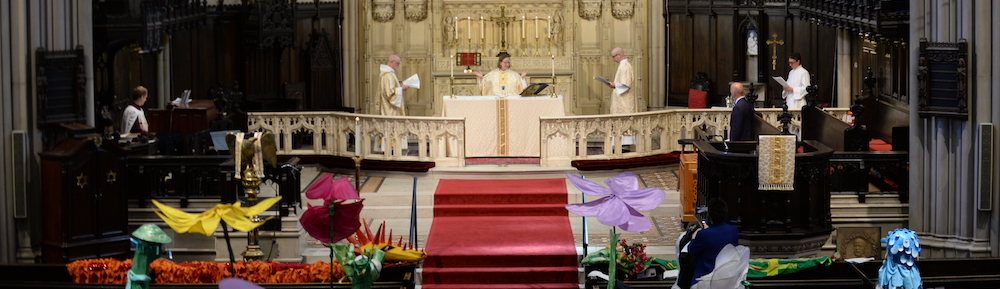
- 1 Kings 19:1-15a. “What are you doing here Elijah?”
- Galatians 3:23-29. There is no longer Jew or Greek, there is no longer slave or free, there is no longer male and female for all of you are one.
- Luke 8:26-39. Return to your home and declare how much God has done for you.
O God of our future, grant us the strength, the wisdom and the courage to seek always and everywhere after truth, come when it may, and cost what it will.
Some days there is just too much to preach about, and I’m not just talking about the terrible news reports from last night or this past week. This is one of those days that makes me think there should be a rule about not having too many great readings from scripture on the same day: the story of Elijah hearing the still, small voice of God; Paul’s letter to the Galatians asserting that in Christ, there is no Jew or Greek, no slave or free, no male and female, because all are one; and then the Gerasene demoniac story. I mean, come on; what preacher can resist that? And we are celebrating the baptism of Hudson Grey Meinero, whose parents were married at Emmanuel and whose mother and uncle were baptized here, too. Hudson will embody hope for the future today as his baptism calls us to recommit ourselves to peace with justice. Continue reading