1909

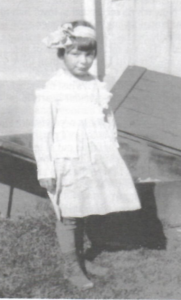
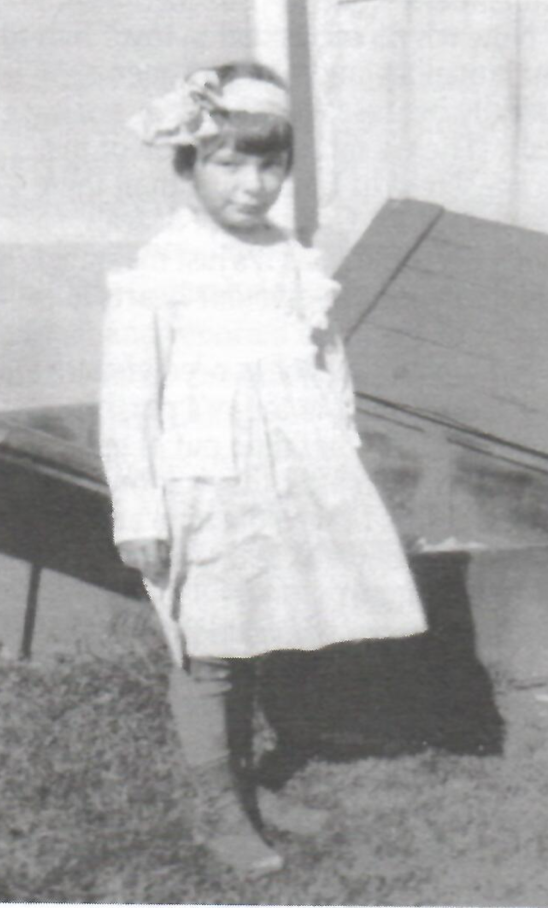
  • Thanks to the late Craig Smith for this image of Priscilla as a girl, c1915.

    7 May.  Benefactor of our cantata program, Priscilla Rawson (Young) was born in Bayside, NYC to Clementine Herschel of Holyoke MA & Hobart Rawson of Cincinnati OH. She was named for her Mayflower ancestor Priscilla Mullins Alden, who in turn was the namesake of Priscilla, now thought to have been the amanuensis of Paul the Apostle and author of the Epistle to the Hebrews [1].  See also 1939, 1942, 1971, 1973, 1994 & 2000.

  • Elwood Worcester and Samuel McComb published The Christian Religion as a Healing Power: A Defense and Exposition of the Emmanuel Movement (NY: Moffat, Yard), full text.  It is an addendum to their Religion and Medicine:  The Moral Control of Nervous Disorders (NY: Moffat, Yard, 1908), full text.
  • Charlotte Spaulding (Mrs. Ernest) Jacoby, c. 1907. Photo credit: Buffalo AKG Art Museum

    Parishioner Ernest Jacoby started a group for alcoholic men with special emphasis on fellowship as a path to recovery.  It eventually moved from our basement and continued into the 1930s as the Jacoby Club.  The first meeting of Alcoholics Anonymous in Boston was held in 1940 at the Club, then at 115 Newbury Street.  Papers of the Club are archived at the Mass. Historical Society.
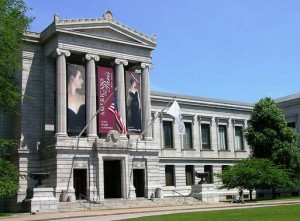


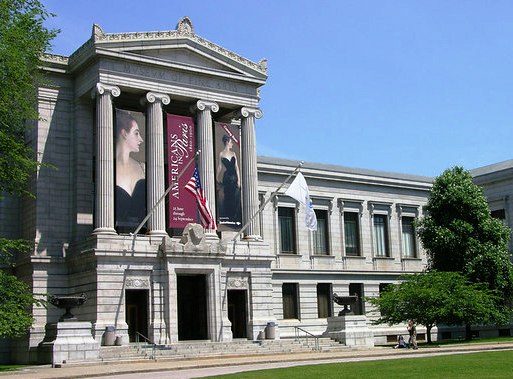
    Entrance of the Museum of Fine Arts, Boston


  • The first section of parishioner Guy Lowell‘s design for the Museum of Fine Arts was completed. Lowell (1870-1927) also designed the Charles River Dam (built in 1910) and the Esplanade from the Charlesgate to the dam.  For more about him and his other architectural achievements, please see Wikipedia.


1. Ruth Hoppin, Priscilla’s Letter: Finding the Author of the Epistle to the Hebrews. Ft. Bragg CA: Lost Coast Press, 2000.
1892

Rector Leighton Parks reported in the Year-Book of Emmanuel Parish that the number of communicants had grown during his tenure of fourteen years from 210 to 500. He expected the Sunday school, which had 75 children when he arrived, to reach 300 children by the year’s end.  Expressing concern for expansion of the church’s facilities to accommodate this growth, he had asked the Vestry to investigate buying land west of the City for a new church.

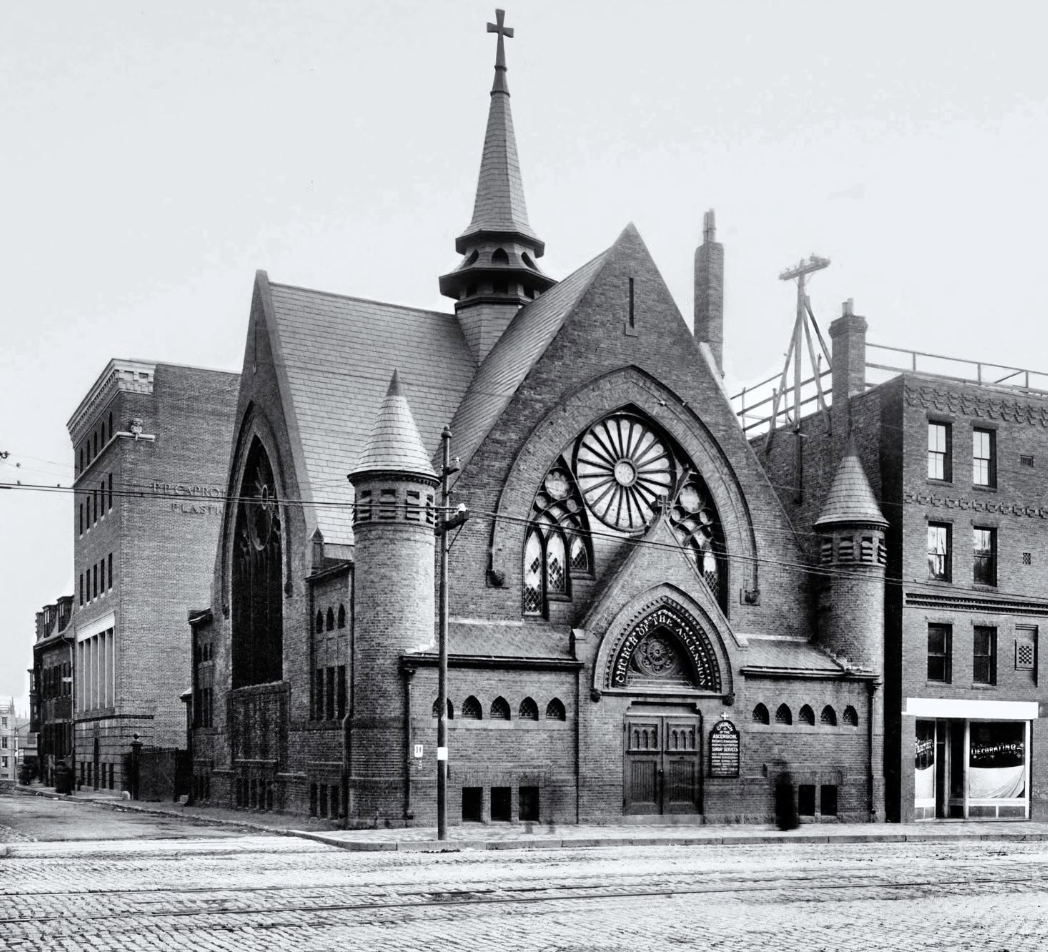
Our mission Church of the Ascension’s yellow-brick Gothic Revival building was completed at 1906 Washington St.  Parishioner Francis Richmond Allen, who may have worked as architect from its inception, would direct in 1901 structural improvements and an enlargement of its parish house. On the National Register of Historic Places, it now houses the Grant African Methodist Episcopal Church. The Rev Carlton Putnam Mills served as Minister in Charge.

Church of the Ascension, 1906 Washington St., South End, is now the Grant AME Church.

1884

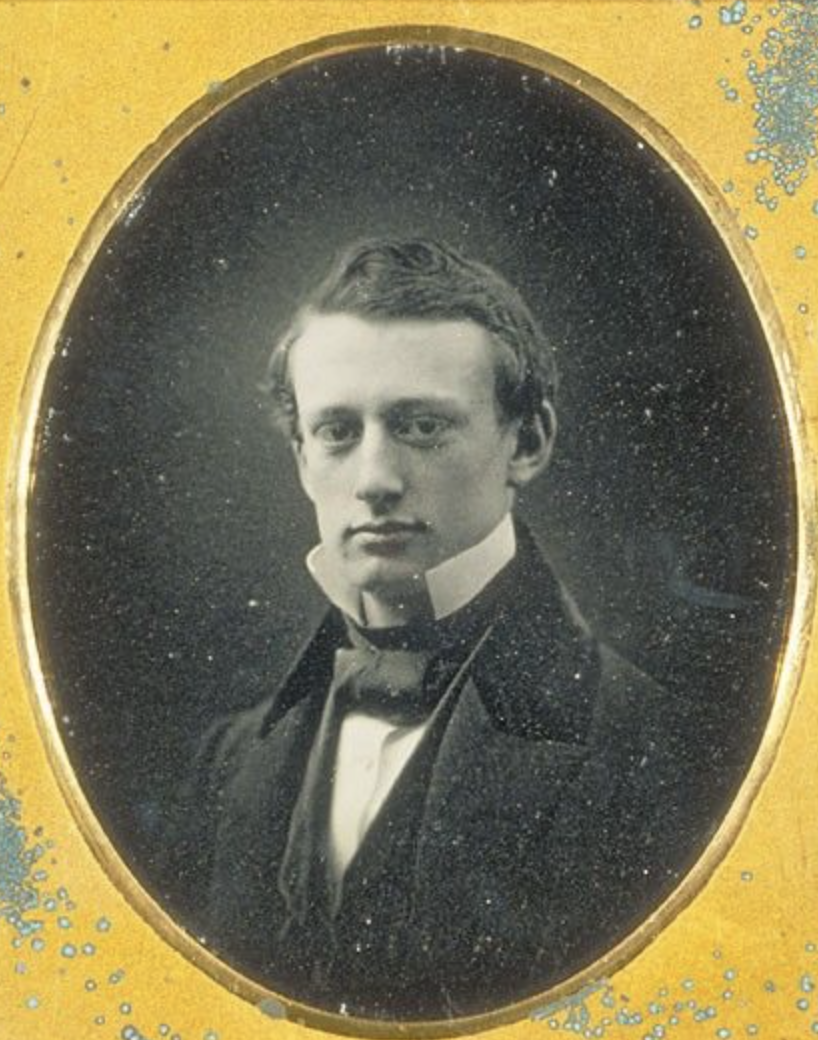
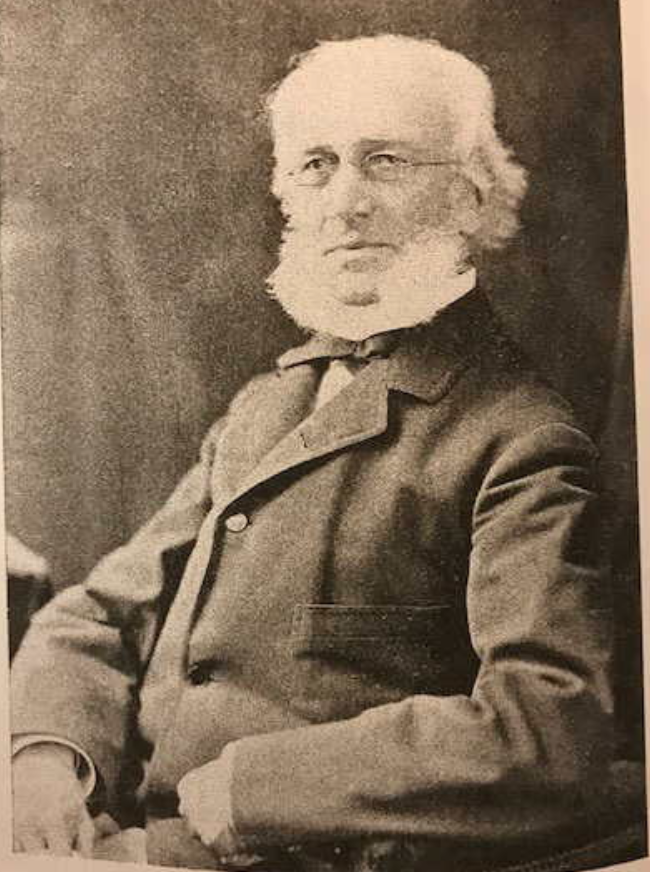
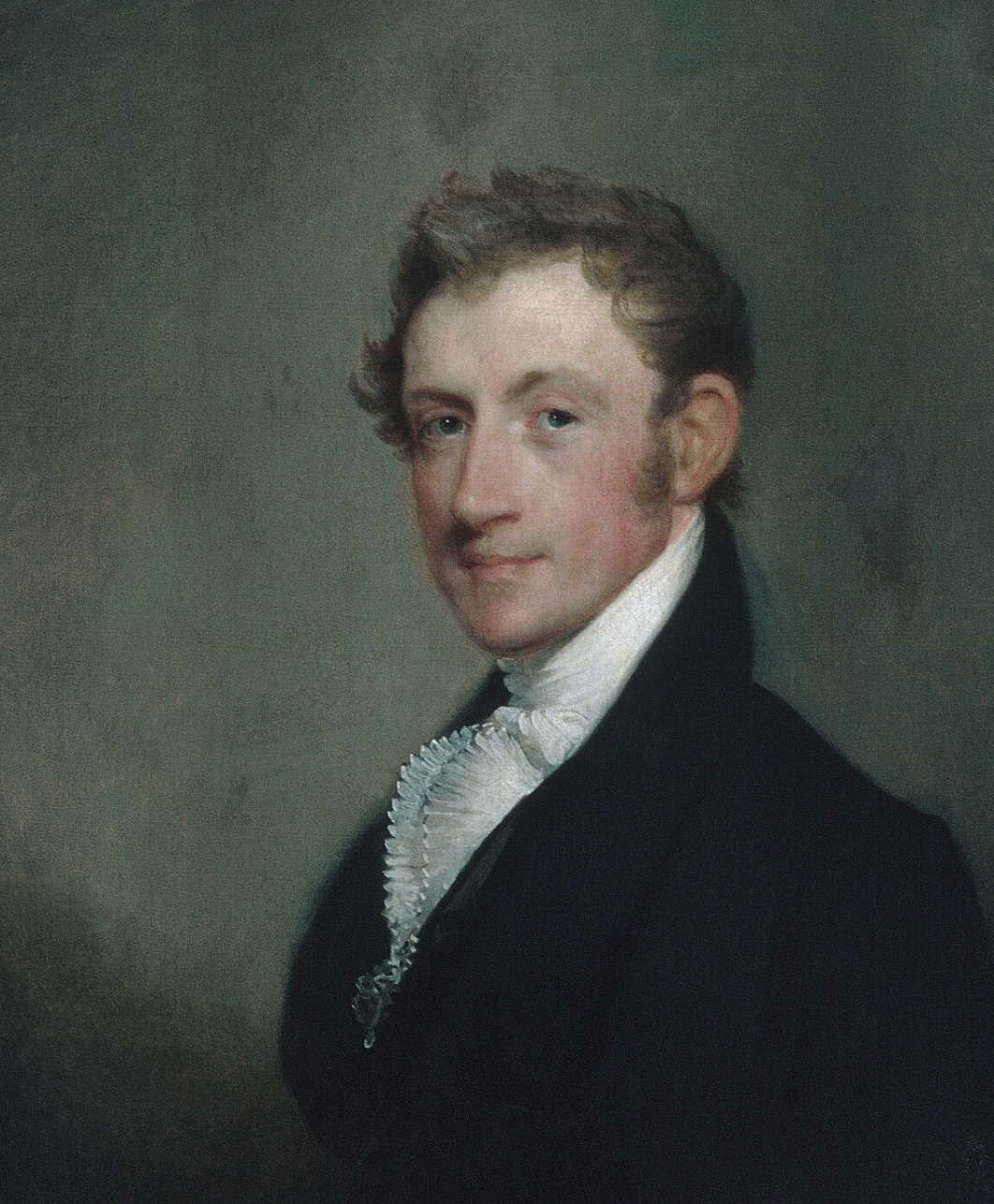
Edward Sprague Rand (1809-84, senior warden 1860-64)

Jan 18SS City of Columbus was wrecked on Devil’s Bridge off Martha’s Vineyard. A group of Wampanoags heroically managed to rescue several men. All women and children had perished when an icy wave swept them overboard.

Among the 65 passengers drowned were parishioner Oscar Iasigi, who was the Turkish consul for New England and our founding senior warden Edward Sprague Rand, who was on his way to Florida with his wife, daughter-in-law, grandson, and son, The Rev. C. A. Rand, rector of Trinity Church, Haverhill. All were lost. 


1864

The Rev. Mary Douglass Burnham, 1899, by permission of SUNY Upstate Medical University

Having learned of a recent massacre of Sioux Indians from her friend Evelina Bogart of Albany NY,  parishioner Mary Douglass Saville (Mrs. Wesley) Burnham (1832-1904) founded the Dakota League,  a mission of our diocese (and eventually other Boston-area churches) to support Native Americans in the Dakota Territory.

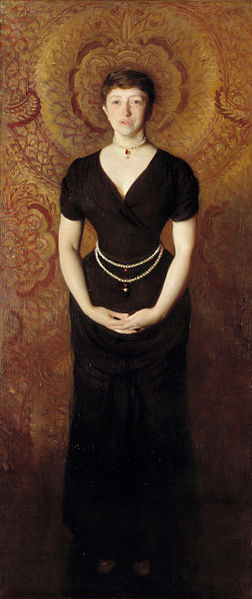
Isabella Gardner

Isabella Stewart Gardner by John Singer Sargent, courtesy of the Gardner Museum via WikiCommons

April 10.Isabella Stewart Gardner was confirmed at Emmanuel by the Rt. Rev. Dr. Manton Eastburn, Bishop of Massachusetts.  It was the fourth anniversary of her marriage to John Lowell Gardner, Jr., who had purchased Pew 28  in 1862.  Although the Stewarts had been members of Grace Church in New York City, their children were not confirmed until they reached adulthood. Louise Hall Tharp in her biography Mrs. Jack hypothesizes that Isabella’s confirmation “might have been a sort of thank-offering for the child she so much wanted”.  John Lowell 3rd, born on June 18, 1863, unfortunately died on March 15, 1865. His baptism and burial are recorded in our parish register. The Gardners, who lived nearby at 152 Beacon St., later raised their orphaned nephews, sons of Jack’s brother Joseph, also owned a pew until his death in 1875.

Take a visual tour of her museum and its collection at Google’s Cultural Institute.