1974

  • The Rev. Dr. Mark Harvey began his jazz ministry and founded the Jazz Coalition (later the Aardvark Jazz Orchestra), which sponsored concerts, liturgies, and festivals here over the next four decades.  See also his Timeline of Jazz @ Emmanuel.
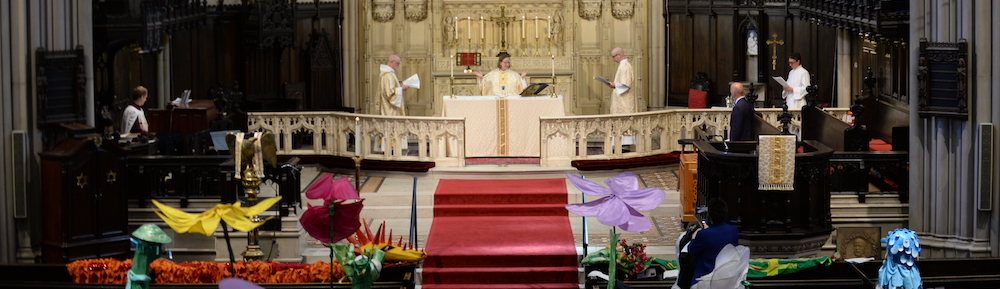
  • March 3.  As our sponsored seminarian, Pauli Murray preached from our pulpit her inaugural sermon on a passage she had selected (Isaiah 61: 1-4), entitled ” Women Seeking Admission to Holy Orders: As Crucifers Carrying the Cross”.* Saying that Emmanuel “sent me forth as a member of your congregation with your blessings and prayers to begin my training for the Sacred Ministry”, she asked:

Why in the face of the devastating rejection at the Louisville General Convention of last October, 1973–a rejection which Bishop Paul Moore of NY has called the violation of the very core of their personhood–[have the women seeking ordination to the priesthood] only increased their determination to enter the higher levels of the clergy?

Then paraphrasing Isaiah 53:3, she prophesied:

I believe that these women are in truth the Suffering Servants of Christ, despised and rejected, women of sorrows and acquainted with grief.  They are answering to a higher authority than that of the political structures of our Church, and in the fullness of time God will sweep away those barriers and free the Church to carry forward its mission of renewal as a living force and God’s witness in our society.

* Reprinted in Daughters of Thunder:  Black women preachers and their sermons, 1850-1979, Bettye Collier-Thomas (NY: Jossey Bass, 1998),  pp. 240-44.  Please see also About Pauli Murray and our Timeline entries about her:  1951,1970, 1973, 1977, 1985, 1987, 2012 & 2015.
1973

  • Pauli Murray, who was a vestry member, left her tenured position at Brandeis U. and  entered the General Theological Seminary. The Rev. Alvin L. Kershaw had helped her discern a call to ordination.

Once I admitted the call of total commitment to service in the church, it seemed that I had been pointed in this direction all my life and that my experiences were merely preparation for this calling.  In spite of my own intellectual doubts and the opposition to women’s ordination which was widespread within the Episcopal Church at the time, I took the fateful step of applying to The Rt. Rev. John Melville Burgess, Bishop of the Diocese of Massachusetts, for admission to holy orders. (Autobiography, 1989, p. 427)

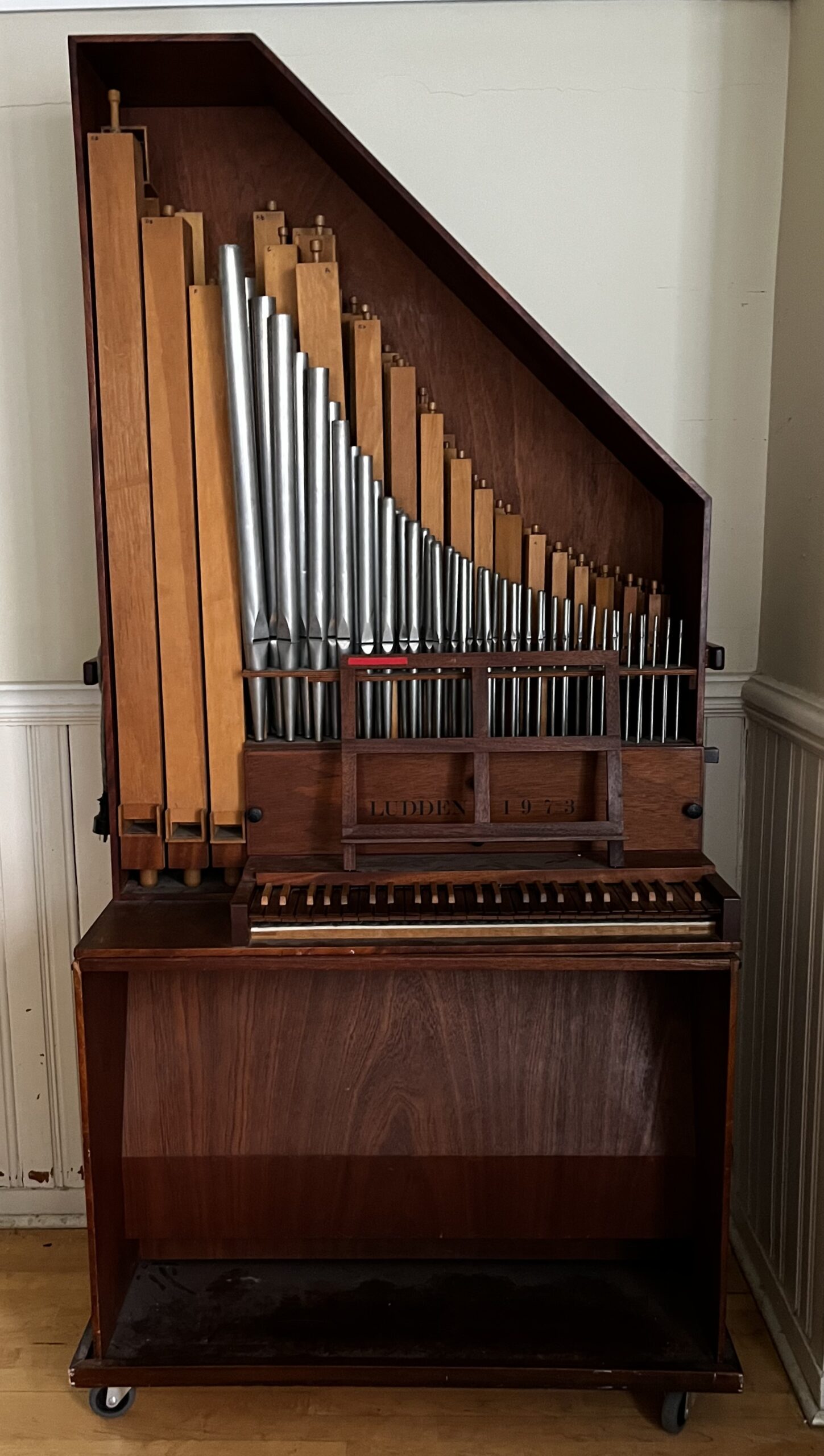
  • Organ built by James Ludden, given by Priscilla Rawson Young in 1973

    4 Nov. Priscilla Rawson Young gave a portable pipe organ, built by James Ludden, which is still used for rehearsals in our Music Room.

See also:

  1. Pauli Murray and Timeline entries:  1970, 1977,1985, 1989, 2012 & 2015.
  2. Priscilla Young:  Timeline entries: 1909, 1939194219711994 & 2000.

1957

6 Oct.  The Rt. Rev. Anson Phelps Stokes III, our 11th diocesan bishop, installed The Rev. Harold Bend Sedgwick as our eighth rector.

The rectory at 10 Chestnut St. was sold and an apartment at 388 Beacon St. was bought for his residence.  For more about the Sedgwick years please see the chapter on him in Emmanuel Church, 1860-1960: The First Hundred Years.

1956

  • Feb 15.  “Ole Miss” invited the Rev. Alvin Louis Kershaw to speak

on the subject of jazz, an area in which he was considered something of an expert. In the meantime, [he had become] a contestant on the television quiz show The $64,000 Question, where his expertise in the field of jazz helped him to win $32,000. In an interview after the program, he alluded to the possibility of donating a portion of his winnings to the National Association for the Advancement of Colored People (NAACP) to aid in the battle against segregation. When word of this reached Mississippi, the Rev. Kershaw became the target of a firestorm of criticism, which eventually led to cancellation of his scheduled visit to Ole Miss.

–Guide to his papers donated by his widow Doris to U. of Southern Mississippi, McCain Library and Archives.

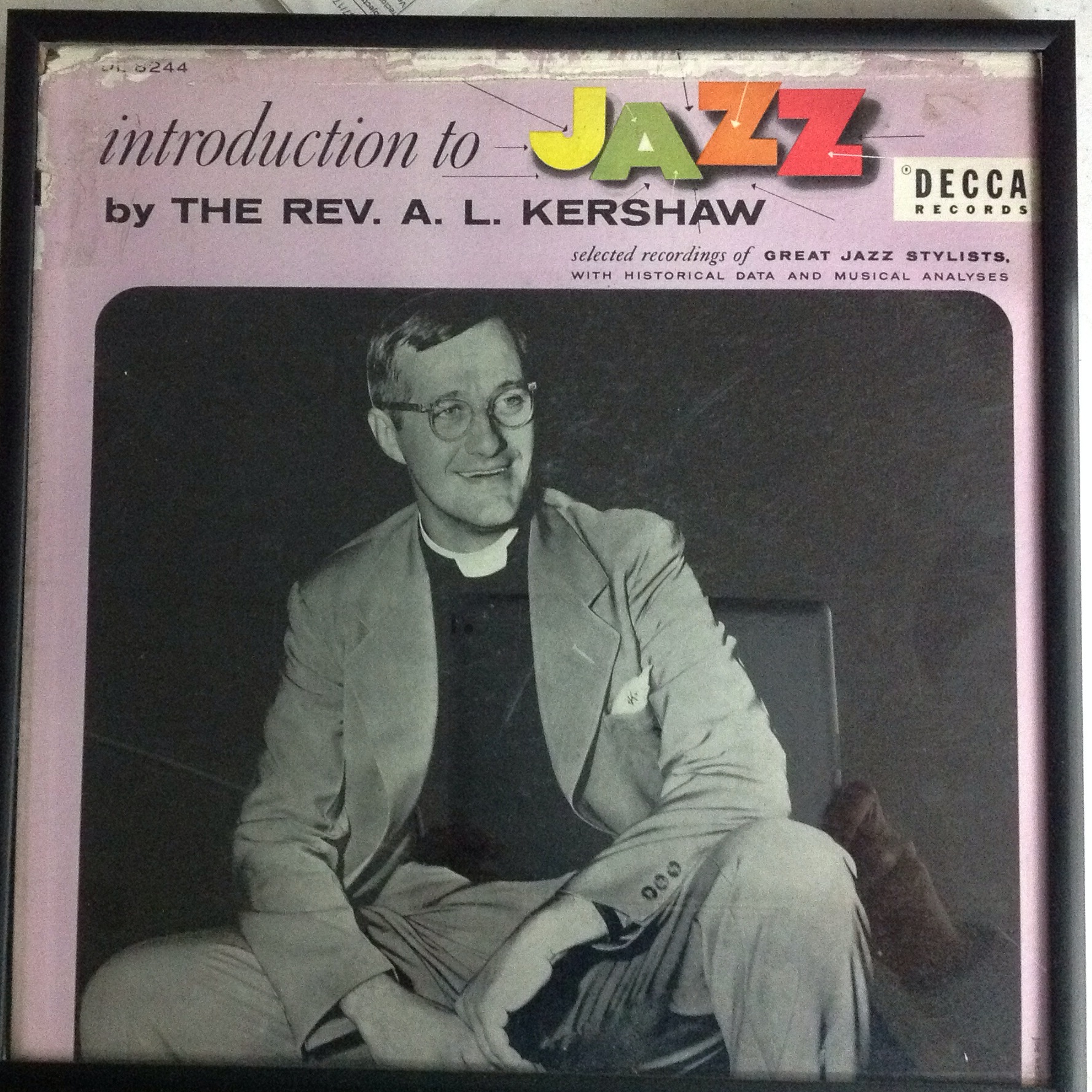
  • His album Introduction to Jazz was released by Decca Records.  Our archive has a copy of the record, which contains “Selected recordings of great jazz stylists, with historical data and musical analyses” and these tunes:
      1. Snag it (King Oliver’s Savannah Syncopators)
      2. Wild man blues (Johnny Dodds’ Black Bottom Stompers)
      3. I’ve found a new baby (Chicago Rhythm Kings)
      4. Tin roof blues (New Orleans Rhythm Kings)
      5. Davenport blues (Adrian Rollini’s Orchestra)
      6. The blues jumped a rabbit (Jimmy Noone’s New Orleans Band)
      7. Five point blues (Bob Crosby’s Bob Cats)
      8. Perdido Street blues (Louis Armstrong)
      9. Georgia cake walk (Art Hodes and his band)
      10. Impromptu ensemble no. 1 (Bobby Hackett et al.)
      11. Tishomingo blues (Bunk Johnson)
      12. Chimes blues (George Lewis and his Ragtime Band).

See also Timeline entries:  1963, 1966, 1969.

Introduction to Jazz


  • March. Rector R.G. Metters in his annual report summarized the decade of his tenure, including:
    • Growth in communicants
    • Growth of investments by more than a quarter
    • Increase in pledges from $22K to almost $43K
    • Renovation of the church and parish house  at a cost of more than $115K
  • Oct. 1. Rector Metters resigned and later became headmaster of St. George’s School in Spokane WA.  The vestry appointed the Rev. David Siegenthaler priest-in-charge.

1948

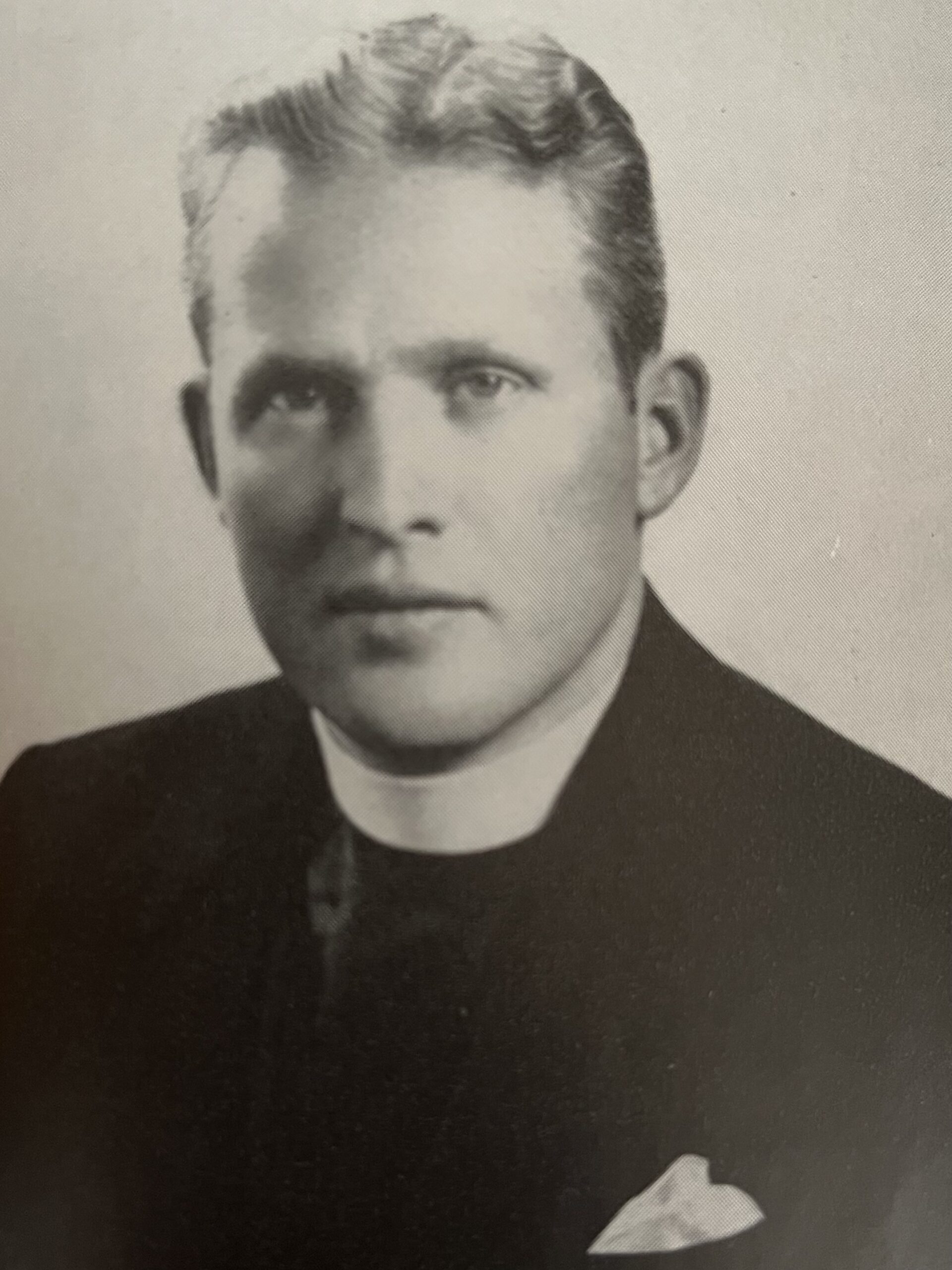
The Rev. Robert Gifford Metters

In connection with its  stewardship campaign the vestry ran a survey that revealed a reduced congregation of 375 communicants.  With his associate priest, the Rev. Dr. H. Robert Smith, Rector R.G. Metters began holding Healing Services on Wednesday mornings.  He was president of the Mass. Association for Mental Health for several years and a longtime member of the National Association.

1945

  • 8 May. Germans surrendered, leading to the end of World War II in Europe.
  • June.  Rector P. E. Osgood preached his last sermon at Emmanuel.
  • 15 July.  The Rev. Dr. H. Robert Smith, formerly of Grace Church, Newton MA, accepted the position of Minister-in-Charge to serve until a new rector could be called.
  • 6 & 9 August. US dropped atomic bombs on Hiroshima and Nagasaki, leading to Japanese  surrender a week later.
  • October.  After many years in charge of our Church School, Elizabeth Varney departed, and Nancy Currier took over.
  • 28 November.  The vestry assigned the church’s reading rights at the Boston Athenæum to rector-elect, The Rev. Robert Gifford Metters. For more about his tenure, please see the chapter on him in Emmanuel Church, 1860-1960: The First Hundred Years.

1943


  • 17 September.  The Rev. Henrietta Rue Goodwin died.  She had retired from the faculty of the National Cathedral School to live with her sister Helen Goodwin French, widow of Hollis French, who was warden here from 1914-1940. After her burial from the Cathedral Church of the Nativity in Bethlehem PA, which the Goodwins had helped to found, a memorial was held at Emmanuel. For a discussion of her ministry here, see also: 1897.

1940

July 19.  Our fourth rector, The Rev. Dr. Elwood Worcester, died at the age of 78.

Hollis French, warden 1914-1940. Credit:  Cleveland Museum of Art

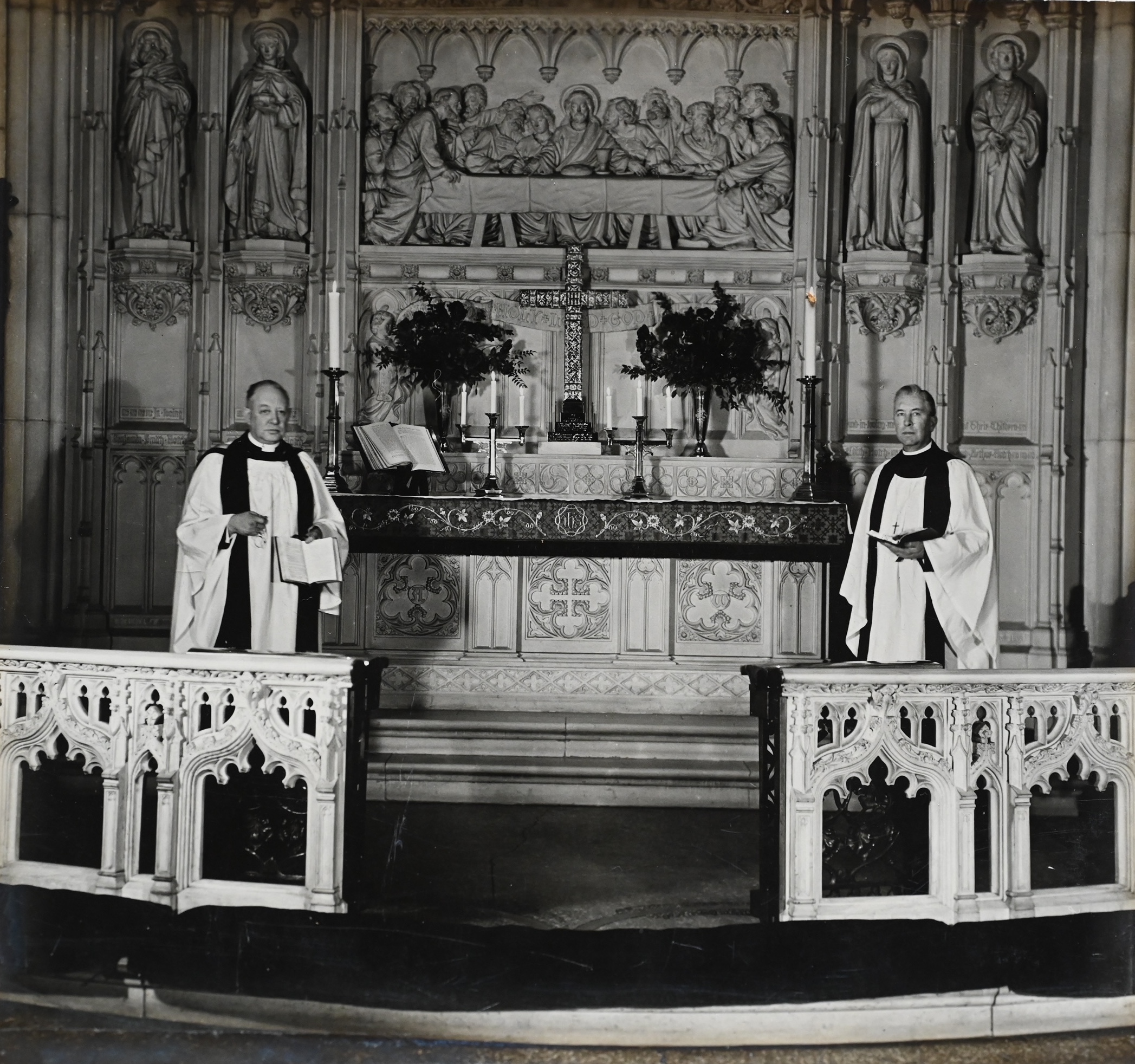
Nov. 21.  Senior Warden Hollis French died. Born in Boston in 1868, he had served as Jr. Warden 1914-1936, when he became Sr. Warden under Rector P.E. Osgood, who is pictured below with Associate Rector Arthur Silver Payzant (served 1937-1945).

The Rev. Dr. Phillips Endecott Osgood (1882-1956) & The Rev. Arthur Silver Paysant (1884-1965) in 1938.

1936

December 13. Celebration of our 75th Year

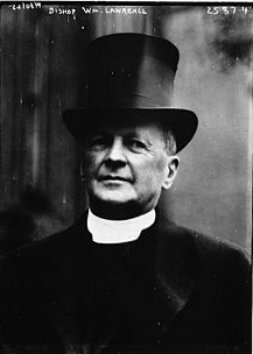
Bishop Wm. Lawrence

The Rt. Rev. William Lawrence, D.D., Bishop of Massachusetts (1893-1927). Photo credit: WikiCommons

Our fifth rector, The Rev. Dr. Phillips Endecott Osgood, said in his sermon:  “We are stewards of an inheritance, interpreters of a tradition”.  Organist Dr. Albert Snow composed an anthem for the service.  Bishop Emeritus William Lawrence praised our first four wardens:

  • Edward Sprague Rand (1st senior warden), a trustworthy, public-spirited lawyer
  • William Richards Lawrence (1st junior warden), who had bought the land for our church. was his uncle.
  • Benjamin Tyler Reed (2nd senior warden), who founded in Cambridge the Episcopal Theological School, which became the Episcopal Divinity School
  • Enoch Reddington Mudge (2nd junior warden), who later built St. Stephen’s Church, Lynn

For more detail, see Boston Globe, Dec. 14, 1936, p. 4:  “Bishop Lawrence in Tribute to Early Emmanuel Wardens. Services Celebrate 75th Birthday of Church. Dr. Osgood Views Future”.