The Green Book Tour: Some Highlights

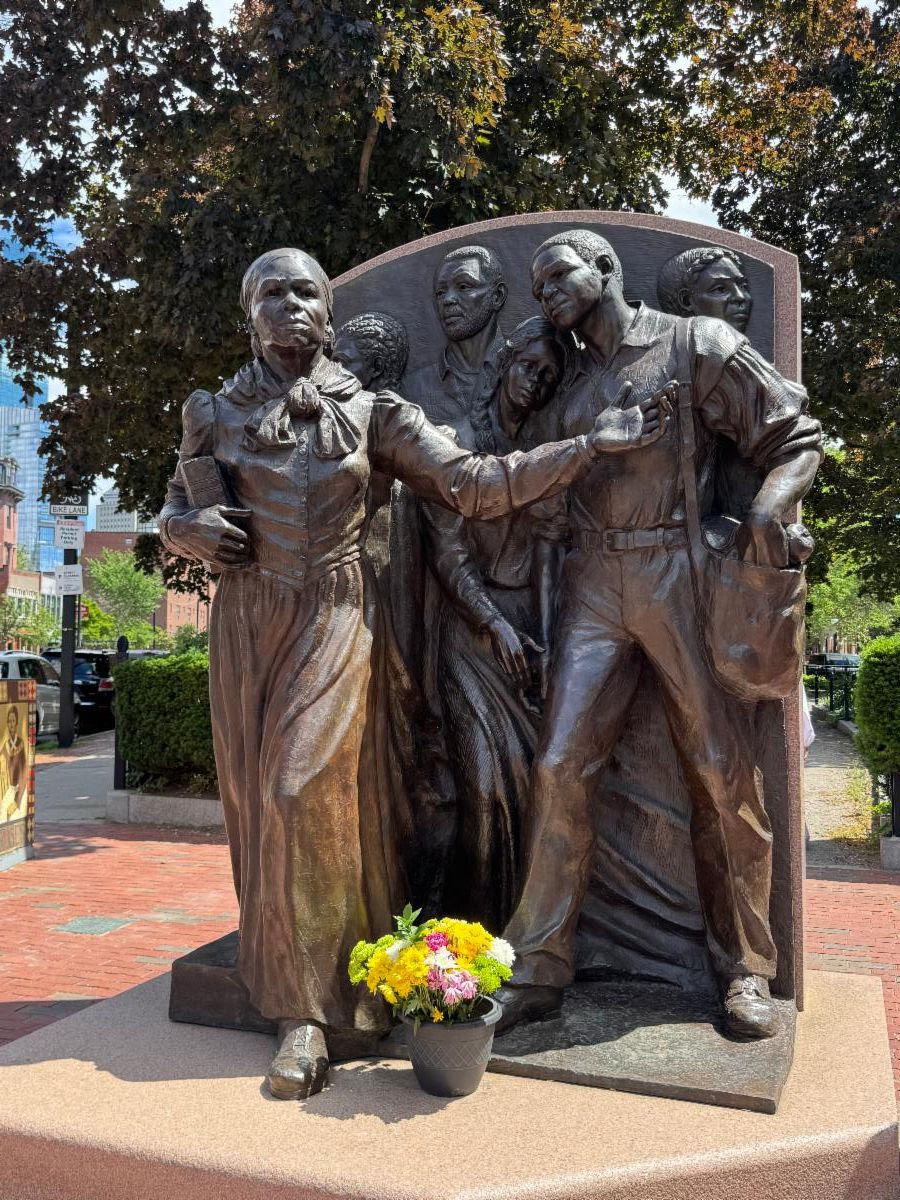
Fern Cunningham’s sculpture Step on Board shows aboltionist Harriet Ross Tubman with a Bible under her arm.

On June 20th, 2026, I joined The Green Book Tour led by Byron Rushing and the Rev. June Cooper.  The Negro Motorist Green Book, published between 1936 and 1966 as a guidebook for African American roadtrippers, became known as simply The Green Book..

On this sunny but windy day we all met outside of the Union United Methodist Church (originally a Congregational Church) on Columbus Avenue in Boston. There were about a dozen of us in addition to the leaders of the tour. Both Byron and June have a depth of knowledge about the South End of Boston and the history of the businesses which were advertised in The Green Book. These businesses, including hotels, were either Black-owned or served Negroes. Charlie’s Sandwich Shoppe on Columbus Ave. is still operating. It was originally owned by a Greek family and was advertised in The Green Book.

The Harriet Tubman House on Holyoke Street offered rooms to Black women who were either in school or working in Boston and would not have been able to rent in the area otherwise. Very near to this location we visited the Harriet Tubman Park with its two sculptures, one of which honors Harriet Tubman herself. The other sculpture sported a traffic cone on its top; evidence of a visit by the Tartan Army, which had visited Boston from Glasgow for the World Cup.

This area attracted many jazz musicians during the height of the Jazz Age. Of the many clubs once open there were two that were Black-owned establishments: Wally’s Café (originally Wally’s Paradise located across the street from its present location) and Estelle’s,  which is now a condominium building at 888 Columbus Ave.. The Hi-Hat at the corner of Mass. Ave. and Columbus Ave., which burned down after the Second World War, was replaced by a settlement house. It is now modern housing (apartments and/or condominiums). The Columbus Avenue African Methodist Episcopal Zion (AMEZ) Church on the corner of Columbus Avenue and Northampton Street was originally a synagogue. Where one would usually see a rose window, it has a Mogen David or Jewish Star.

Our tour ended at Slade’s, where we had lunch and chatted amongst ourselves. It was a beautiful day for a long walk in Boston.

–Mary Beth Clack, Mary Blocher, Cindy Coldren, Pat Krol, Liz Levin
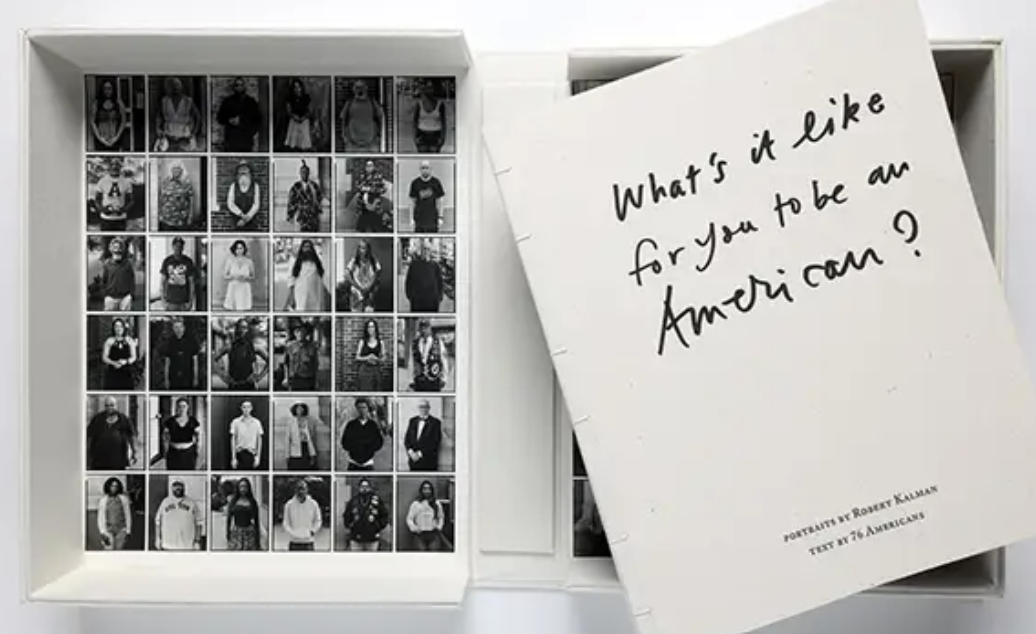
Who is America at 250?

On view at the Boston Athenaeum until May 16, 2026, is the traveling exhibition,
“Who Is America at 250? Artists’ Books on the State of Democracy”.

Organized by the San Francisco Center for the Book and presenting works related to immigration, social injustice, racial inequity, and wage inequality, the exhibit prompts questions about the challenges and prospects of democracy. Its curators see the artists’ book as a meaningful conduit for open contemplation of democracy. Continue reading

Racial Disparities in Health Care

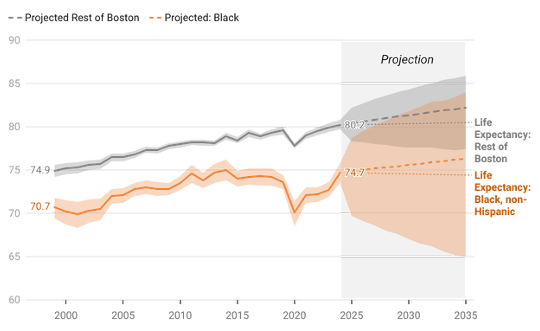
The Boston Globe recently reported data related to the widening gap in life expectancy between Boston’s Black residents and the city’s other racial and ethnic groups.  Growing from 3.3 years to almost 7 years, it has doubled in the past decade according to new data from the Boston Public Health Commission. Continue reading

Now is the day of salvation.

Proper 7B. June 20, 2021

1 Samuel 17:57-18:5, 10-16. Jonathan loved him as his own soul.
2 Corinthians 6:1-13. See, now is the acceptable time. Now is the day of salvation.
Mark 4:35-41. Let us go across to the other side.

O God of our faith, grant us the strength, the wisdom and the courage to seek always and everywhere after truth, come when it may, and cost what it will.


Jesus had been teaching about the Realm of God being like seed scattered on all kinds of ground, and about the Realm of God being like kudzu (well, he said mustard, but an uncontrollable weed with medicinal qualities is what he was talking about). At the end of the same day that Jesus had been teaching the crowds, when evening had come, he said, “Let’s go over to the opposite shore, to the far shore. Let’s go to the eastern side of the lake to the region of the Geresenes, to the territory of the Greco-Roman Decapolis.” He was not suggesting a vacation. 
Continue reading

2020

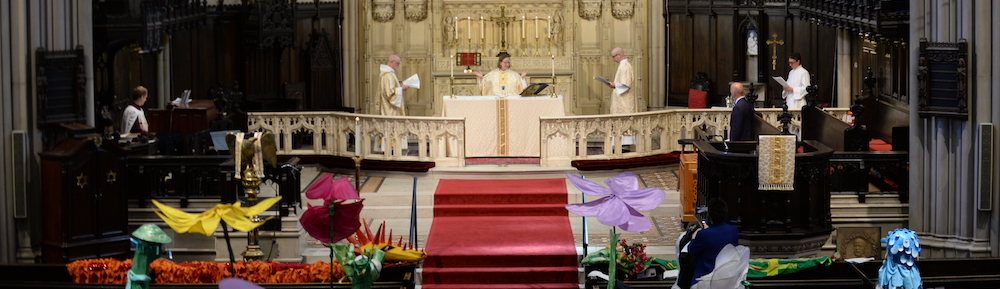
  • March 7. 10th anniversary of our 12th rector’s installation.  On its eve, we feasted with dinner, speeches, poetry, and song.  Thanks to the efforts of our deacon The Rev. Robert Greiner, Mayor of Boston Martin J. Walsh proclaimed it Reverend Pamela L. Werntz Day.  Pictured in the banner of this post are Pam Werntz, Amanda Grant-Rose, Rebekah Rodrigues, Joy Howard, Grace McElroy-Howard, Laura Simons, Bob Greiner, Rabbi Devon Lerner, Gennifer Sussman, The Rev. Tamra Tucker, and Jaylyn Olivo.
  • Bill Wallace seen on a Sussex Directories Inc site

    The Rev. William Blaine-Wallace

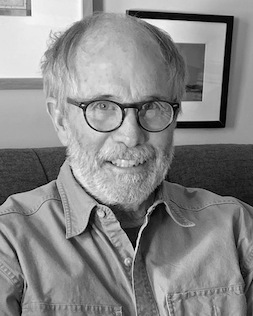
    June 28.  Our 11th rector, the Rev. William Blaine-Wallace, read for Chapel Camp from his book When Tears Sing:  The Art of Lament in Christian Community (Maryknoll NY:  Orbis, 2020).

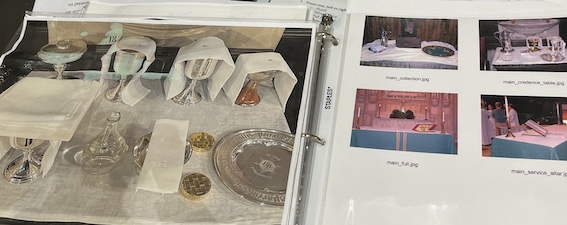
  • July. Before he left to study at Virginia Theological Seminary, our Candidate for Holy Orders Joshua Padraig (Paddy) Cavanaugh compiled a liturgical customary, an illustrated manual which is used by our Altar Guild in its preparations for services throughout the year.
  • Oct. 21.  Parish Operations Manager Kevin Neel set up our YouTube Channel and with video equipment bought by Emmanuel Music, Brad Dumont and Matt Griffing began to livestream our services.
  • Nov. 1. A Saint for All Saints, a conference about the legacy of our own saint, Pauli Murray, organized by a committee led by Jr. Warden William Margraf, was held via Zoom.  The Rev. Dr. Yolanda A. Rolle, Episcopal Chaplain of Howard University, whom we sponsored for the priesthood,

    The Rev. Dr. Anna Pauline Murray

    moderated a panel comprised of Assoc. Dean Melissa W. Bartholomew of Harvard Divinity School; the Rev. Dr. Cameron Partridge, rector of St. Aidan’s Church, San Francisco; and the Very Rev. Dr. Kelly Brown Douglas, Canon Theologian of the National Cathedral and Dean of Episcopal Divinity School at Union Theological Seminary.  Please see our page for the program and more.


2015

April 4.  The New York Times reported that Pauli Murray‘s family home in Raleigh NC had been named a national treasure by the National Trust for Historic Preservation.

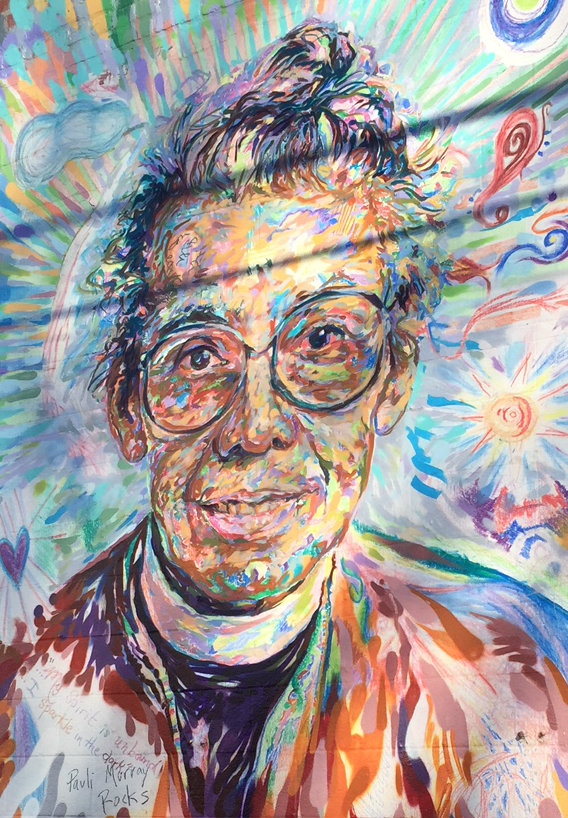
As part of the Pauli Murray Project a memorial mural painted on the brick wall of a former tobacco warehouse in Durham NC shows her flanked by panels that read:

 As an Episcopal priest, Pauli Murray used the pulpit to find the “spirit of love and reconciliation” as expressed in her ministry as the “goal of human wholeness”. — Karla Holloway

It may be that when historians look back on 20th century America, all roads will lead to Pauli Murray.  Civil rights, feminism, religion, literature, law, sexuality — no matter what the subject, there is Pauli. — Historian Susan Ware

Pauli Murray taught us that our lives are not defined by our race or our gender but by our striving to make the world a better place than when we found it.  — Elnora J. Shields, Southwest Central Durham Quality of Life Project

Murray mural

Pauli Murray mural (detail) on tobacco warehouse in Durham NC

See also:

2012

Photo credit: UNC. Carolina Digital Library and Archives via WikiCommons.

Photo credit: UNC. Carolina Digital Library and Archives via WikiCommons.

The 77th General Convention of The Episcopal Church resolved to add The Rev. Dr. Anna Pauline Murray to Holy Women, Holy Men and the Calendar of the Church Year, which now commemorates her life on the day of her death, July 1.

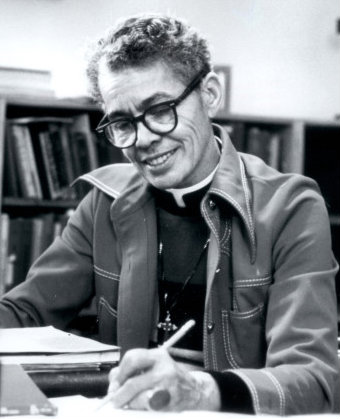
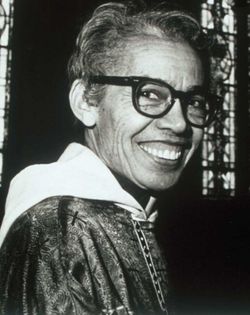
Murray attended Emmanuel in the early 1970s and served on our vestry (1973-75).  In her autobiography (1987) , she credits former Rector Al Kershaw with encouraging her to leave her faculty position at Brandeis University and pursue ordination in The Episcopal Church.  In 1977, at the age of sixty-six, she became The Church’s first African-American-woman priest.

See also


1985

  • Jan. Dr. Sara Lawrence-Lightfoot joined our vestry for a 3-year term during the tenure of Rector Al Kershaw.  
  • March 31. Our own composer John Harbison preached on the 300th birthday of Johann Sebastian Bach.
  • July 1. The Rev. Dr. Anna Pauline Murray died in Pittsburg PA at the age of 75.  She is buried in Cypress Hills Cemetery, Brooklyn, New York, beside her partner Irene Barlow, whose death in 1972 had led Murray to discern a call to the priesthood at Emmanuel. The Episcopal Church has designated July 1st as her feast day.

See also:

1977

January 8.    Pauli Murray was ordained a priest at the Washington National Cathedral by the Rt. Rev. William F. Creighton, bishop of the (Episcopal) Diocese of Washington. She was the first African American woman, and one of the first women, to be ordained a priest in the Episcopal Church.

February 13.  At the invitation of the rector of The Chapel of the Cross, Chapel Hill NC, the Rev. James Peter Lee, The Rev. Dr. Murray celebrated her first Eucharist.   She read from her grandmother Cornelia Smith‘s Bible, from a lectern that had been given in memory of the woman who had owned Cornelia, Mary Ruffin Smith. This was the first time a woman celebrated the Eucharist at an Episcopal church in North Carolina.  In her autobiography (1987), p. 435) Pauli described her thoughts about the service, which our Parish Historian Mary Chitty attended:

Whatever future ministry I might have as a priest, it was given to me that day to be a symbol of healing. All the strands of my life had come together. Descendant of slave and of slave owner, I had already been called poet, lawyer, teacher, and friend. Now I was empowered to minister the sacrament of One in whom there is no north or south, no black or white, no male or female – only the spirit of love and reconciliation drawing us all toward the goal of human wholeness.

See also:

1974

  • The Rev. Dr. Mark Harvey began his jazz ministry and founded the Jazz Coalition (later the Aardvark Jazz Orchestra), which sponsored concerts, liturgies, and festivals here over the next four decades.  See also his Timeline of Jazz @ Emmanuel.
  • March 3.  As our sponsored seminarian, Pauli Murray preached from our pulpit her inaugural sermon on a passage she had selected (Isaiah 61: 1-4), entitled ” Women Seeking Admission to Holy Orders: As Crucifers Carrying the Cross”.* Saying that Emmanuel “sent me forth as a member of your congregation with your blessings and prayers to begin my training for the Sacred Ministry”, she asked:

Why in the face of the devastating rejection at the Louisville General Convention of last October, 1973–a rejection which Bishop Paul Moore of NY has called the violation of the very core of their personhood–[have the women seeking ordination to the priesthood] only increased their determination to enter the higher levels of the clergy?

Then paraphrasing Isaiah 53:3, she prophesied:

I believe that these women are in truth the Suffering Servants of Christ, despised and rejected, women of sorrows and acquainted with grief.  They are answering to a higher authority than that of the political structures of our Church, and in the fullness of time God will sweep away those barriers and free the Church to carry forward its mission of renewal as a living force and God’s witness in our society.

* Reprinted in Daughters of Thunder:  Black women preachers and their sermons, 1850-1979, Bettye Collier-Thomas (NY: Jossey Bass, 1998),  pp. 240-44.  Please see also About Pauli Murray and our Timeline entries about her:  1951,1970, 1973, 1977, 1985, 1987, 2012 & 2015.