2026

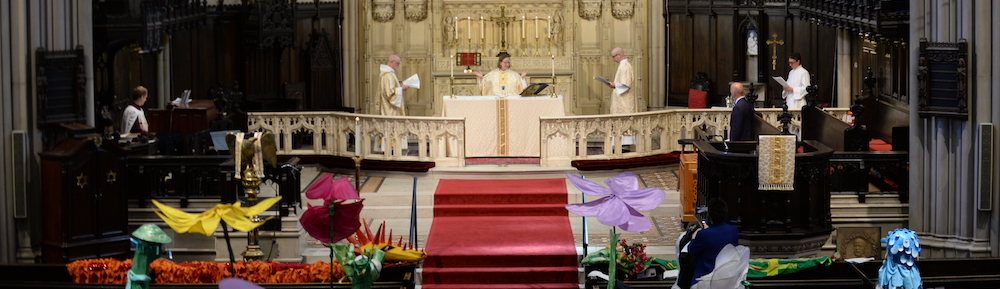
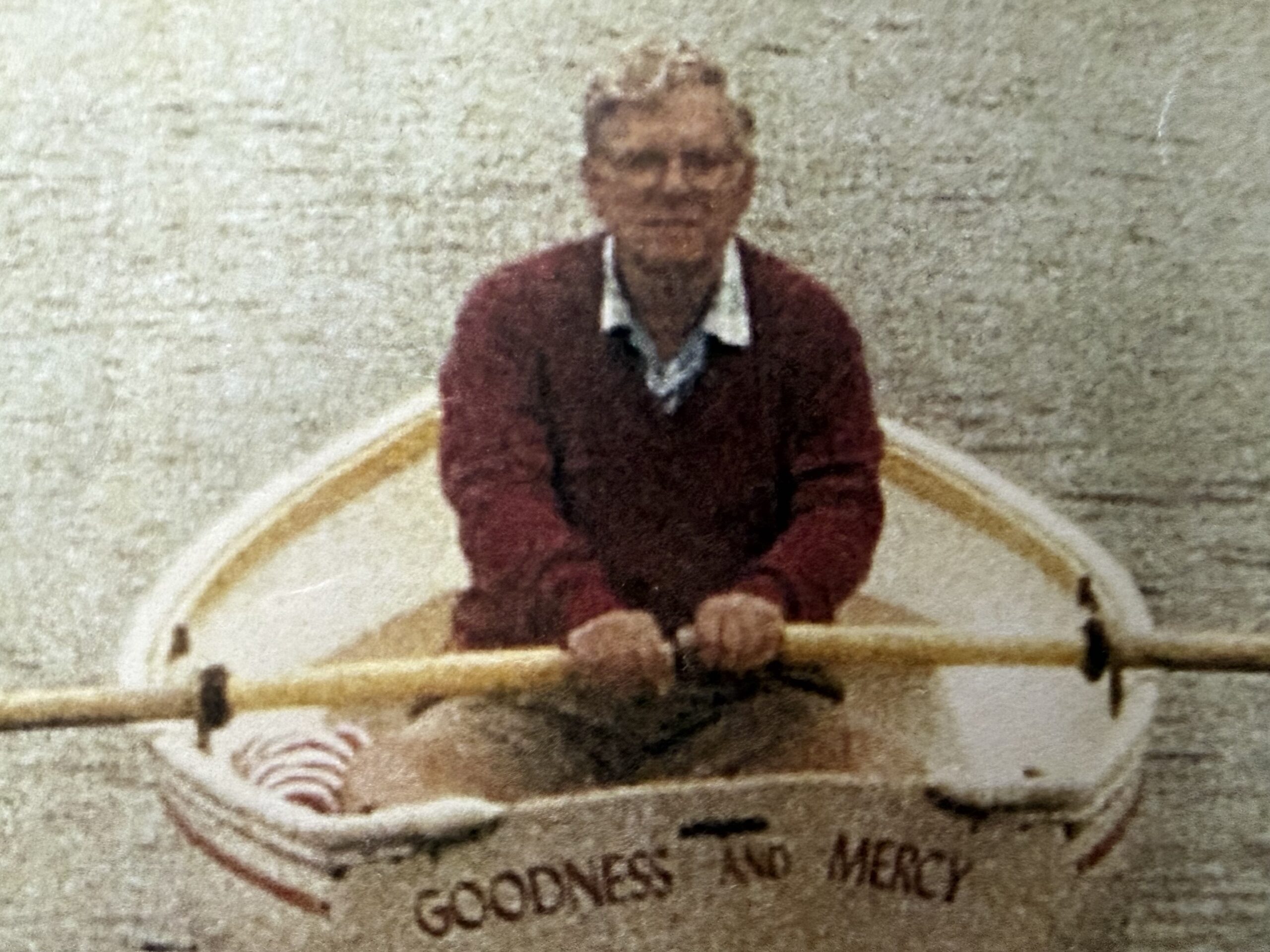
31 Jan.  We celebrated the life and ministry of our Senior Pastoral Assistant (his choice of title), The Rt. Rev. J. Clark Grew II, 10th Bishop of Ohio (1939-2025).  Our rector, family members, The Rev. Jennifer Daly, and The Rt. Rev. Mark Hollingsworth, Jr. spoke and were joined in the chancel by bishops Arthur B. Williams, Jr.; Julia Whitworth; Thomas J. Brown, and Alan M. Gates.  Dr. John Dilworth and violinist Daniella Maddon provided the musical offering.  See also the order of service and the livestream recording.

Clark Grew in his dinghy Goodness & Mercy

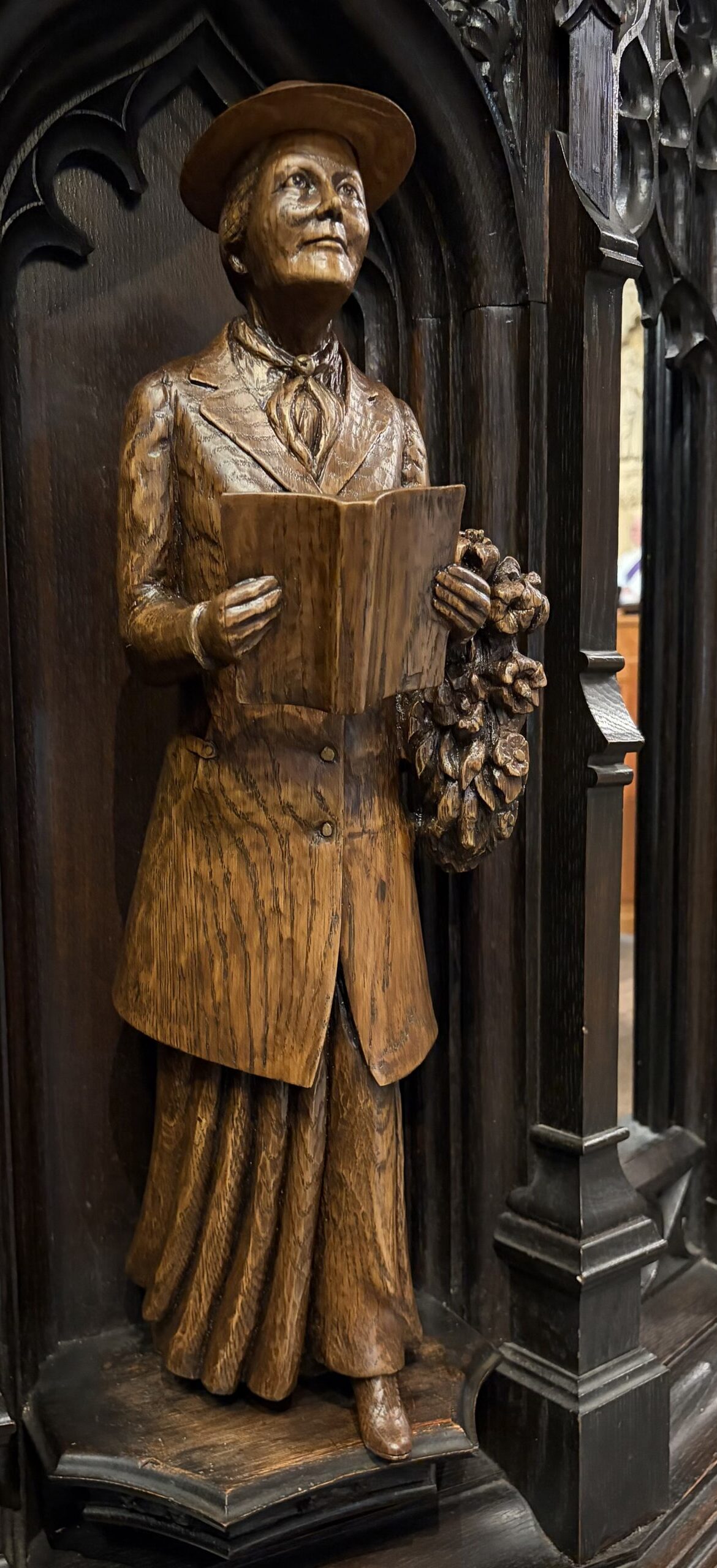
Pulpit statue of Vida Dutton Scudder by Ted Southwick

8 March. The Rt. Rev. Julia Whitworth visited us and dedicated Ted Southwick’s commissioned pulpit statue of Vida Dutton Scudder (1861-1954). Confirmed as Episcopalian by Phillips Brooks, she became a saint of The Episcopal Church, whose feast day is October 10.  She was a niece of publisher E.P. Dutton, who was the first clerk of our vestry, and of Horace Scudder, editor The Atlantic Monthly (1890-98).   She helped found in 1887 the College Settlements Association, which established Denison House for immigrants in the South Cove. In 1911 she joined the Socialist Party and founded the Episcopal Church Socialist League.  Her support in 1912 of striking textile workers in the Bread and Roses Strike drew criticism and threatened her teaching position at Wellesley College. Her 96 works religious, social, and literary topics can be downloaded from the Internet Archive.

Shehecheyanu Redux

See also our rector’s 2013 sermon of the same title.

Epiphany, Last Sunday.  2 March 2025.  The Very Rev. Pamela L. Werntz

Exodus 34:29-35. The skin of his face was shining and they were afraid to come near him.
2 Corinthians 3:12-4:12. Since then, we have such a hope, we act with great boldness.
Luke 9:28-43a. And all were astounded by the greatness of God.

O God of faithfulness, grant us the strength, the wisdom and the courage to seek always and everywhere after truth, come when it may, and cost what it will.


One of the many benefits for me of sharing the pulpit of Emmanuel Church with a rabbi-in-residence and with an Ark of the Covenant in my peripheral view is that it continues to challenge and change the way I encounter Holy Scripture and the prayers and hymns of the Episcopal Church. My sensitivity to the need for corrective lenses in the Church is heightened. My desire to preach against the ways that the Christian Church has promoted supersessionist theology continues to rise. Christian supersessionism is very much like racism as far as I am concerned.   It’s systemic, oppressive, often internalized, hard for many Christians to see, and always wrong. It distorts our vision and damages our souls. 

I especially need to call this out on a day when we welcome a child with dual citizenship in the realm of God, as both a son of Israel and a member of the Body of Christ. Levi and his older sister and brother all have two spiritual passports in the realm of God; they are full citizens of both Judaism and Christianity. How is it possible? I don’t exactly know, but I do know that with God anything born of love is possible. And I know that at Emmanuel Church we have a long history of experiencing glorious impossibilities.

And so on this day on which we mark the end of the Epiphany season with stories of the transfiguration of Jesus, in light of the stories of Moses’ shining countenance, I’m drawn to preach about the Apostle Paul and his words to the Church in Corinth, because our passage today sounds as if Paul was dismissing Moses and the Israelites as old news (and he was). It sounds as if Paul was preaching the newness and better-ness of Christianity (but he wasn’t quite doing that). I have to tell you (or remind you) that Paul was not a Christian. [1] While he recruited Gentiles to follow Jesus, as a Jew through and through, he was arguing with people within his own tradition for openness and inclusivity in the realm of God, . Furthermore, neither Paul nor Jesus was inventing the ideas of openness and inclusivity. To varying degrees both of them were declaring stretched boundaries and widened gates for belonging and beloving as people of God, using the Law and the Prophets as their scriptural foundations. The Apostle Paul and the Evangelist Luke were asserting continuity and expansion of belonging and beloving in encouraging people to follow the Jesus Way.  Looking back on Paul’s arguments with corrective lenses, however, it becomes clear that he was arguing about who was out and who was in as he contended that the glory of Moses was dimming and the glory of Jesus was brightening.

Paul was reacting to rivals, whom he derisively called super-apostles, who were insisting that to be faithful to Jesus required being faithful to Torah. The Rev. Dr. Dan Joslyn-Siemiatkoski, Director of the Center for Christian-Jewish Learning at Boston College, wrote the other day that although this was an intramural argument within Judaism, it was “aimed towards Gentile Jesus believers, [and] it quickly becomes an argument that can and does fuel anti-Jewish perspective.” [2] Dan argues that this reading should not be included in the Lectionary at all. I think he’s right. We should go back to using the Episcopal Church Lectionary assignment for this Sunday, which calls for 1 Corinthians 12:27-13:13, Paul’s treatise on the primacy of love.

I know that there are those who dislike Paul, and they have good reasons. I used to dislike him, but now I like him enough to want to argue with him rather than just discount him. My seminary professor and Jewish New Testament scholar Larry Wills taught me to use a different interpretive framework or lens to know and appreciate Paul. The new framework or lens getting developed over the last several decades takes into account all of what Paul wrote (that we still have in scripture). It’s a much broader approach than the one that excludes the things that don’t fit in a more traditional Protestant Reformation framework. 

I would like to persuade you that Paul was not a phony, ignorant, or a liar, although I admit he was a bit of a jerk. I would like to persuade you that we don’t need to imagine that he was hating and rejecting himself or his tradition even as he challenged his rival apostles within it. He was a great writer, and he had a passion for welcoming folks into the beloved community by proclaiming that the God of Israel’s mercy and grace extended to all nations, i.e. all Gentiles.

The context for our passage from 2 Corinthians is this. Having founded the community of Jesus followers in the city of Corinth, Paul moved on to gather similar communities in other cities. After he was gone, some super-apostles came to Corinth and insisted that, in order to truly be people of the God of Israel, the Gentile men had to be circumcised and the Gentile people had to follow halakhah, or Jewish dietary laws and other established faithful practices. The thing is, Paul’s audience in Corinth was made up of Gentiles. He was arguing that the Torah does not apply to Gentiles. In his letter to the church in Rome, he wrote: “Do we then render Torah void? God forbid! On the contrary, we uphold the Torah!”  Torah is so much deeper and wider than our English word law.  Torah is a way of being, created before the world (as in, “In the beginning was the Word, and the Word was with God, and the Word was God.”) Torah is the Word, the way of being, given to Jews.

So if all of this is true (and I believe it is), what does any of it have to do with us? Well, according to Paul, God’s mercy and grace extend to people even if they aren’t Jews. This is good news, great news actually! Interest in openness and inclusiveness has its roots in the Hebrew Bible and is continued in the Christian Testament. We bear witness to openness and inclusiveness at Emmanuel Church with scripture, tradition, and reason as our foundation, and with the authority that comes from engaging with the Holy One, Who is always doing a new thing.

New covenant doesn’t nullify any previous covenants from the standpoint of the God of Israel.  God was offering new covenants to God’s people throughout ancient history: the new covenant of Noah, the new covenant of Abraham, the new covenant with Moses and the people in the wilderness, the new covenant with David, the new covenant written on the hearts of the people described by the prophet Jeremiah, the new covenant proclaimed by Jesus. In her book entitled Paul was Not a Christian, Jewish New Testament scholar Pamela Eisenbaum asks the rhetorical question: “Has Jesus’ act of faith rendered the covenant between God and Israel meaningless? God forbid! On the contrary, we who are members of Israel are fulfilling the prophesies of Torah by acknowledging God’s redemption of the whole world.” [3]

Here’s what I notice about the story of Moses veiling his face and about Paul’s interpretation. Moses was radiant, brilliant, dazzling, terrifyingly luminous because of his encounters with the Divine. Since the people were afraid, he he veiled his face to avoid frightening them when he talked to them. The scripture tells us that Moses, plagued by doubt and anxiety, had sought the Divine Presence and positively glowed after his encounter. with God.   According to Paul, Moses had good intentions; but in trying to protect people from their fears, he obscured something essential: the reflection of the glory of God. According to Paul, being shielded from the reflection of the glory of God hardened the people’s minds. That’s an interesting idea. Paul was encouraging his audience to be bold and to shine with the glory of God. The Church has been wrong in making this an anti-Jewish message. The story of the transfiguration in our Gospel today, written decades after Paul’s letters, reveals and upholds that Jesus’ closest companions saw Moses, Elijah, and Jesus in relational community. Sadly, our English translation willfully obscures the word exodus when Jesus was talking with Moses and Elijah about his departure, which he was about to accomplish in Jerusalem. Jesus was speaking with them about his forthcoming exodus, i.e. liberation from slavery and journey through the wilderness to a land of well-being, a land of the well cared for.

We are all called to boldly shine with the glory of God when we encounter the power of love in community. Shining can be so much more difficult than lamenting, especially when times are tough. To express beauty and joyfulness in the midst of so much anxiety and sadness in the world is brave and hopeful. It’s not a denial of suffering, but a nevertheless gladness to be alive, gratefulness to have survived to this point. It doesn’t negate any of the sorrows prior to this day or the sorrows felt by other people. It’s bold to say it,  to pray it, to radiate with it, and not to hide it. It seems like a most fitting way to end this sermon: giving thanks to God for the joy of this gathering. If you know the Shehecheyanu, say it with me! Baruch atta Adonai eloheinu melech ha’olam, she-hecheyanu v’ki-yemanu v’higianu lazman hazeh. Blessed are you Holy One, sovereign of the universe, Who has kept us in life and sustained us and brought us to this time.


  1.  Pamela Eisenbaum, Paul was Not a Christian: The Original Message of a Misunderstood Apostle (HarperCollins, 2009).
  2. Dan Joslyn-Siemiatkoski.  https://www.facebook.com/dan.joslynsiemiatkoski
  3. Eisenbaum, op. cit., electronic book edition (no page numbers).

Blessed Pauli Murray

Feast of Pauli Murray.  9 July. 2023. The Very Rev. Pamela L. Werntz

  • Sirach 15:1-6. They will lean on her and not fall.
  • Galatians 3:23-29. There is no longer Jew or Greek…slave or free…male and female.
  • Mark 12:1-12.  The stone the builders rejected has become the cornerstone [or keystone]; this was the Lord’s doing, and it is amazing.

O God of reconciling love, grant us the wisdom, the strength and the courage to seek always and everywhere after truth, come when it may, and cost what it will.


Today is a long-anticipated, special day at Emmanuel Church because we are celebrating the Feast Day of The Rev. Dr. Pauli Murray with the unveiling of a statue of her, beautifully rendered by our Artist-in-Residence Ted Southwick. The statue is installed on the sanctuary pulpit, from which Dr. Murray preached. We are thrilled and honored to welcome her niece Rosita Stevens-Holsey, who will speak with us after the service. While Dr. Murray’s feast day is July 1, the day that she completed her earthly mission, today is the 112th anniversary of her baptism at St. James’ Episcopal Church in Baltimore. Just prior to being ordained, she had described herself as: woman, Christian, seminarian, poet, lawyer, person of color, and senior citizen. Last week in Supreme Court Justice Sotomayor’s dissenting opinion in the bigoted-website case, she recalled Murray’s pioneering work with regard to public accommodations.[1] I want to assure you that Pauli Murray is still speaking to us all. Continue reading

2020

  • March 7. 10th anniversary of our 12th rector’s installation.  On its eve, we feasted with dinner, speeches, poetry, and song.  Thanks to the efforts of our deacon The Rev. Robert Greiner, Mayor of Boston Martin J. Walsh proclaimed it Reverend Pamela L. Werntz Day.  Pictured in the banner of this post are Pam Werntz, Amanda Grant-Rose, Rebekah Rodrigues, Joy Howard, Grace McElroy-Howard, Laura Simons, Bob Greiner, Rabbi Devon Lerner, Gennifer Sussman, The Rev. Tamra Tucker, and Jaylyn Olivo.
  • Bill Wallace seen on a Sussex Directories Inc site

    The Rev. William Blaine-Wallace

    June 28.  Our 11th rector, the Rev. William Blaine-Wallace, read for Chapel Camp from his book When Tears Sing:  The Art of Lament in Christian Community (Maryknoll NY:  Orbis, 2020).

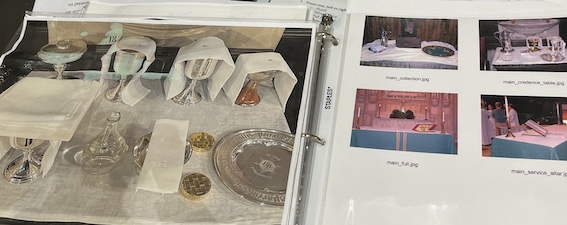
  • July. Before he left to study at Virginia Theological Seminary, our Candidate for Holy Orders Joshua Padraig (Paddy) Cavanaugh compiled a liturgical customary, an illustrated manual which is used by our Altar Guild in its preparations for services throughout the year.
  • Oct. 21.  Parish Operations Manager Kevin Neel set up our YouTube Channel and with video equipment bought by Emmanuel Music, Brad Dumont and Matt Griffing began to livestream our services.
  • Nov. 1. A Saint for All Saints, a conference about the legacy of our own saint, Pauli Murray, organized by a committee led by Jr. Warden William Margraf, was held via Zoom.  The Rev. Dr. Yolanda A. Rolle, Episcopal Chaplain of Howard University, whom we sponsored for the priesthood,

    The Rev. Dr. Anna Pauline Murray

    moderated a panel comprised of Assoc. Dean Melissa W. Bartholomew of Harvard Divinity School; the Rev. Dr. Cameron Partridge, rector of St. Aidan’s Church, San Francisco; and the Very Rev. Dr. Kelly Brown Douglas, Canon Theologian of the National Cathedral and Dean of Episcopal Divinity School at Union Theological Seminary.  Please see our page for the program and more.


All Saints Sunday

All Saints Sunday, (26B), November 4, 2018; The Rev. Susan Ackley

Ruth 1:1-18 In the days when the judges ruled, there was a famine in the land…
Hebrews 9:11-14 But when Christ came as a high priest of the good things that have come.
Mark 12:28-34 One of the scribes came near and heard them disputing with one another.

When I was a little Catholic girl I was invited by some church friends to meet a saint. We met on a rainy Saturday at church and walked a mile or so to the saint’s house. She was lying in bed. I remember she was plumpish and very pale and that the room smelled odd.
Continue reading

It’s a miracle!

Sunday in the Octave of the Feast of All Saints’, November 5, 2017; The Rev. Pamela L Werntz

Revelation 7:9-17. These are they who have come out of the great ordeal.
1 John 3:1-3. See what love [God] has given us.
Matthew 5:1-12.  Blessed… .blessed… .blessed.

O God of All Saints, grant us the strength, the wisdom and the courage to seek always and everywhere after truth, come when it may, and cost what it will.


From time to time I feel the need to confess things to you, that you probably already know, but I still want to say them. Today I have two such confessions. First, I am a Church geek. I love the Bible, warts and all. I especially love Jesus, although I don’t always understand him, and he often takes me where I do not wish to go. I love the feasts and fasts of our liturgical calendar, especially All Saints’ Day. I love singing hymns and sharing bread and wine when we gather for worship. I also love vestry meetings and annual parish meetings, and overly full Diocesan Conventions like the one we had yesterday at our Cathedral on Tremont Street. In spite of the energy it exacts from this introvert, I love the wide and wild assortment of folks that come together to lead the church in the most crazy, messy, democratic way. I love budget deliberations. I love raising money for and spending money on things that matter, things that promote the well-being of our common life. I love resolution debates about our affirmations of and aspirations for the common good. I love people who express their incredulity, saying to me, “budget and resolution debates? Really, Pam?” Really.
Continue reading

2017

  • Feb. 5.  At our annual meeting we voted to update our parish by-laws.
  • Oct 15.  Rabbi Howard Berman preached about the 13th anniversary of our relationship with Central Reform Temple (formerly Boston Jewish Spirit).
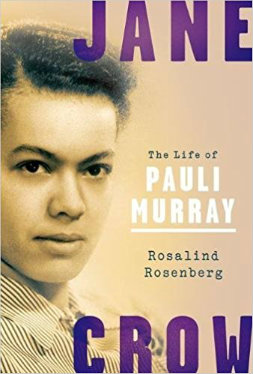
  • Jane Crow: The Life of Pauli Murray by Rosiland Rosenberg is published by Oxford U. Press.  Amazon’s record describes her contribution:  “Throughout her prodigious life, activist and lawyer Pauli Murray systematically fought against all arbitrary distinctions in society, channeling her outrage at the discrimination she faced to make America a more democratic country.”  

    Book jacket, Oxford U. Press

Its last chapter deals with Pauli’s call to ordained ministry. On p. 356, Rosenberg notes that in 1967 Pauli began to attend Emmanuel, where then rector Alvin Kershaw advised her and referred her to The Rt. Rev. John W. Burgess, who was our diocesan bishop and the first African-American Episcopal bishop.  

See also Timeline entries for Pauli Murray: 1944, 1951, 19701973, 1974, 19771985, 1987, 2012 & 2015.

See also Timeline entry 2007 about the restoration of our former organ:  Casavant Frères Opus 700.


Spiritual Infrastructure

All Saints’ Day (with alt second reading), November 1, 2015; The Rev. Pamela L. Werntz

Wisdom of Solomon 3:1-9 The souls of the righteous are in the hand of God
Revelation 7:9-17 Blessing and glory and wisdom and thanksgiving and honor and power and might be to our God forever and ever!
John 11:32-44 Come out!…Unbind him and let him go.

O God of all, grant us the strength, the wisdom and the courage to seek always and everywhere after truth, come when it may, and cost what it will.

Some days on the church calendar are really big – Christmas Eve, Easter Day, Pentecost and All Saints are generally the four biggest for us. Today is the great Feast of All Saints; it’s a day to celebrate the saints, known and unknown. Tomorrow is All Souls’ Day – the day set aside in the church calendar for commemoration of all those who have departed this life, whether they were saints or sinners or both. So this is a Sunday to remember the present as well as the past – to honor all those who go and have gone before us – all saints and all souls. Continue reading

2013

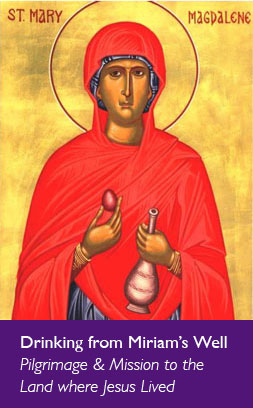
  • March.  With support from the Lilly Foundation, our rector Pamela Werntz left on her sabbatical pilgrimage to Iona, Scotland, several sites in the Holy Land, and Ste. Maxime, France, where she sought inspiration from Mary Magdalene. The Rev. Susan Ackley became our  Sabbatical Priest/Artist in Residence.
  • April 13.  Faculty from Leslie University’s Expressive Arts Therapy Program spoke after the service about how their students might assist with such programs as Emmanuel Cafe and Common Art.  Our Leslie interns have described their experiences since then in Musings from the Margins, the first post of which describes its founding in more detail.
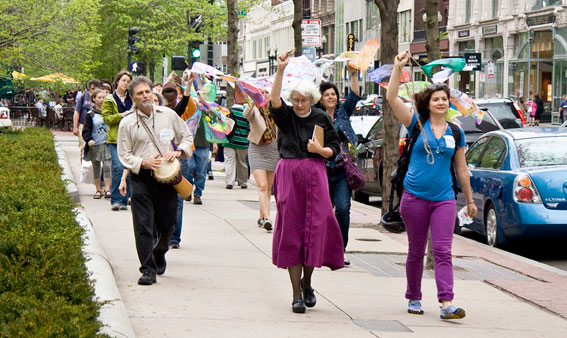
  • April 15.  Two bombs exploded on Boylston Street near the finish line of the annual Boston Marathon, killing three people and injuring several hundred others. Leslie students joined people at Emmanuel in creating memorial flags in an event called “When Words Are Not Enough.”
Participants in "Words Are Not Enough" carry prayer flags to the Boston Marathon bombing memorial site in Copley Square.

The Rev. Susan Ackley, our Sabbatical Priest/Artist-in-Residence, and participants in “Words Are Not Enough” carry prayer flags down Newbury Street to the Boston Marathon bombing memorial site in Copley Square.

2012

Photo credit: UNC. Carolina Digital Library and Archives via WikiCommons.

Photo credit: UNC. Carolina Digital Library and Archives via WikiCommons.

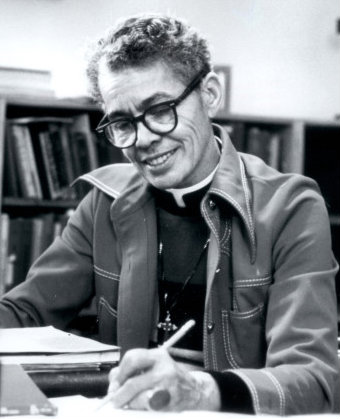
The 77th General Convention of The Episcopal Church resolved to add The Rev. Dr. Anna Pauline Murray to Holy Women, Holy Men and the Calendar of the Church Year, which now commemorates her life on the day of her death, July 1.

Murray attended Emmanuel in the early 1970s and served on our vestry (1973-75).  In her autobiography (1987) , she credits former Rector Al Kershaw with encouraging her to leave her faculty position at Brandeis University and pursue ordination in The Episcopal Church.  In 1977, at the age of sixty-six, she became The Church’s first African-American-woman priest.

See also