Our thanks to the Reverend Dr. Martha Tucker for this meditation which first appeared in this column in 2023.
 If you remove the yoke from among you, the accusing finger, and malicious speech;
If you lavish your food on the hungry and satisfy the afflicted;
Then your light shall rise in the darkness, and your gloom shall become like midday….
“Repairer of the breach,” they shall call you,
“Restorer of ruined dwellings.”
—Isaiah 58:9–10, 12
So many prophets radically and poetically call us to participate in a sacred restoration of wholeness, to be “restorers of the breach”. I believe that this is a valuable lens through which to gain perspective on the concept of reparations.
It is not about money, at least not principally so. It is about becoming part of a movement of restoration to a sacred wholeness in which all will be One, in which divisions will cease, in which mountains are leveled and valleys raised up, while lions and lambs live in peace.
The above are prophetic images and metaphors for some ultimate harmony in the realm toward which we are progressing, toward which God invites us. And…that realm, that “kingdom”, is here and yet to come, within and without. To jump to a discussion of reparations without the context of the goal of holy wholeness might tempt one to seek quick material fixes and similarly transactional responses. If I write a check, then I can discharge my duty.
The problem is that all that misses the opportunity, the opportunity, to make reparations a mission and ministry, to allow it to change our hearts. It seems to me to begin with a genuine acknowledgement that we are broken and have also been part of the breaking, albeit in some cases unknowingly and unwillingly, is to begin the process of gathering the fragments.
Deep bias and hegemonic power can masquerade as harmless when in fact they are crushing souls and discriminating mightily. Love in all its holy manifestations is what will mend and repair. I wonder whether the focus might be on gathering the fragments in the wake of centuries of oppression and becoming repairers of the breach.
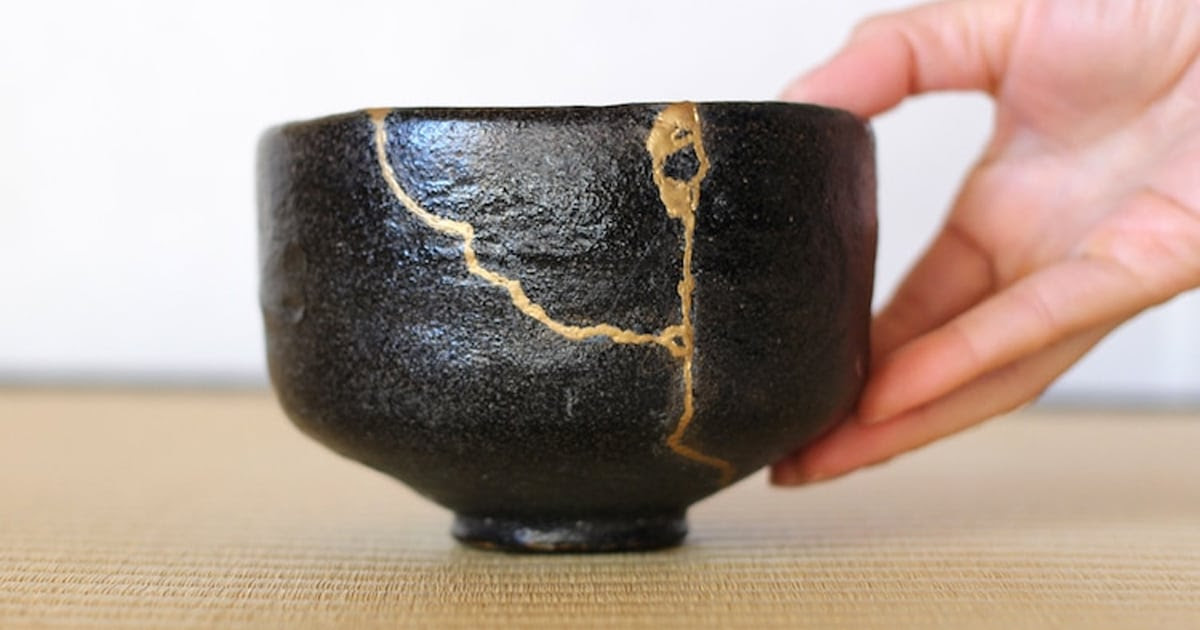
Taking a cue from the Japanese art of kintsukuroi, wherein broken pottery is reassembled with a beautiful golden glue filament so that the seams and brokenness become renewed and even more beautiful and certainly unique, might be the prompt.
Imagine taking this image to God’s creation, where the binding gluey glittering materialis kindness, mercy, justice and humility. Imagine each of us pouring our gluey stuff into and onto the brokenness of the world, especially pouring it into the seam of the racial divide.
Specifically, I feel invited to turn toward the shards of systemic oppression and to offer compassion. I hope to be surprised by the beauty and magnificence of a renewing wholeness of humanity. I hope to become a repairer of the breach.
–Mary Beth Clack, Mary Blocher, Cindy Coldren, Pat Krol, Liz Levin
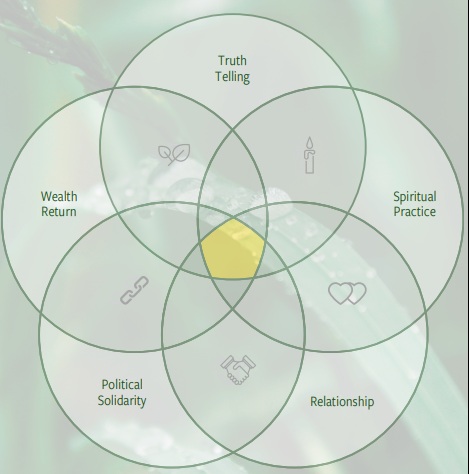 More recently, the Racial Justice Working Group deepened its understanding of the essence, practices, and spiritual underpinnings of reparations work by attending the May-June 2026 Sacred Reckonings program, sponsored by Episcopal City Mission and the Reparations Interfaith Coalition.