Vida Dutton Scudder at Denison House


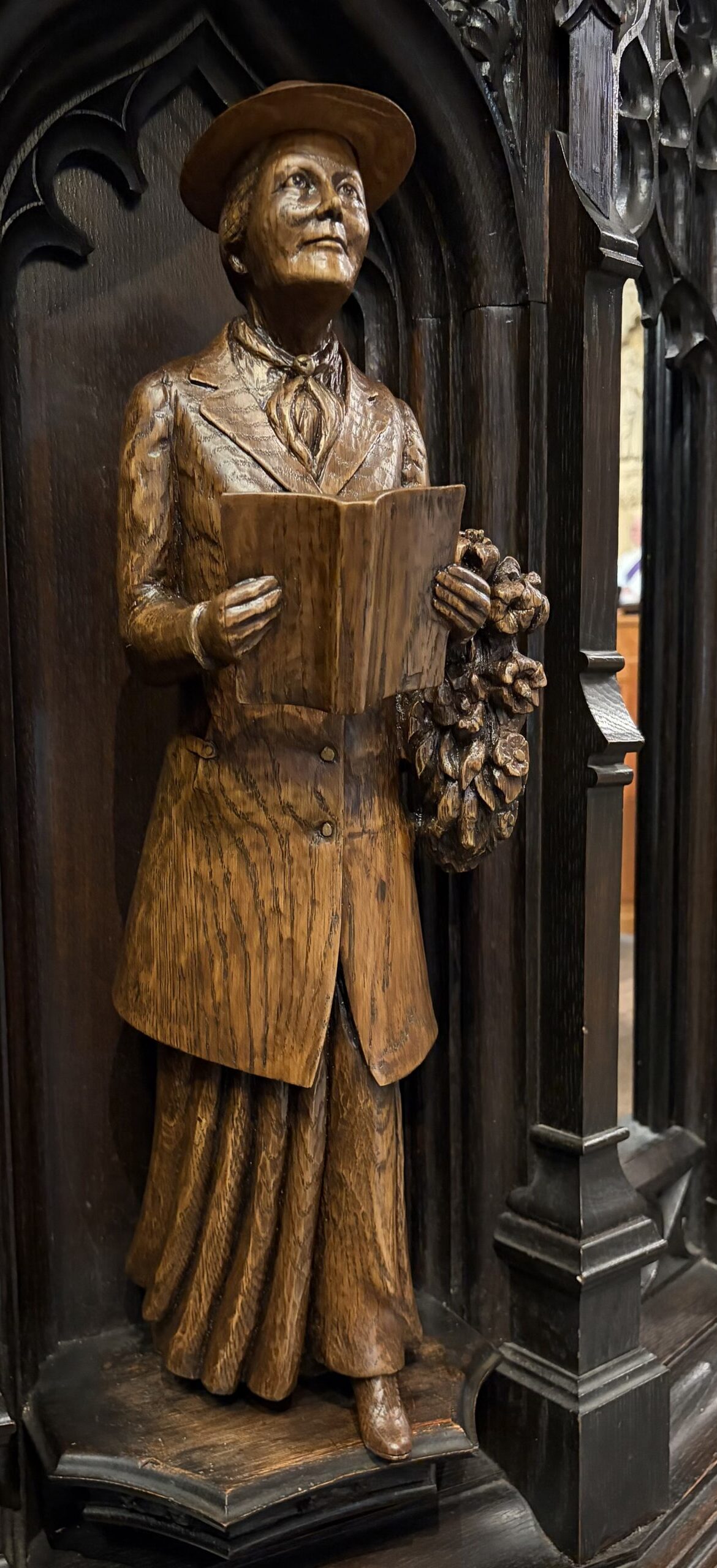
Pulpit statue of Vida Dutton Scudder by Ted Southwick

After the dedication of Emmanuel’s pulpit statue of Vida Dutton Scudder last month, we focus here on her relationship to Denison House, which was founded by the College Settlements Association in 1892. Managed by women, the house at 93 Tyler Street, a hub for social services and educational programs, welcomed emerging immigrant communities in Boston. The House’s first director was Emily Greene Balch (1867-1961), economist, sociologist, and winner of the 1946 Nobel Peace Prize. When Balch returned to teaching, Helena Dudley (1858-1932), labor and peace activist, and Vida Dutton Scudder (1861-1954), pacifist, educator, and Christian Socialist, became co-directors. Among her many notable achievements, Scudder helped to found the Episcopal Church Socialist League in 1911 and became chairperson of the Church League for Industrial Democracy (CLID). She was known for her conviction that philanthropy should be accompanied by social reform.

In the typescript “Early Days at Denison House,” Scudder reflected on its accomplishments over the forty-five years since its founding. Activities were full of joy: “Young college women were sharing the best that life had brought us”. While “labor troubles” and unemployment abounded early on, she asserted that “a zest for social reform glowed as steadily…as the welcoming fires” of the house. Scudder concluded this brief piece with:

Dubbed radical in many quarters, we went on our way undaunted; the early leaders of organized labor were our devoted and inspiring friends; a Federal Labor Movement meeting at the House and a study-circle concerned with economic problems to which sundry distinguished citizens belonged, are activities I like to remember….How conservative Boston reacted to our ardent centre of social thought and experiment is another story. There is no time to tell it here. But the young people connected with Denison House today are heirs of a fine tradition.*

–Mary Beth Clack, Mary Blocher, Cindy Coldren, Pat Krol, Liz Levin

*Records of Denison House, 1890-1984. Series I. HISTORY. “Early Days at Denison House” by Vida Scudder, 1937. (B-27, folder 1. Schlesinger Library, Radcliffe Institute, Harvard University, Cambridge, Mass.) Digitized copy consulted.

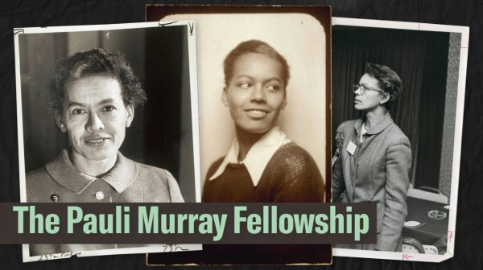
The Pauli Murray Fellowship


In October 2021, the Pauli Murray Fellowships were established by the American Civil Liberties Union (ACLU).

The Spring 2026 ACLU Magazine reported on two activists, Areej Qadeer and Ollie Henry, who were selected for the 18-month positions in non-profit management at the ACLU. Areej had been working in grassroots organizing in the American-Muslim community, serving on the Council of American-Islamic Relations’ legal team. Ollie’s work for reparations, advocating at the intersection of gender, disability, and race positioned her to support the ACLU’s initiatives in these areas. Part of their work had involved leading workshops for high school and college students at the ACLU National Advocacy Institute, which focused on building coalitions for intersectional legal work. Continue reading

“What is your hand in this?”

Commemorative concerts for America’s 250th anniversary will be dotting the musical landscape in 2026. An inventive program that may prove to be one of the most challenging for audiences has been launched by Davóne Tines and Ruckus, “a shapeshifting, collaborative, baroque ensemble with a visceral and playful approach to early music.” Sanders Theater hosted them on January 31, 2026, as part of their ten-cities tour.

Created by bass-baritone Davóne Tines, bassist Douglas Adam August Balliett, and Clay Zeller-Townson, founder of Ruckus, the program called “What is your hand in this?” recasts “Colonial and Revolutionary-era hymns, ballads, and Baroque compositions, on a musical journey that weaves through the pre-Civil War period, the Civil Rights era, and into the present day.” (Everyone 250 Continue reading

2026

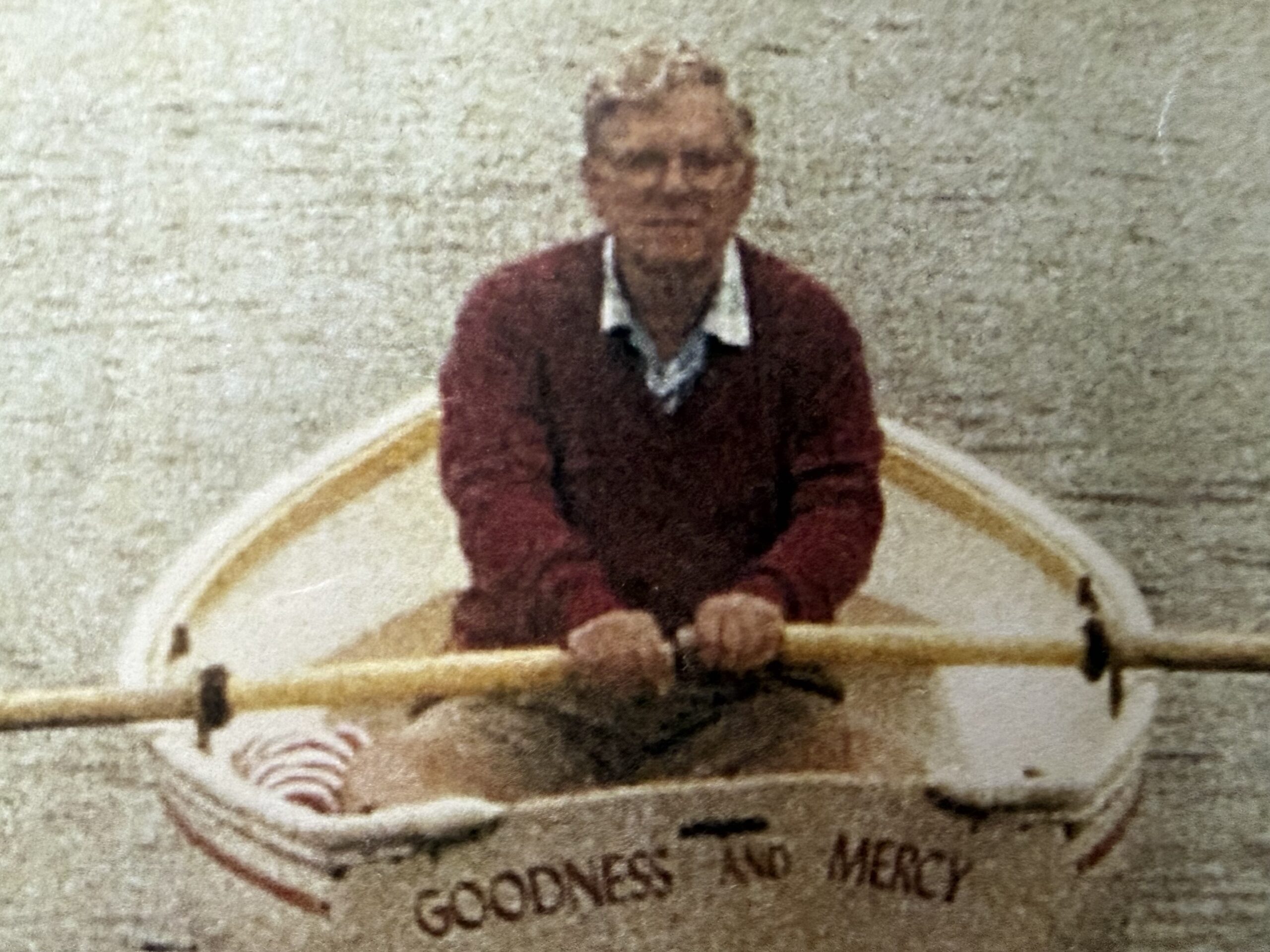
31 Jan.  We celebrated the life and ministry of our Senior Pastoral Assistant (his choice of title), The Rt. Rev. J. Clark Grew II, 10th Bishop of Ohio (1939-2025).  Our rector, family members, The Rev. Jennifer Daly, and The Rt. Rev. Mark Hollingsworth, Jr. spoke and were joined in the chancel by bishops Arthur B. Williams, Jr.; Julia Whitworth; Thomas J. Brown, and Alan M. Gates.  Dr. John Dilworth and violinist Daniella Maddon provided the musical offering.  See also the order of service and the livestream recording.

Clark Grew in his dinghy Goodness & Mercy

Pulpit statue of Vida Dutton Scudder by Ted Southwick

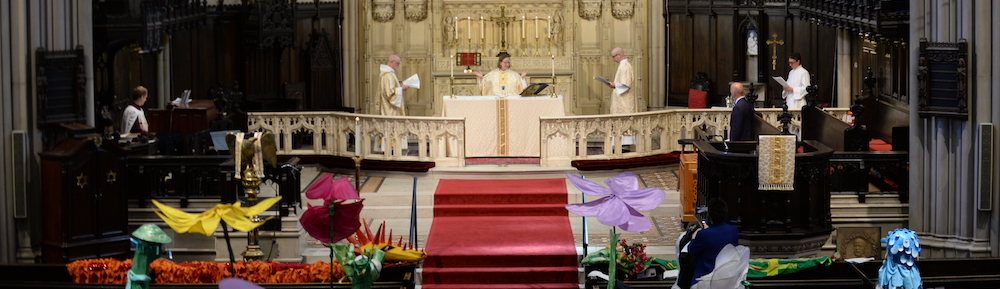
8 March. The Rt. Rev. Julia Whitworth visited us and dedicated Ted Southwick’s commissioned pulpit statue of Vida Dutton Scudder (1861-1954). Confirmed as Episcopalian by Phillips Brooks, she became a saint of The Episcopal Church, whose feast day is October 10.  She was a niece of publisher E.P. Dutton, who was the first clerk of our vestry, and of Horace Scudder, editor The Atlantic Monthly (1890-98).   She helped found in 1887 the College Settlements Association, which established Denison House for immigrants in the South Cove. In 1911 she joined the Socialist Party and founded the Episcopal Church Socialist League.  Her support in 1912 of striking textile workers in the Bread and Roses Strike drew criticism and threatened her teaching position at Wellesley College. Her 96 works religious, social, and literary topics can be downloaded from the Internet Archive.

The Fierce Urgency of Now

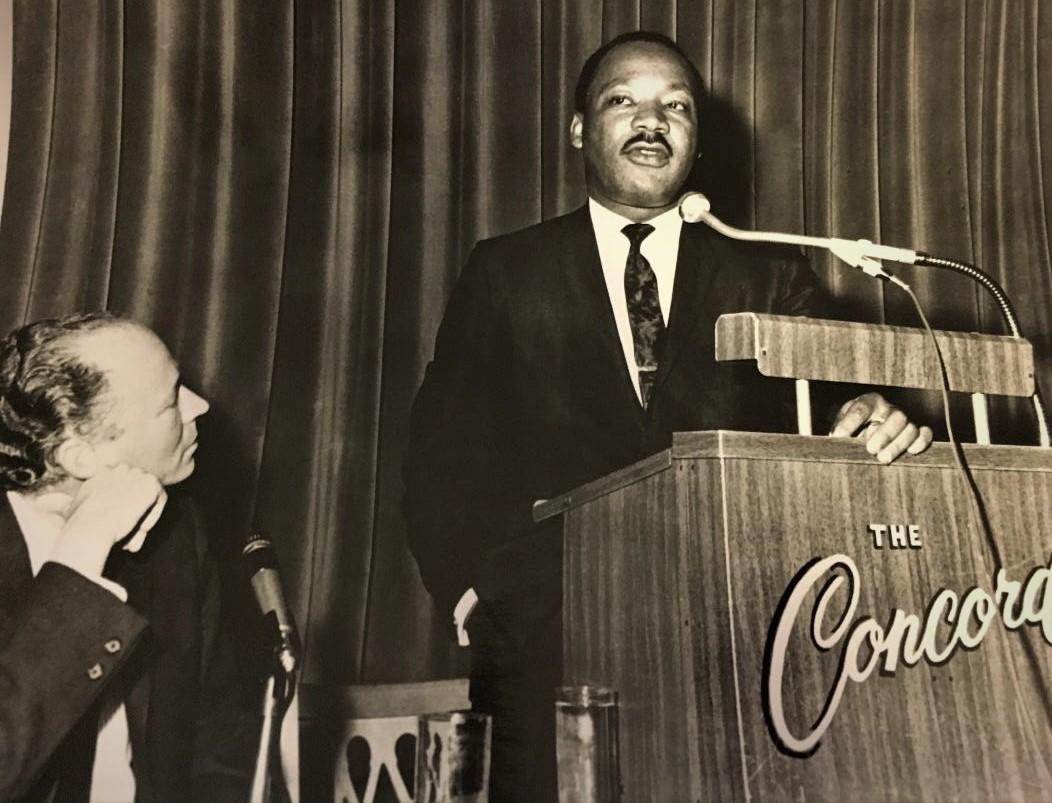
On Monday, January 19th, 2026, the 56th Annual Martin Luther King Jr. Memorial Breakfast will be held in Boston.

The MLK Breakfast Memorial Committee is comprised of representatives from St. Cyprian’s Episcopal Church and Union United Methodist Church. The event is the longest-running celebration of its kind in the U.S.; scholarships are provided each year to students from nine Boston public high schools.

Continue reading

Boston’s Home for Aged Colored Women

March 3, 2025

To honor women’s history this month, we turn to a story of little seen women in Boston at the time Emmanuel was being founded. The Boston Globe published an article about the discovery of a marker for the Home for Aged Colored Women (1860-1944) in Dorchester’s Cedar Grove Cemetery (From a mass grave in Boston, unearthing Black women’s lives” by Karilyn Crockett (February 3, 2025)

The Home, founded in 1860, was among the Boston institutions that offered shelter and support to women who did not have financial or other family support. In the case of the Home for Aged Colored Women, historical news accounts and the organization’s records (located at the Massachusetts Historical Society) state that women of color applied to the Home after not being welcomed at almshouses and other benevolent institutions.

We discovered that Emmanuel parishioners were benefactors of the Home from the 1860s onward (among them was Susan Coombs Dana (Mrs. Wiliam R. Lawrence).

We invite you to explore these sites which explore the Home’s history in more detail

The West End Museum site.

The National Park Service’s page about the Home.

–Mary Beth Clack, Mary Blocher, Cindy Coldren, Pat Krol, Liz Levin
For the Next Generation

February 17, 2025

During Black History Month, we invite you to read some of the works written by authors speaking to the next generation. Our suggestions include:

–Langston Hughes’s poem, “Mother to Son” (first published in 1922 in The Crisis, the official magazine of the National Association for the Advancement of Colored People (NAACP); in 1926, the poem was included in his Hughes’s poetry collection, The Weary Blues)

–James Baldwin’s “A Letter to My Nephew” (published as “My Dungeon Shook: Letter to My Nephew on the One Hundredth Anniversary of the Emancipation,” in The Fire Next Time (New York: Knopf Doubleday, 2013)

–Imani Perry’s Breathe: A Letter to My Sons (Boston: Beacon Press, 2019). Perry offers a layered meditation.

–Ta-Nehisi Coates’s Between the World and Me (New York: Random House, 2015)

–Mary Beth Clack, Mary Blocher, Cindy Coldren, Pat Krol, Liz Levin

A Reflection on Reparations for Holocaust Remembrance Day

February 3, 2025

We met Constance Holmes when we participated in the last fall’s Stolen Beam program.

Connie is a founding member of the Reparations Interfaith Coalition and serves on the Episcopal City Mission Reparations leadership team. Here is Connie’s meditation for us on Holocaust Remembrance Day, January 28, 2025. Continue reading

Small World(s): Emmanuel & Church of the Holy Spirit, Mattapan

January 7, 2025

Last Juneteenth some Emmanuelites attended the celebration at the Church of the Holy Spirit (CHS), Mattapan. Since that time, we discovered an essential connection between our church and CHS. In 1886, a generous gift of Annie Lawrence Lamb (1857-1950) enabled the founding of CHS which was dedicated to her father, Benjamin Smith Rotch (1817-1882). Benjamin Rotch was co-founder of the New Bedford Cordage Company and one of our church’s founding proprietors. He was a member of Emmanuel’s first vestry, one of the first convention delegates, and warden from 1880-1882. Appointed to the committee to obtain subscriptions for the building of the church in the 1860s, Rotch also served on the committee considering the enlargement of the church during the same period. Our Emmanuel website has wonderful descriptions of the family’s gifts, in particular, the Rotch reredos and communion table. Continue reading