
2026

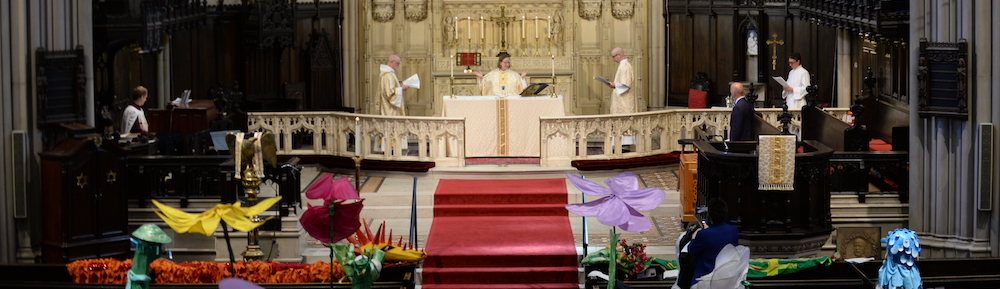
31 Jan.  We celebrated the life and ministry of our Senior Pastoral Assistant (his choice of title), The Rt. Rev. J. Clark Grew II, 10th Bishop of Ohio (1939-2025).  Our rector, family members, The Rev. Jennifer Daly, and The Rt. Rev. Mark Hollingsworth, Jr. spoke and were joined in the chancel by bishops Arthur B. Williams, Jr.; Julia Whitworth; Thomas J. Brown, and Alan M. Gates.  Dr. John Dilworth and violinist Daniella Maddon provided the musical offering.  See also the order of service and the livestream recording.
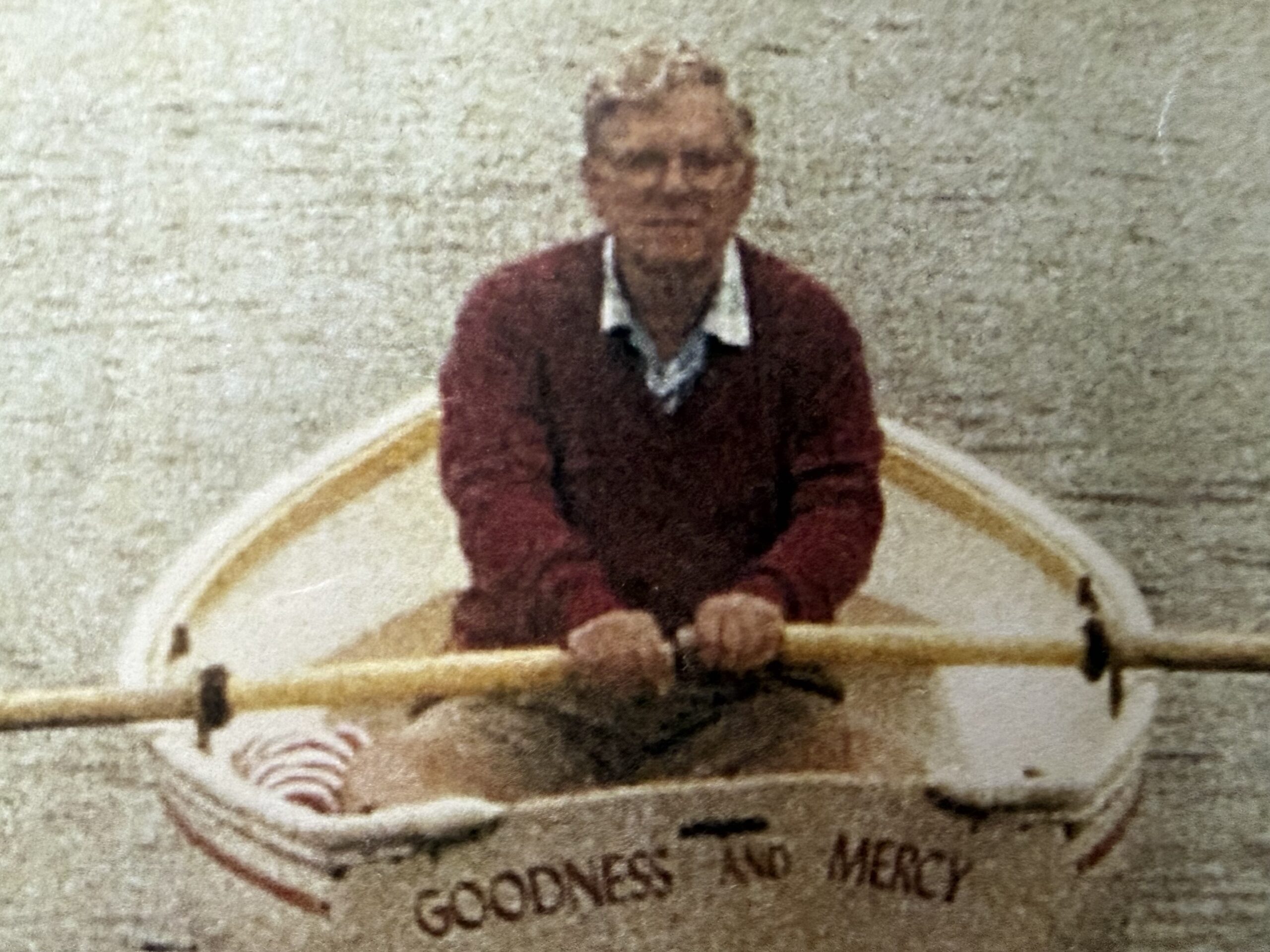
Clark Grew in his dinghy Goodness & Mercy
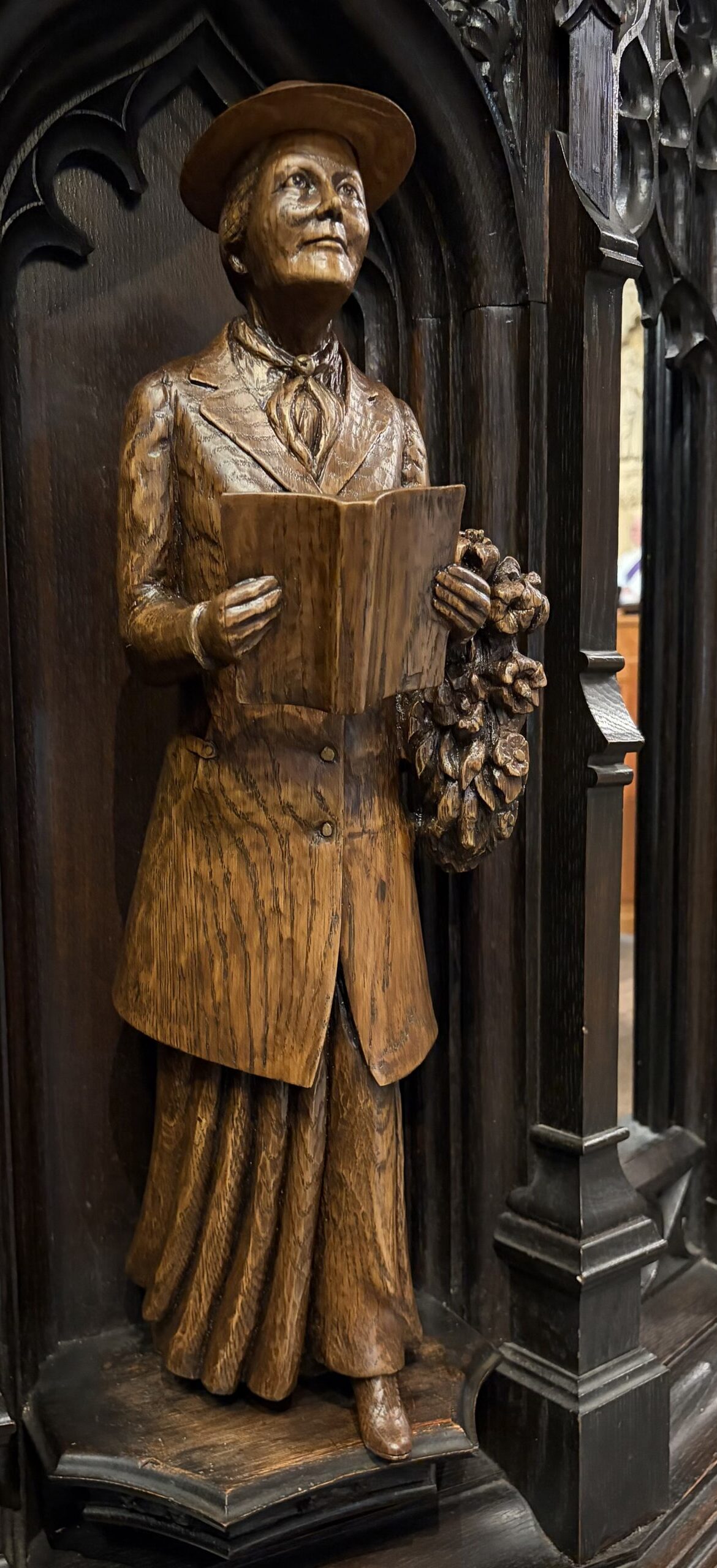
Pulpit statue of Vida Dutton Scudder by Ted Southwick

8 March. The Rt. Rev. Julia Whitworth visited us and dedicated Ted Southwick’s commissioned pulpit statue of Vida Dutton Scudder (1861-1954). Confirmed as Episcopalian by Phillips Brooks, she became a saint of The Episcopal Church, whose feast day is October 10.  She was a niece of publisher E.P. Dutton, who was the first clerk of our vestry, and of Horace Scudder, editor The Atlantic Monthly (1890-98).   She helped found in 1887 the College Settlements Association, which established Denison House for immigrants in the South Cove. In 1911 she joined the Socialist Party and founded the Episcopal Church Socialist League.  Her support in 1912 of striking textile workers in the Bread and Roses Strike drew criticism and threatened her teaching position at Wellesley College. Her 96 works religious, social, and literary topics can be downloaded from the Internet Archive.
1988

  • June.  Organist Michael Beattie joined Emmanuel Music for rehearsals in our Music Room of Peter Sellars‘ version of Mozart’s opera Le Nozze di Figaro, which played that summer in the PepsiCo Theater in Purchase NY.  Craig Smith conducted; Frank Kelley sang the part of Basilio; Jayne West, the Countess; and Susan Larson, Cherubino.
  • In her “Peace Pentecost” sermon at our Cathedral Church of St. Paul, poet Denise Levertov (1923-97) emphasized the connection between contemplation and action:  “If we neglect our inner lives, we destroy the sources of fruitful outer action.

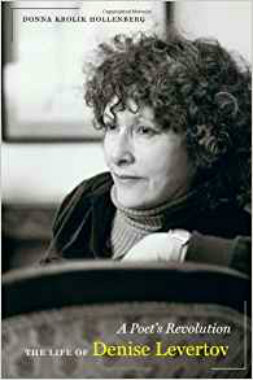
    Thanks to U. of California Press for this image.

    But if we do not act, our inner lives become mere monuments to egotism.” At Emmanuel she founded a Peace Group to foster the links between spiritual thought and action among her fellow parishioners.

Earlier in the decade she had been attracted to Emmanuel by our social-justice activities, beautiful music and liturgy, and rector Al Kershaw, who counseled her.  “He assured her that doubt was part of spiritual growth and the darkness she encountered might increase her sense of dependence and lead her to God,” says her biographer Dana Greene citing Denise’s diary entry for June 13, 1988.

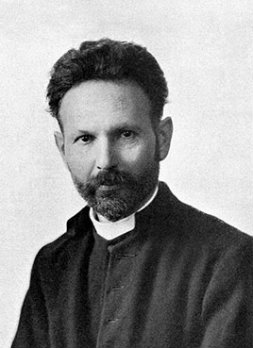
Denise’s father, Paul Philip Levertoff (1878–1954), born in Belarus, an early proponent of Messianic Judaism, took holy orders in the Anglican Church and preached wearing an alb with a tallit and kippa.

The Rev. Paul Philip Levertoff

In 1922 he had become director of what is now the London Diocesan Council for Work among the Jews and edited its quarterly journal, The Church and the Jews. He was a prolific writer on theological subjects in Hebrew, German, and English and translated into English the Midrash Sifre on Numbers (1926) and the Zohar  (1933).

See also:

  1. Dana Greene.  Denise Levertov:  A Poet’s Life.  Urbana IL:  U. of Illinois Press, 2012.
  2. Denise Levertov.  Making PeaceBreathing the Water.  NY:  New Directions, 1987.
  3. Donna Hollenberg.  A Poet’s Revolution: The Life of Denise Levertov. Berkeley: U of California Press, 2013.
  4. Paul A. Lacey and Anne Dewey, eds.  The Collected Poems of Denise Levertov.  NY: New Directions, 2013.
  5. Paul Philip Levertoff. Love and the Messianic Age.
  6. Timeline: 1994