Vida Dutton Scudder at Denison House


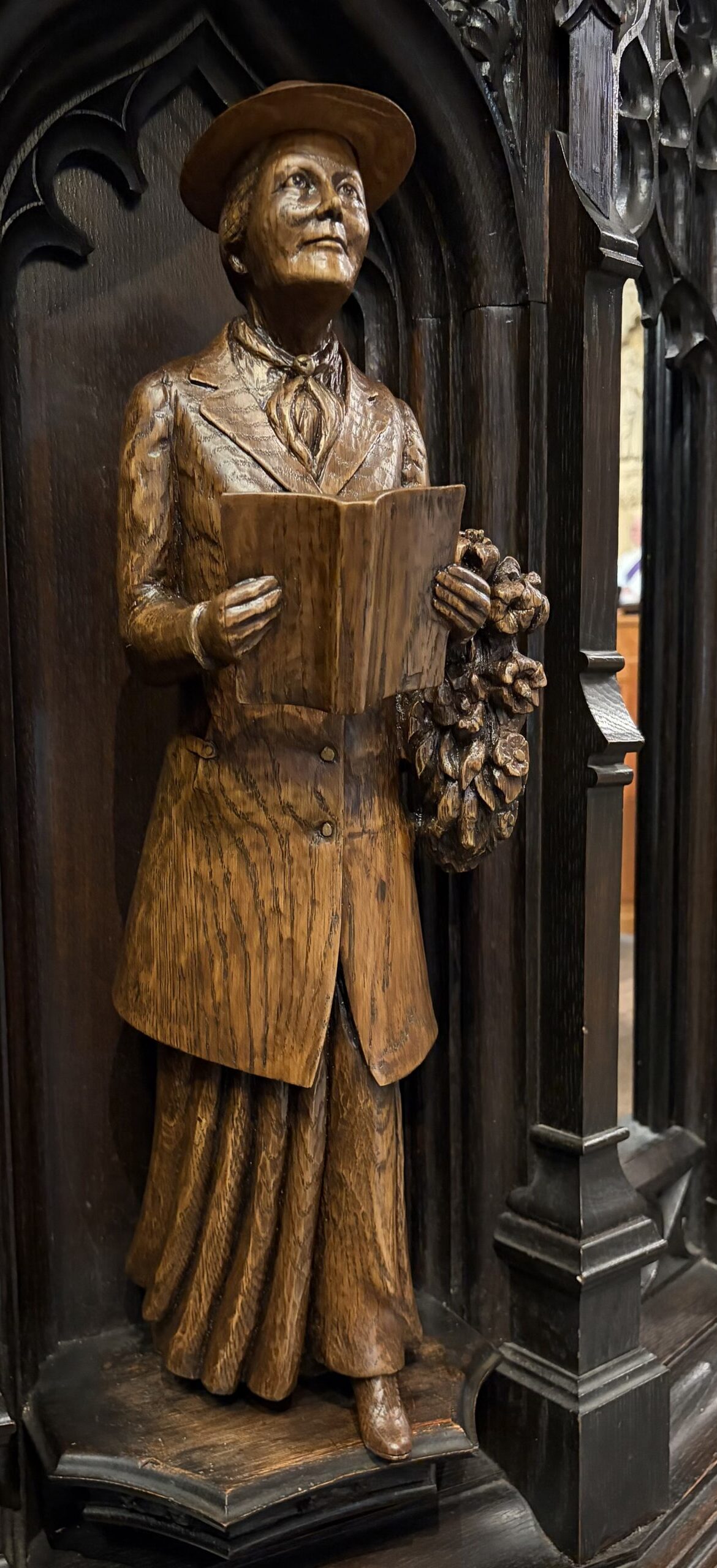
Pulpit statue of Vida Dutton Scudder by Ted Southwick

After the dedication of Emmanuel’s pulpit statue of Vida Dutton Scudder last month, we focus here on her relationship to Denison House, which was founded by the College Settlements Association in 1892. Managed by women, the house at 93 Tyler Street, a hub for social services and educational programs, welcomed emerging immigrant communities in Boston. The House’s first director was Emily Greene Balch (1867-1961), economist, sociologist, and winner of the 1946 Nobel Peace Prize. When Balch returned to teaching, Helena Dudley (1858-1932), labor and peace activist, and Vida Dutton Scudder (1861-1954), pacifist, educator, and Christian Socialist, became co-directors. Among her many notable achievements, Scudder helped to found the Episcopal Church Socialist League in 1911 and became chairperson of the Church League for Industrial Democracy (CLID). She was known for her conviction that philanthropy should be accompanied by social reform.

In the typescript “Early Days at Denison House,” Scudder reflected on its accomplishments over the forty-five years since its founding. Activities were full of joy: “Young college women were sharing the best that life had brought us”. While “labor troubles” and unemployment abounded early on, she asserted that “a zest for social reform glowed as steadily…as the welcoming fires” of the house. Scudder concluded this brief piece with:

Dubbed radical in many quarters, we went on our way undaunted; the early leaders of organized labor were our devoted and inspiring friends; a Federal Labor Movement meeting at the House and a study-circle concerned with economic problems to which sundry distinguished citizens belonged, are activities I like to remember….How conservative Boston reacted to our ardent centre of social thought and experiment is another story. There is no time to tell it here. But the young people connected with Denison House today are heirs of a fine tradition.*

–Mary Beth Clack, Mary Blocher, Cindy Coldren, Pat Krol, Liz Levin

*Records of Denison House, 1890-1984. Series I. HISTORY. “Early Days at Denison House” by Vida Scudder, 1937. (B-27, folder 1. Schlesinger Library, Radcliffe Institute, Harvard University, Cambridge, Mass.) Digitized copy consulted.
2026

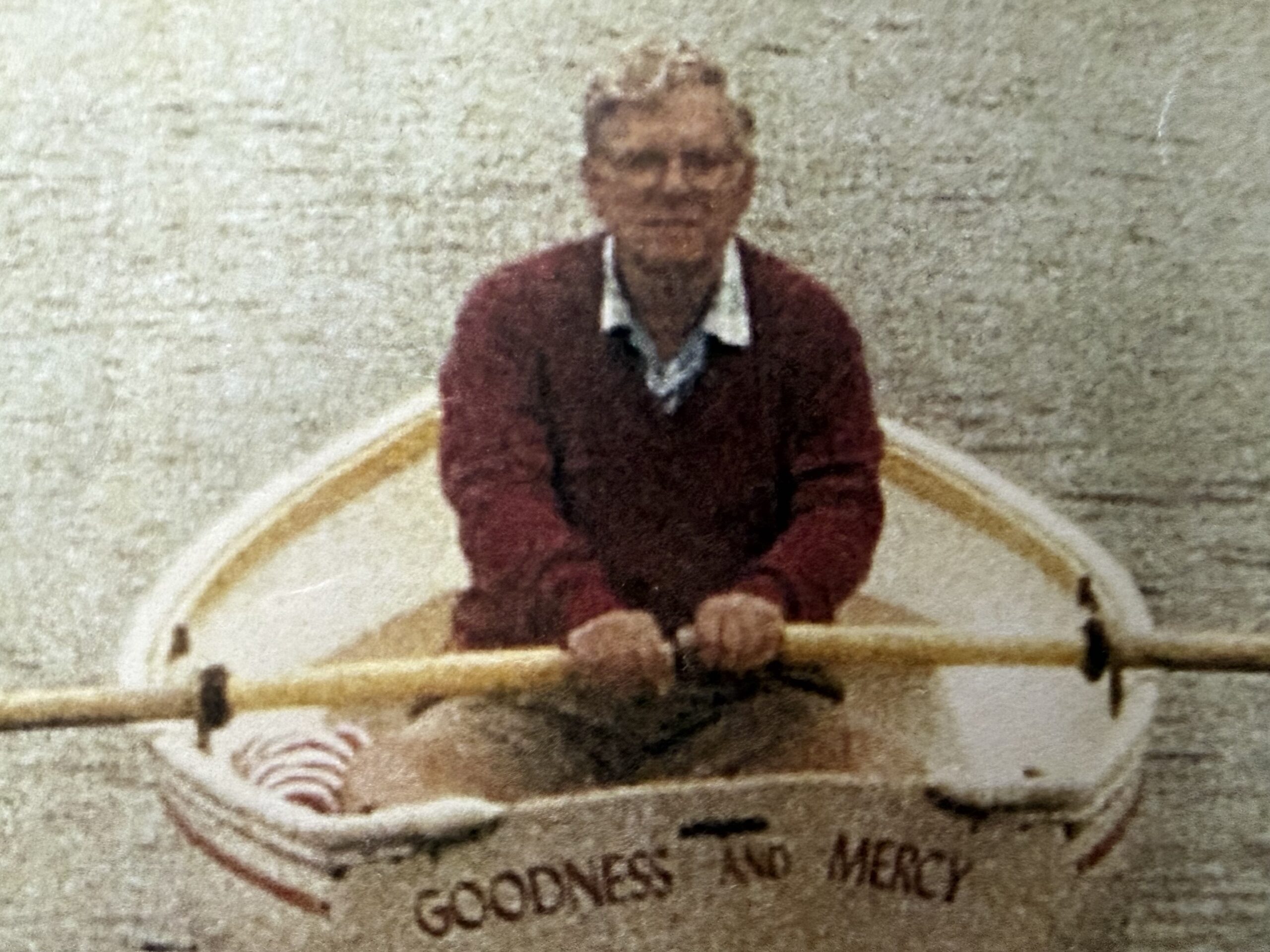
31 Jan.  We celebrated the life and ministry of our Senior Pastoral Assistant (his choice of title), The Rt. Rev. J. Clark Grew II, 10th Bishop of Ohio (1939-2025).  Our rector, family members, The Rev. Jennifer Daly, and The Rt. Rev. Mark Hollingsworth, Jr. spoke and were joined in the chancel by bishops Arthur B. Williams, Jr.; Julia Whitworth; Thomas J. Brown, and Alan M. Gates.  Dr. John Dilworth and violinist Daniella Maddon provided the musical offering.  See also the order of service and the livestream recording.

Clark Grew in his dinghy Goodness & Mercy

Pulpit statue of Vida Dutton Scudder by Ted Southwick

8 March. The Rt. Rev. Julia Whitworth visited us and dedicated Ted Southwick’s commissioned pulpit statue of Vida Dutton Scudder (1861-1954). Confirmed as Episcopalian by Phillips Brooks, she became a saint of The Episcopal Church, whose feast day is October 10.  She was a niece of publisher E.P. Dutton, who was the first clerk of our vestry, and of Horace Scudder, editor The Atlantic Monthly (1890-98).   She helped found in 1887 the College Settlements Association, which established Denison House for immigrants in the South Cove. In 1911 she joined the Socialist Party and founded the Episcopal Church Socialist League.  Her support in 1912 of striking textile workers in the Bread and Roses Strike drew criticism and threatened her teaching position at Wellesley College. Her 96 works religious, social, and literary topics can be downloaded from the Internet Archive.

Being Faithful

Proper 20C, 18 September 2022. The Very Rev. Pamela L. Werntz

Jeremiah 8:18-9:1. The summer is ended and we are not saved.
1 Timothy 2:1-7. “First of all, I urge that supplications, prayers, intercessions, and thanksgivings be made for everyone.
Luke 16:1-13. You cannot serve God and wealth.

O God of love, grant us the strength, the wisdom and the courage to seek always and everywhere after truth, come when it may, and cost what it will.


Welcome to this grand sanctuary, this haven of beauty, whether it is surrounding you because you are here in person, or you’re seeing it online again through the lenses of cameras. Welcome to this magnificent community whose mission is to welcome you, no matter how long you’ve been here, no matter how long you’ve been away, and wherever you are on your spiritual journey, even and especially if you are not in such a good place! Welcome to a gathering of people whose mission is also to love you just the way you are and love you too much to let you stay that way! Welcome to a church that is very likely to change you for the better. Welcome to a worship service in which the readings are usually challenging and sometimes confounding, the prayers of the people are often disturbing, and the music is reliably lovely! Welcome to a community long on questions and short on answers, and yet, one where one beggar can always show another beggar where to get some bread. Although we may have been apart for a time, this is not, “Welcome back”; this is, as I like to say, “Welcome forward”. Continue reading

1923

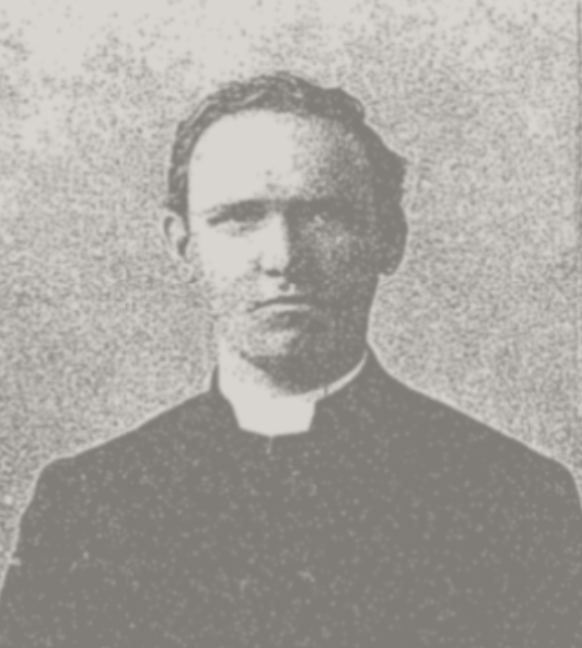
The Rev. Percy Tom Edrop (1883-1945) became assistant to Elwood Worcester and began to preach at our afternoon services.  Having immigrated as a teenager from Birmingham, England, he had worked his way up in journalism to become city editor of the New York American. He served at Emmanuel until June 1926, when he became rector of All Saints, Belmont MA. In 1929  he became Dean of Christ Church Cathedral in Springfield MA.

1905

Tuberculosis Class, organized by Joseph H. Pratt MD and Lesley H. Spooner, MD., reached 308 patients in its first year.

The Rev. Dr. Samuel McComb (1864–1938) became Associate Rector. Raised in Belfast, Ireland, with a doctorate from Oxford University, he had taught church history at Queens University, Ontario, and served as a Presbyterian minister in England and New York City before his ordination in the Episcopal Church. He became a spokesman for the Emmanuel Movement during its active years.  See also 1909 and his many works available on Amazon and full text from Hathi Trust.


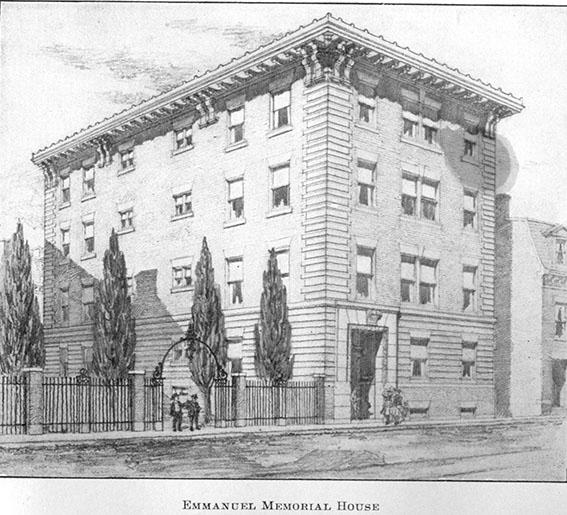
November 23.  Emmanuel Memorial House was dedicated.  Given by Harriet Pitts Weeks (Mrs. Silas Reed) Anthony in memory of her father Andrew Gray Weeks, whose widow gave its playground.  It was located at 11 Newcomb St. around the corner from 1906 Washington St., where our diocese maintained a mission in the South End, Church of the Ascension (now Grant African Methodist Episcopal Church).  Through the Emmanuel House Committee, Emmanuel parishioners helped with the kindergarten and summer play school for neighborhood children.  They also ran homemaking and other classes and a gymnasium for Ascension parishioners. Emmanuel Memorial House567