Vida Dutton Scudder at Denison House


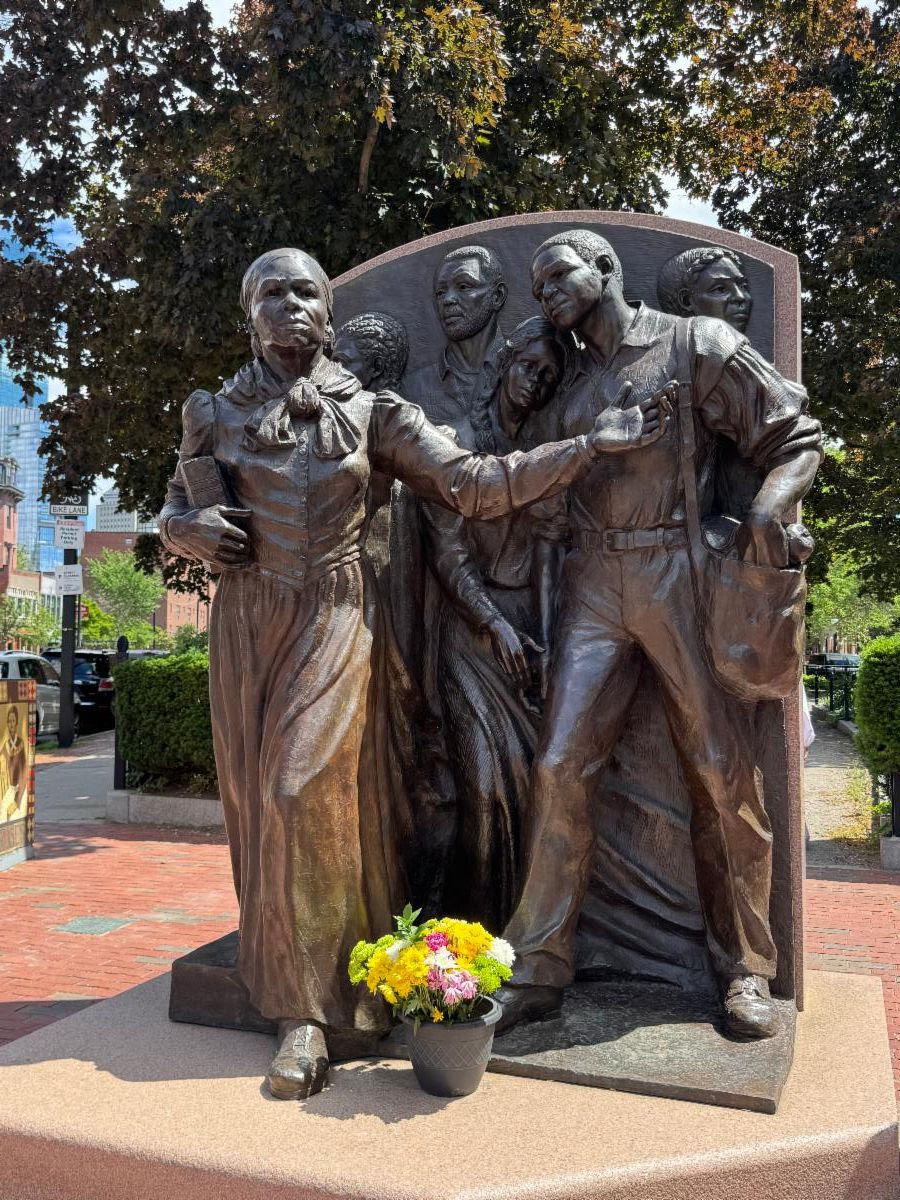
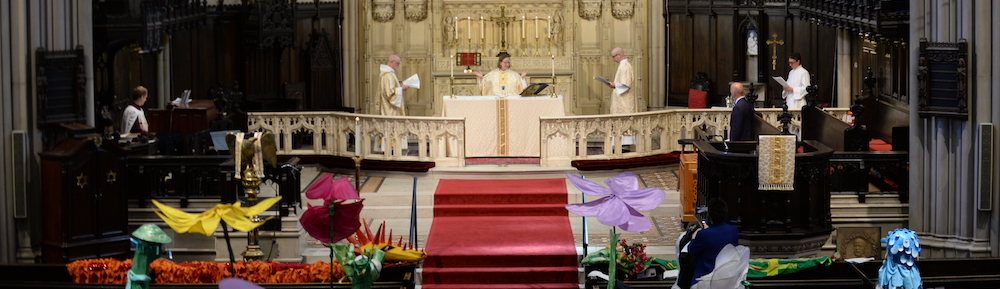
Pulpit statue of Vida Dutton Scudder by Ted Southwick

After the dedication of Emmanuel’s pulpit statue of Vida Dutton Scudder last month, we focus here on her relationship to Denison House, which was founded by the College Settlements Association in 1892. Managed by women, the house at 93 Tyler Street, a hub for social services and educational programs, welcomed emerging immigrant communities in Boston. The House’s first director was Emily Greene Balch (1867-1961), economist, sociologist, and winner of the 1946 Nobel Peace Prize. When Balch returned to teaching, Helena Dudley (1858-1932), labor and peace activist, and Vida Dutton Scudder (1861-1954), pacifist, educator, and Christian Socialist, became co-directors. Among her many notable achievements, Scudder helped to found the Episcopal Church Socialist League in 1911 and became chairperson of the Church League for Industrial Democracy (CLID). She was known for her conviction that philanthropy should be accompanied by social reform.

In the typescript “Early Days at Denison House,” Scudder reflected on its accomplishments over the forty-five years since its founding. Activities were full of joy: “Young college women were sharing the best that life had brought us”. While “labor troubles” and unemployment abounded early on, she asserted that “a zest for social reform glowed as steadily…as the welcoming fires” of the house. Scudder concluded this brief piece with:

Dubbed radical in many quarters, we went on our way undaunted; the early leaders of organized labor were our devoted and inspiring friends; a Federal Labor Movement meeting at the House and a study-circle concerned with economic problems to which sundry distinguished citizens belonged, are activities I like to remember….How conservative Boston reacted to our ardent centre of social thought and experiment is another story. There is no time to tell it here. But the young people connected with Denison House today are heirs of a fine tradition.*

–Mary Beth Clack, Mary Blocher, Cindy Coldren, Pat Krol, Liz Levin

*Records of Denison House, 1890-1984. Series I. HISTORY. “Early Days at Denison House” by Vida Scudder, 1937. (B-27, folder 1. Schlesinger Library, Radcliffe Institute, Harvard University, Cambridge, Mass.) Digitized copy consulted.

The Pauli Murray Fellowship


In October 2021, the Pauli Murray Fellowships were established by the American Civil Liberties Union (ACLU).

The Spring 2026 ACLU Magazine reported on two activists, Areej Qadeer and Ollie Henry, who were selected for the 18-month positions in non-profit management at the ACLU. Areej had been working in grassroots organizing in the American-Muslim community, serving on the Council of American-Islamic Relations’ legal team. Ollie’s work for reparations, advocating at the intersection of gender, disability, and race positioned her to support the ACLU’s initiatives in these areas. Part of their work had involved leading workshops for high school and college students at the ACLU National Advocacy Institute, which focused on building coalitions for intersectional legal work. Continue reading

Racial Disparities in Health Care

The Boston Globe recently reported data related to the widening gap in life expectancy between Boston’s Black residents and the city’s other racial and ethnic groups.  Growing from 3.3 years to almost 7 years, it has doubled in the past decade according to new data from the Boston Public Health Commission. Continue reading

The Bay State Banner’s Black History Month Programs

In its 60th Anniversary Forum Series The Bay State Banner presented on February 12 “The State of Black America.” Two open forums complemented the newspaper’s special essay section to commemorate Boston and black history. WGBH sponsored mid-day talks at the Boston Public Library moderated by the Banner’s editor Ron Mitchell. Panelists included Dr. Noelle Trent, executive director of the Museum of African American History of Boston & Nantucket, who spoke about the effort to restore last year’s funding cuts from the  Institute of Library and Museum Services. Because black museums are grassroots efforts, the funding has been crucial to the health of the organization.  With the community activated an appeal was filed, which resulted in an injunction and restoration of funding. She also elaborated on how other American black museums have contributed to laying the foundation for African American museum scholarship. Continue reading

“What is your hand in this?”

Commemorative concerts for America’s 250th anniversary will be dotting the musical landscape in 2026. An inventive program that may prove to be one of the most challenging for audiences has been launched by Davóne Tines and Ruckus, “a shapeshifting, collaborative, baroque ensemble with a visceral and playful approach to early music.” Sanders Theater hosted them on January 31, 2026, as part of their ten-cities tour.

Created by bass-baritone Davóne Tines, bassist Douglas Adam August Balliett, and Clay Zeller-Townson, founder of Ruckus, the program called “What is your hand in this?” recasts “Colonial and Revolutionary-era hymns, ballads, and Baroque compositions, on a musical journey that weaves through the pre-Civil War period, the Civil Rights era, and into the present day.” (Everyone 250 Continue reading

Honoring Absalom Jones

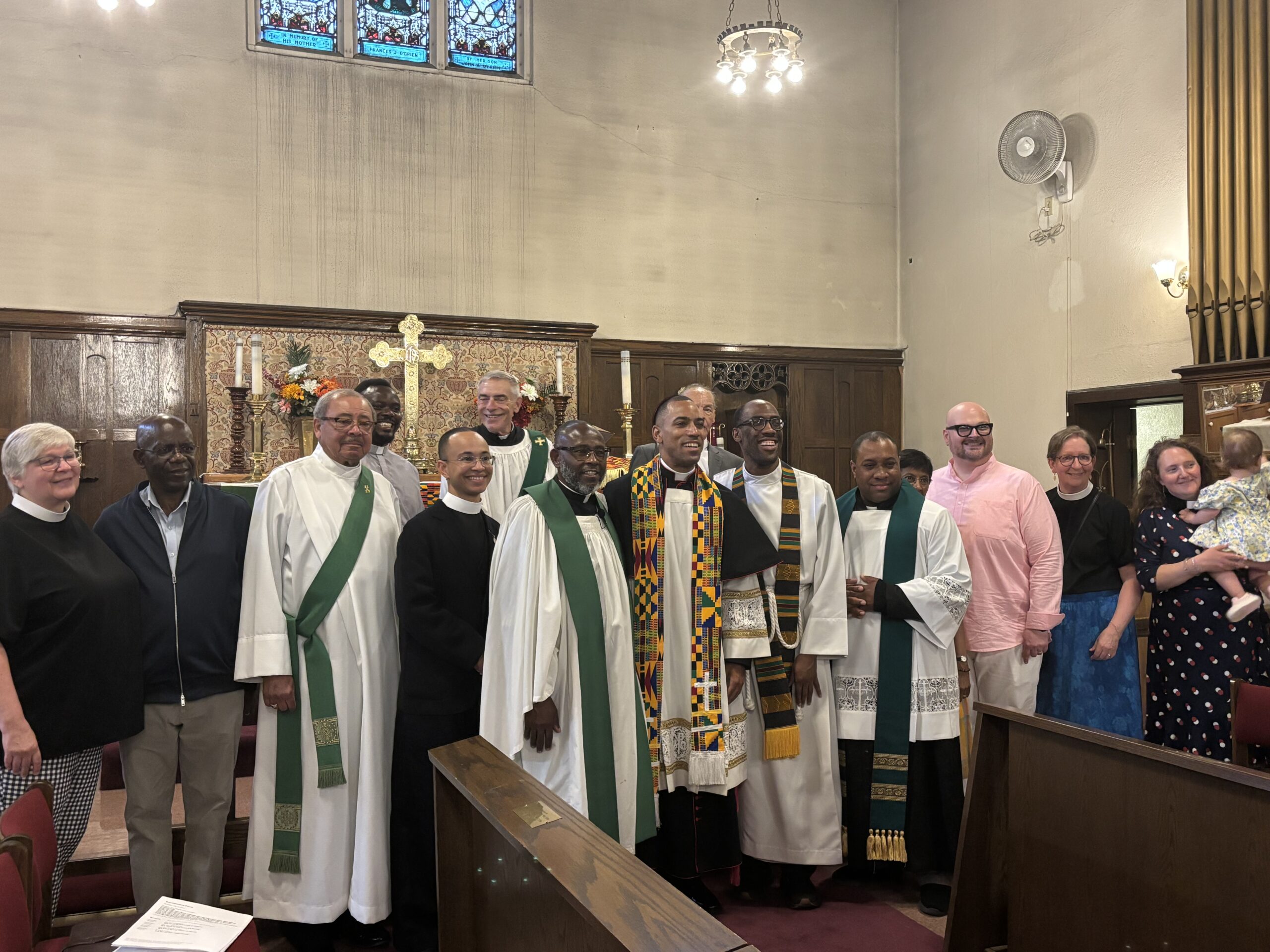
Known as the “Black Bishop of the Episcopal Church,” Absalom Jones’s feast day is February 13. Following tradition, numerous Episcopal churches and dioceses are holding commemorative services. The Cathedral Church of St. Paul in Boston announced that our diocese’s celebration would be held at 4pm on February 14, 2026, with the Rt. Rev. Julia E. Whitworth presiding and the Rev. Canon Dr. Kelly Brown Douglas preaching. Continue reading

The Fierce Urgency of Now

On Monday, January 19th, 2026, the 56th Annual Martin Luther King Jr. Memorial Breakfast will be held in Boston.

The MLK Breakfast Memorial Committee is comprised of representatives from St. Cyprian’s Episcopal Church and Union United Methodist Church. The event is the longest-running celebration of its kind in the U.S.; scholarships are provided each year to students from nine Boston public high schools.

Continue reading

Love & Justice: Quotes for the New Year

We write today with two inspiring texts in mind, our reverend Pam’s Christmas Eve sermon, and Coretta Scott King’s words displayed in the 1965 Freedom Plaza surrounding our city’s Embrace statue.

From The Rev. Pam Werntz’ sermon, December 24, 2025, on light and darkness, grace and love, and the hope we need in our world:

The light doesn’t eliminate the darkness; it shines in the darkness. It offers orientation, direction, hope, and the possibility of seeing differently, of finding a way forward.…And this light not abstract or distant….This light has pitched a tent among us, has taken up residence in our neighborhoods, in our world, in our lives, in our hearts. Continue reading

An Artist’s Sketchbook of the South End

Church of St. Augustine & St. Martin on Lenox St. in Boston’s South End by AR Crite

For a respite from the bustle of the holidays, a visit to the Gardner Museum was in order. There, in the exhibit Allan Rohan Crite: Urban Glory, we learned of the project that Crite completed as an artist in residence at the Museum of African American History on Beacon Hill. Continue reading

Reparations Summit III, November 8, 2025

Over 80 people attended the Reparations Summit.  The Episcopal City Mission (ECM) issued its message of gratitude to all who made the gathering possible.

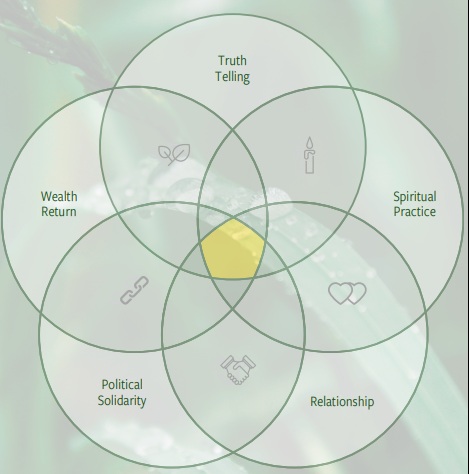
On behalf of ECM, Christ Church Cambridge, and the Reparations Summit Planning Team, which was made up of clergy and lay leaders from across Massachusetts, they extended deep appreciation to all who joined in providing dedicated support, thoughtful contributions, and the logistical care that helped make the Summit a successful gathering. They are hoping to build a movement of faith toward liberation and reparations — a movement grounded in truth-telling, community, and courageous love. Continue reading