
 More recently, the Racial Justice Working Group deepened its understanding of the essence, practices, and spiritual underpinnings of reparations work by attending the May-June 2026 Sacred Reckonings program, sponsored by Episcopal City Mission and the Reparations Interfaith Coalition.
We were inspired by the leaders of the program who have years of experience in social justice organizing and education for faith communities. We were inspired by the commitment of the participants who represented churches and faith-centered groups at various stages in the journey of repair. We witnessed the power of approaching the work with active listening, humility, curiosity, and good will. Our time together was punctuated by song and silence; by activities that drew upon feeling as well as thinking; and by experiences of remembering the past and dreaming of a better future.
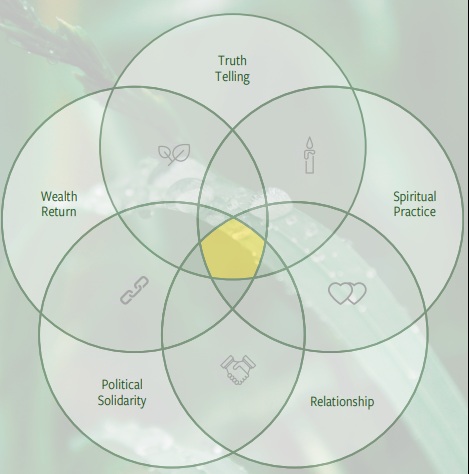
A tangible outcome from the program was our adoption of the Sacred Reckonings framework (more on this soon), a process-oriented way of engaging with reparations work that may be applied in many faith-based organizations and groups.
The framework and our introduction of it took place at our July 19, 2026, Chapel Camp. We will write more soon about the session that day and how Emmanuelites who attended contributed to our growing awareness and knowledge of this sacred work.
–Mary Beth Clack, Joel Anderle, Mary Blocher, Cindy Coldren, Ben Ericson, Pat Krol, Liz Levin