Founding of This Blog

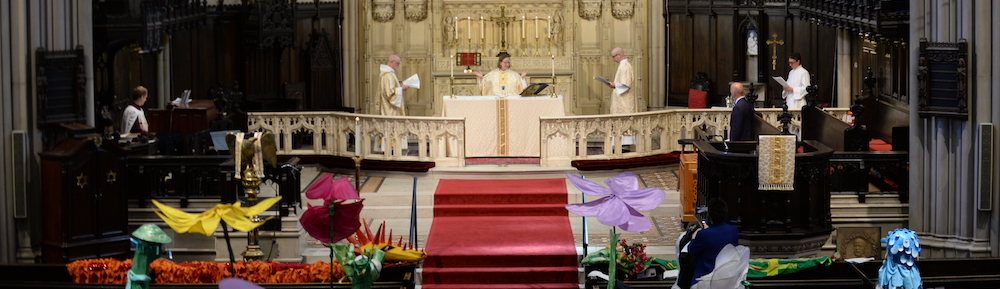
While our rector Pamela Werntz traveled on her 2013 sabbatical, we also had opportunities to explore Spirituality and the Arts at Emmanuel (thanks to the generosity of the Lilly Foundation). A collaboration with Lesley University’s Expressive Arts Therapy program seemed like a perfect means of enriching the church’s mission for using the arts as vehicle for healing and spiritual growth. On April 7, 2013, faculty from Lesley joined us for the service and offered a stimulating presentation about their program and ideas for working with Emmanuel.

In order to build upon this exciting beginning, a group of Lesley University faculty met with representatives from Emmanuel to discuss our future collaborations. Between these two meetings, the bombings at The Boston Marathon resulted in feelings of pain, loss, fear, and anger. The group decided its first event should involve the healing power of creativity in addressing these wounds, and we called it “When Words Are Not Enough.”  Over the years since then our Expressive Therapy Interns have recorded their thoughts about their experiences at Emmanuel in this blog.
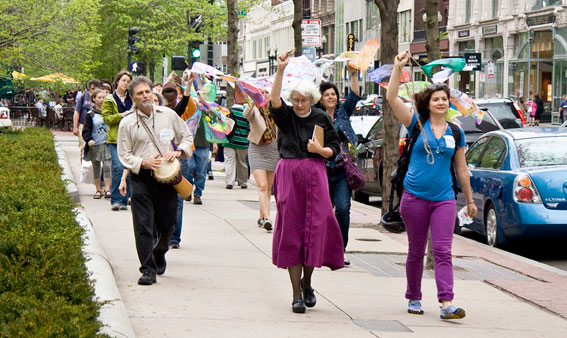
Participants in "Words Are Not Enough" carry prayer flags to the Boston Marathon bombing memorial site in Copley Square.

The Rev. Susan Ackley, our Sabbatical Priest/Artist-in-Residence, and participants in “Words Are Not Enough” carry prayer flags down Newbury Street to the Boston Marathon bombing memorial site in Copley Square.
1945

  • 8 May. Germans surrendered, leading to the end of World War II in Europe.
  • June.  Rector P. E. Osgood preached his last sermon at Emmanuel.
  • 15 July.  The Rev. Dr. H. Robert Smith, formerly of Grace Church, Newton MA, accepted the position of Minister-in-Charge to serve until a new rector could be called.
  • 6 & 9 August. US dropped atomic bombs on Hiroshima and Nagasaki, leading to Japanese  surrender a week later.
  • October.  After many years in charge of our Church School, Elizabeth Varney departed, and Nancy Currier took over.
  • 28 November.  The vestry assigned the church’s reading rights at the Boston Athenæum to rector-elect, The Rev. Robert Gifford Metters. For more about his tenure, please see the chapter on him in Emmanuel Church, 1860-1960: The First Hundred Years.

1914


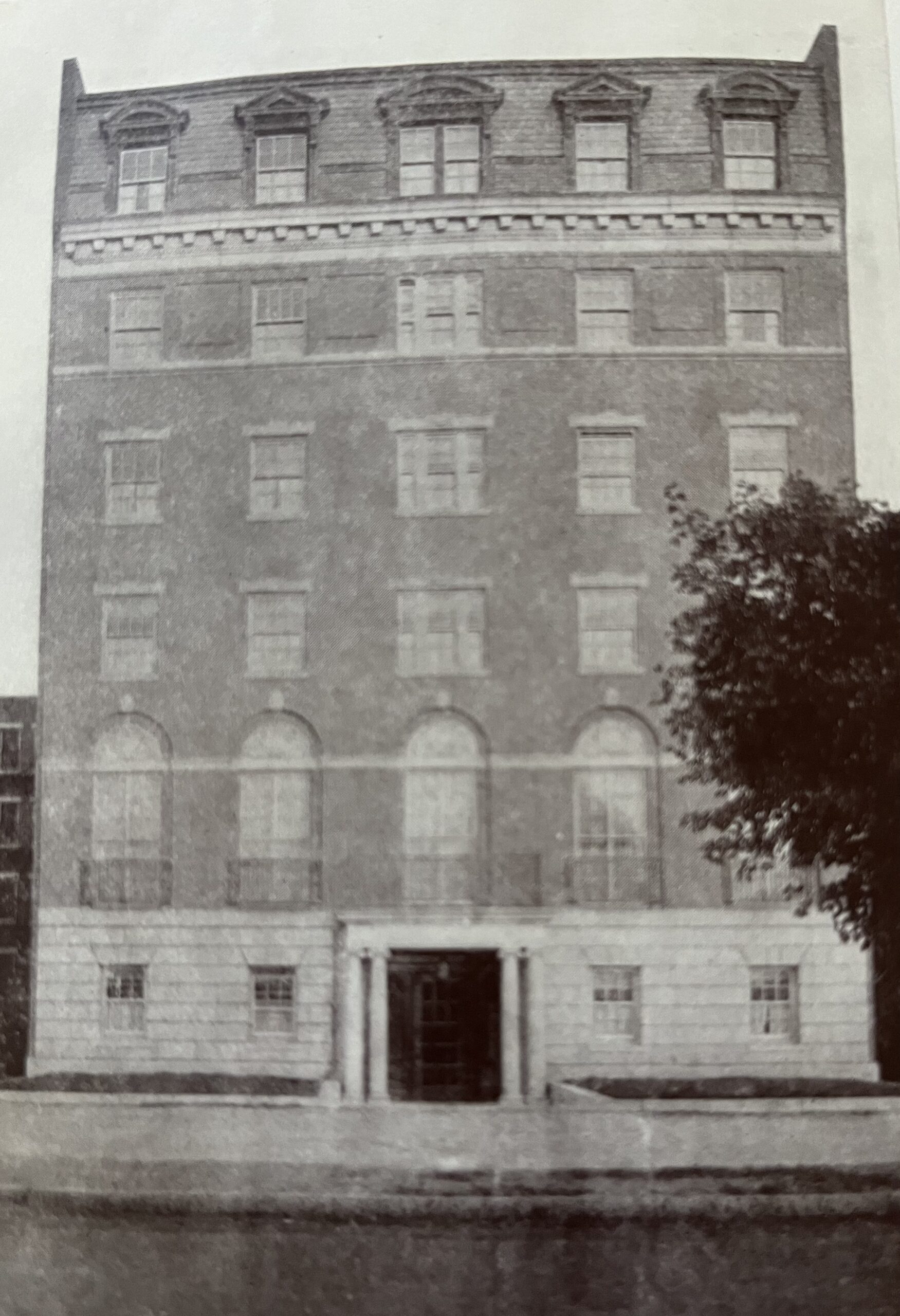
The Students’ House Corporation, under the direction of Mary S. Holmes and Charlotte Upham Baylies, built at 96 The Fenway a home for our Students’ House, which had been in rented quarters since its inception in 1899. They engaged architects Kilham & Hopkins, raised a large portion of its construction cost ($124K), and secured a mortgage for the remainder.  The building is now Kerr Hall, a Northeastern University dormitory.


October 6.  About a thousand people attended the funeral service for financier, philanthropist, and parishioner Gardiner Martin Lane (born 1859).  The Rev. Dr. Elwood Worcester, The Rt. Rev. William Lawrence,  The Rev. John W. Suter of Winchester, and The Rev. Prescott Evarts from Lane’s Harvard Class of 1881 officiated.  Pallbearers included President  A. Lawrence Lowell of Harvard, Sen. Henry Cabot Lodge, Charles Francis Adams, and several of his partners from Lee Higginson & Co.. Lynnwood Farnum played a Tchaikovsky funeral march and “Dead March” from Handel’s “Saul”. The boys choir sang “Abide with me” and “The strife is over”.

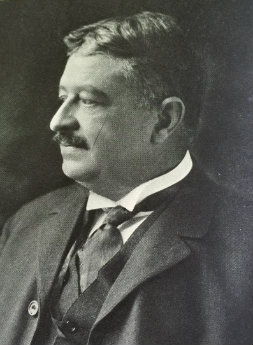
Gardiner Martin Lane from Harvard College Class of 1881 biography of him in the papers of Katharine Lane Weems at the Schlesinger Library, Radcliffe.

As treasurer of the New England chapter of the International Red Cross, Lane collected and distributed relief funds for the Salem fire (1914), the San Francisco earthquake (1906), and other disasters.  Appointed trustee of the Museum of Fine Arts in 1906, and elected its president in 1907, he oversaw its move from Copley Square to the Evans Building on Huntington Ave., which was designed by Emmanuelite Guy Lowell.  Spearheading the Museum’s fundraising effort for the new facility, Lane said, “A mere collection of beautiful objects is of little value unless seen, appreciated, and understood by many.”

Gardiner was born in Cambridge in 1859 to Fannie Bradford and Harvard philologist George Martin Lane, who became the first Harvard professor to receive a pension. Gardiner graduated from Harvard in 1881 and married Emma Louise, a daughter of Basil L. Gildersleeve, his father’s colleague at Johns Hopkins U.. The Lanes are buried in Mt. Auburn Cemetery’s Lot 1727 on Yarrow Path. His widow and daughter Katharine Lane Weems, were parishioners for years after his death and generous benefactors of Emmanuel.

See also our pages World War I Memorial and Katharine Lane Weems.

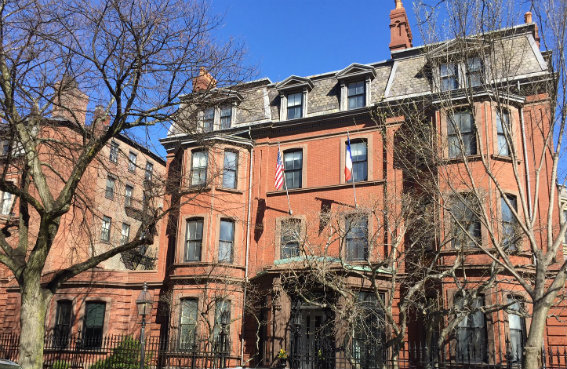
The Lanes’ home at 53 Marlborough is now the French Cultural Center.

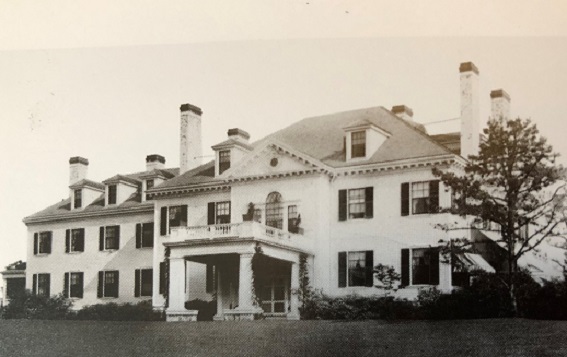
The Lanes’ summer house, The Chimneys, in Manchester by the Sea, MA was designed by Emma G. Lane’s brother Raleigh C. Gildersleeve.

1906

Camp Lowell was established by the shores of Lake Annabessacook in Winthrop ME to provide a summer camp for the choir boys of Emmanuel and  Church of the Redeemer, Chestnut Hill.  Boys from our mission Church of the Ascension also attended for two weeks in its first summer.  The camp, which had sleeping accomodations for 28 campers and 2 staff, was named in memory of Charles Lowell, late treasurer of Emmanuel.  Its trusttees were Charles H. Kip, John Lowell, and William BlodgettJohn Collins Bossidy famously toasted, “Boston, the land of the bean and the cod / where Lowells speak only to Cabots / and Cabots talk only to God,” but it was no doubt belied by the fellowship of Emmanuel, where Walter Cabot Baylies picked up Charles Lowell’s baton and served as warden from 1907-1935.

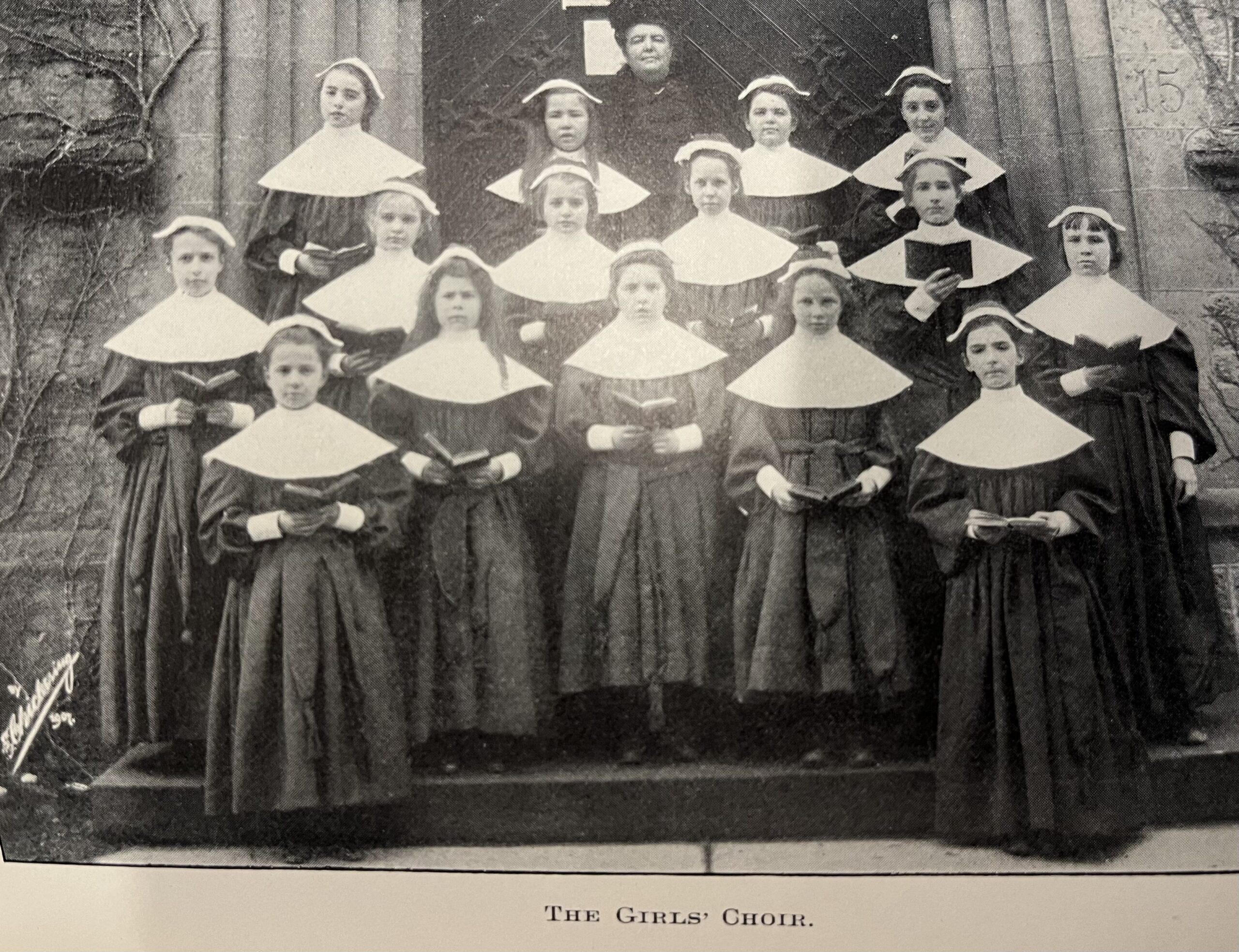
Our Girls Choir

1897

October 28. Rector Leighton Parks set up the Emmanuel Club to give young men of the parish a venue for fellowship.  Samuel Taylor was its first secretary.  They met several times a year for dinner with speakers or entertainment at the newly formed University Club at 270 Beacon Street.   Fitz-Henry Smith Jr. was secretary during its last year in 1911.  A member of the Harvard College Class of 1896, he went on to write these works about Boston:

  • The story of Boston light, with some account of the beacons in Boston harbor (1911).
  • The French at Boston during the Revolution : with particular reference to the French fleets and the fortifications in the harbor (1913).
  • Storms and shipwrecks in Boston and the record of the life savers of Hull (1918).

November.  The Rev. Henrietta Rue Goodwin began her service as deaconess at Emmanuel, which included distributing clothing, monitoring the Mothers’ Meeting, helping to fund choir vestments, and overseeing a Bible class and the Students’ Club.  Her reports in our Yearbooks (1897-1906), give her accounting of Special Funds for distribution of aid to the poor and her other activities, which included thousands of visits to the sick and needy.

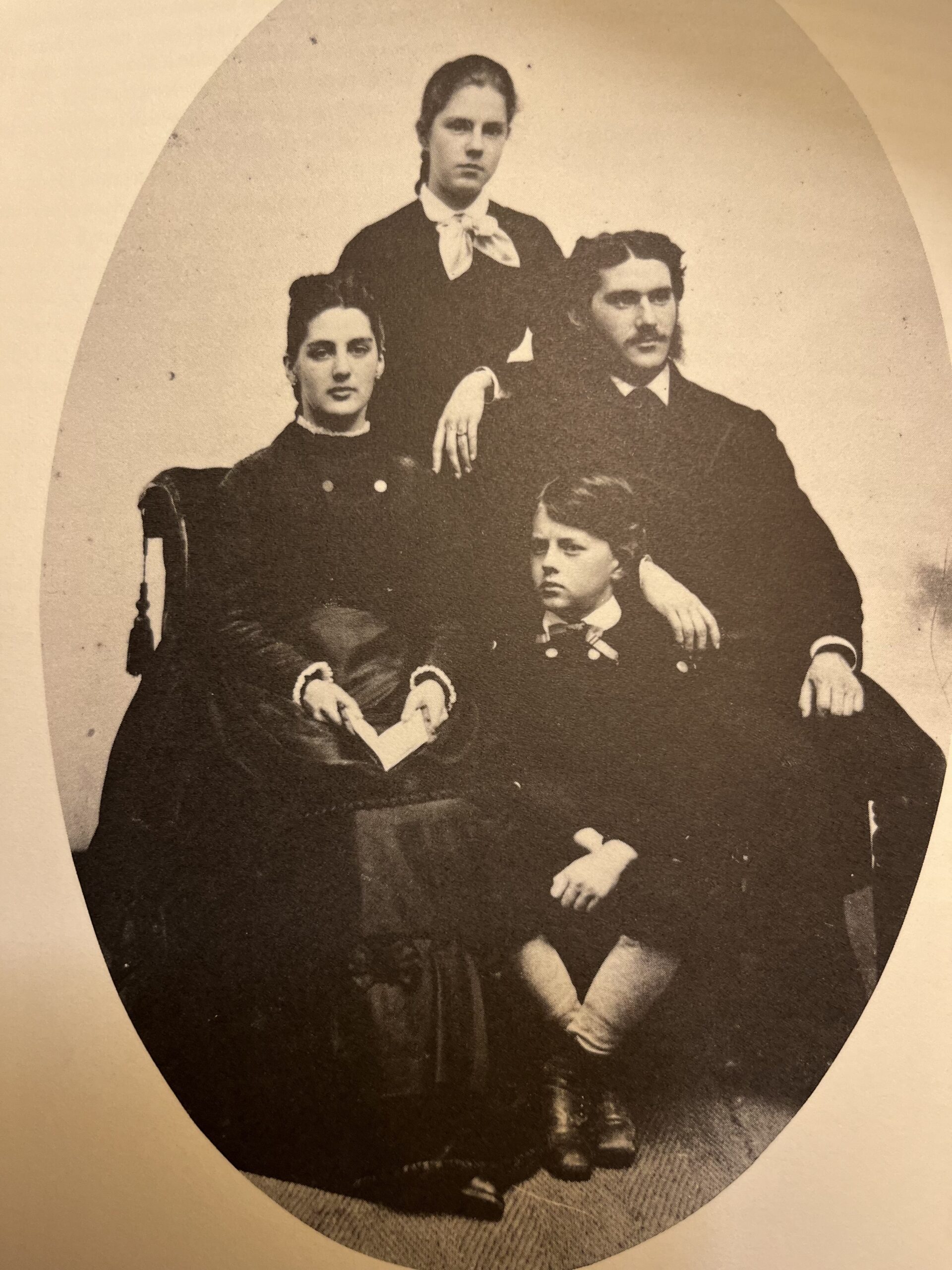
Children of Anne & Benjamin Rotch (clockwise): Aimee, Edith, Arthur & Lawrence

Work of Emmanuel House in the South End was transferred to our mission there, Church of the Ascension.

Edith Rotch, the younger daughter of Anne Bigelow Lawrence & Benjamin S. Rotch died at the age of fifty.  She was memorialized by her sister Aimee R. Sargent in our Rotch reredos.

1872

  • Consuming 65 acres downtown, the Great Boston Fire killed 12 firefighters and several dozen residents. On Summer Street it destroyed Trinity Church, which the congregation rebuilt 5 years later on Copley Square, several blocks from Emmanuel. Above is John Adams Whipple‘s panorama of the damage looking east from Washington St. at Bromfield Street.
  • Eben Dyer Jordan (1822-95). Credit: WikiCommons

    Parishioner and founder of Jordan Marsh Co., Eben Dyer Marsh and five others founded the Boston Globe.  See also this 1890 biographical sketch by John C. Rand.

1868

This snapshot of a postwar vestry includes prominent Bostonians.

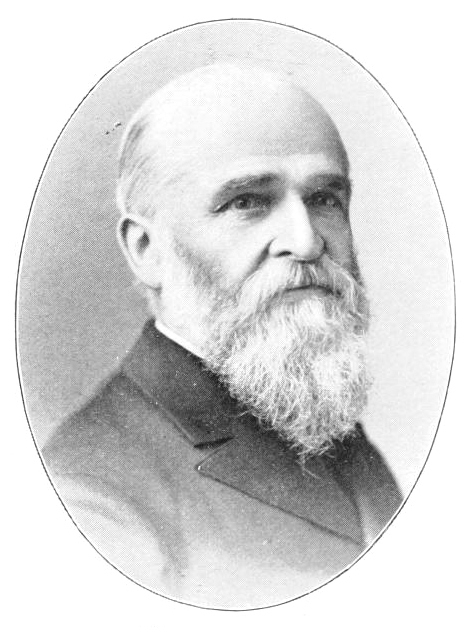
E.R. Mudge (1812-1881)

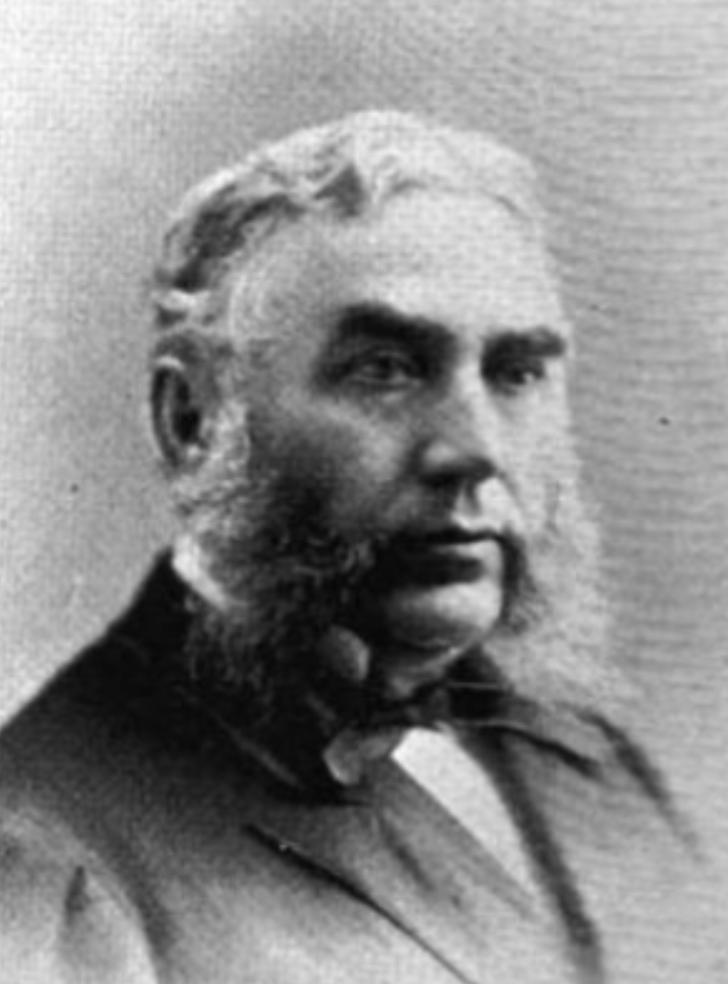
E.P. Dutton (1831-1923) Credit: WikiCommons

  • Sr. Warden:  Benjamin

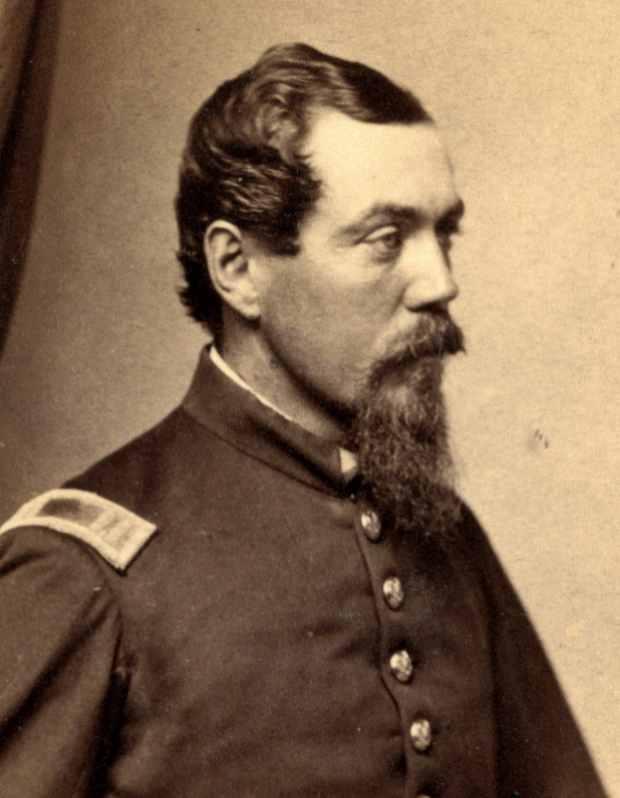
    Geo. P. Denny (1826-85)

    Tyler Reed, Jr. (1864-72)

  • Jr. Warden:  Enoch Redington Mudge, (1865-72)
  • Treasurer: George Parkman Denny (1865-72)
  • Clerk: Robert Codman, Sr. (1865-70); father of Robert. Codman, Bishop of Maine
  • Vestrymen
    • Samuel Turner Dana (1868-71); merchant
    • E.P. Dutton (1862-63,1868-69); publisher
    • Jonathan French (1863-74)
    • Horace Gray, Jr. (1868-69), judge

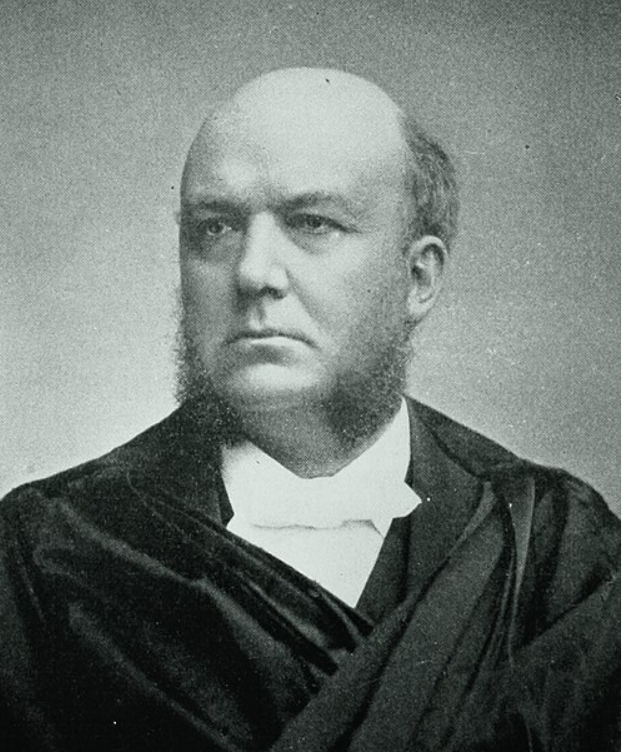
      Horace Gray, Jr., Associate (1864-73) & Chief (1873-82) of the Mass. Supreme Judicial Court; U.S. Supreme Court Justice (1882-1902). Credit: WikiCommons

    • S.J.M. Homer (1868-71); hardware merchant
    • B.F. Nourse (1865-68); author (with Mudge) of a report on cotton cultivation for the Paris International Exhibition
    • Thomas D. Townsend (1865-70)

1865

Having been denied church funding,  Rector Dan Huntington raised funds from parishioners, including the French family, to pay for Chapel of the Good Shepherd, which was consecrated.

  • April 9.  Surrender at Appomattox VA ends the Civil War.
  • April 14.  President Abraham Lincoln was assisinated.
  • Dec. 6. Congress ratified the 13th Amendment to the Constitution, which ended slavery in the US.

1864

The Rev. Mary Douglass Burnham, 1899, by permission of SUNY Upstate Medical University

Having learned of a recent massacre of Sioux Indians from her friend Evelina Bogart of Albany NY,  parishioner Mary Douglass Saville (Mrs. Wesley) Burnham (1832-1904) founded the Dakota League,  a mission of our diocese (and eventually other Boston-area churches) to support Native Americans in the Dakota Territory.

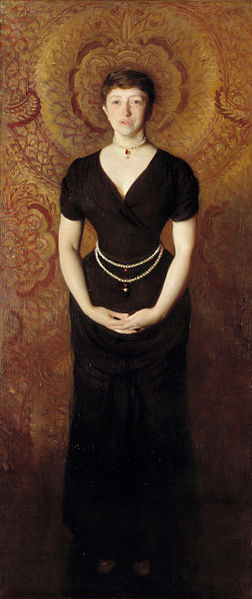
Isabella Gardner

Isabella Stewart Gardner by John Singer Sargent, courtesy of the Gardner Museum via WikiCommons

April 10.Isabella Stewart Gardner was confirmed at Emmanuel by the Rt. Rev. Dr. Manton Eastburn, Bishop of Massachusetts.  It was the fourth anniversary of her marriage to John Lowell Gardner, Jr., who had purchased Pew 28  in 1862.  Although the Stewarts had been members of Grace Church in New York City, their children were not confirmed until they reached adulthood. Louise Hall Tharp in her biography Mrs. Jack hypothesizes that Isabella’s confirmation “might have been a sort of thank-offering for the child she so much wanted”.  John Lowell 3rd, born on June 18, 1863, unfortunately died on March 15, 1865. His baptism and burial are recorded in our parish register. The Gardners, who lived nearby at 152 Beacon St., later raised their orphaned nephews, sons of Jack’s brother Joseph, also owned a pew until his death in 1875.

Take a visual tour of her museum and its collection at Google’s Cultural Institute.