2014

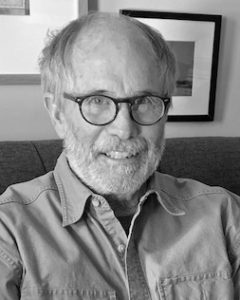
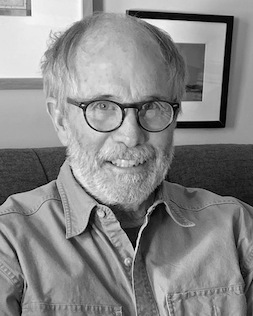
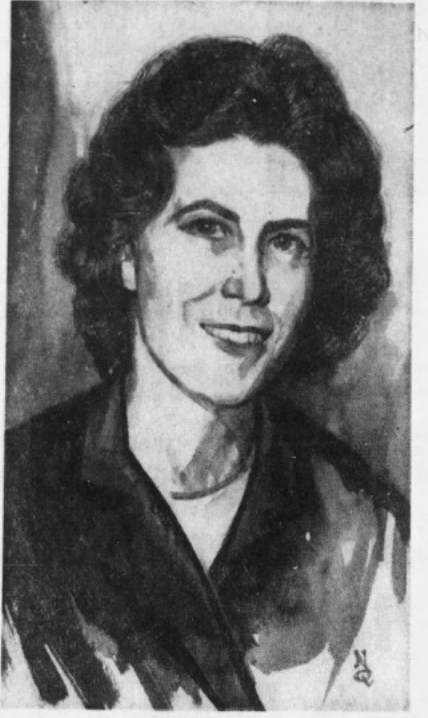
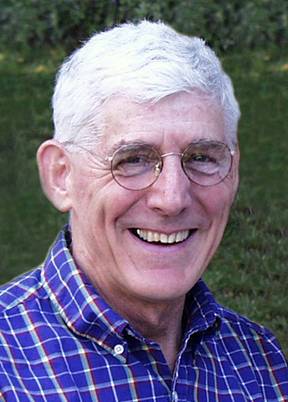
Dorothy A. Brown, 1963 (image credit: NQ, Boston Globe)

March 20.  Dorothy Addams Brown died in Gloucester MA.  She had been born on 29 May 1923 to parishioners Harriet Addams Young (1886-1952) and Lawrence Allyn Brown (1876-1937) and baptized here.  She resided for many year at 434 Marlborough St. with her brother Lawrence, Jr.. She served on our vestry (1962-4 & 1969-74) and our Finance & Budget and Long-Range Planning committees. She was a generous benefactor until her death at the age of 90.  She credited William Wolbach, President of the Boston Safe Deposit & Trust Co., for hiring her as a clerk in 1944, when she graduated from Vassar.  She became the bank’s first woman trust officer and then Vice President.  Mary Meier of The Boston Globe (May 16, 1963) wrote an article about her entitled, “Banks Rarely Give Women Key Role.” When Dottie retired as chair of the New England Group of the National Association of Bank Women in 1965, she was the only senior investment officer in the Association.

Last issue of Voices was published with a farewell letter from its editor Margo Risk.

2013

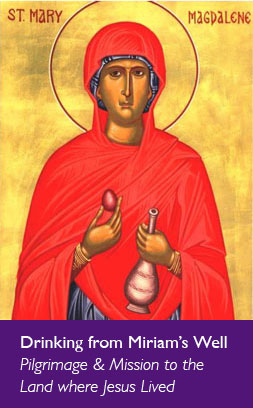
  • March.  With support from the Lilly Foundation, our rector Pamela Werntz left on her sabbatical pilgrimage to Iona, Scotland, several sites in the Holy Land, and Ste. Maxime, France, where she sought inspiration from Mary Magdalene. The Rev. Susan Ackley became our  Sabbatical Priest/Artist in Residence.
  • April 13.  Faculty from Leslie University’s Expressive Arts Therapy Program spoke after the service about how their students might assist with such programs as Emmanuel Cafe and Common Art.  Our Leslie interns have described their experiences since then in Musings from the Margins, the first post of which describes its founding in more detail.
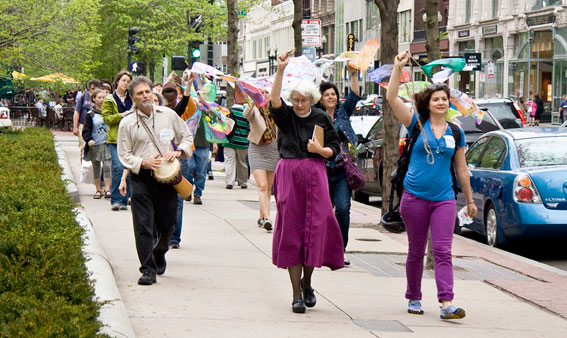
  • April 15.  Two bombs exploded on Boylston Street near the finish line of the annual Boston Marathon, killing three people and injuring several hundred others. Leslie students joined people at Emmanuel in creating memorial flags in an event called “When Words Are Not Enough.”
Participants in "Words Are Not Enough" carry prayer flags to the Boston Marathon bombing memorial site in Copley Square.

The Rev. Susan Ackley, our Sabbatical Priest/Artist-in-Residence, and participants in “Words Are Not Enough” carry prayer flags down Newbury Street to the Boston Marathon bombing memorial site in Copley Square.

1996

  • Our first website was launched by Donald Kreider, who later served as vestry member, clerk, and treasurer.
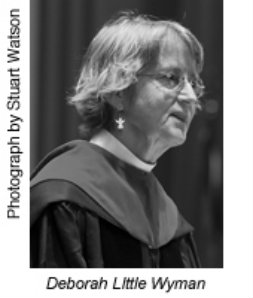
  • The Rev. Dr. Deborah Little Wyman launched what became Ecclesia Ministries. She described her first efforts in a Baccalaureate address,  “After two years of hanging out on park benches, subway stations, heating grates and train tunnels in Boston, during the week before Easter 1996, I had the idea that we could actually have an outdoor worshipping church. I sensed people were waiting to be gathered. That Easter I set up a folding table on Boston Common and 10 brave souls came.”    Ecclesia today sustains common cathedral, common art (which meets at Emmanuel on Wednesdays), and Boston Warm (which meets at Emmanuel on Mondays and Fridays).
    See also: Timeline 1995.
  • Oct. 28.  The Rev. William Blaine-Wallace was installed as 11th rector.BBW253

Founding of This Blog

While our rector Pamela Werntz traveled on her 2013 sabbatical, we also had opportunities to explore Spirituality and the Arts at Emmanuel (thanks to the generosity of the Lilly Foundation). A collaboration with Lesley University’s Expressive Arts Therapy program seemed like a perfect means of enriching the church’s mission for using the arts as vehicle for healing and spiritual growth. On April 7, 2013, faculty from Lesley joined us for the service and offered a stimulating presentation about their program and ideas for working with Emmanuel.

In order to build upon this exciting beginning, a group of Lesley University faculty met with representatives from Emmanuel to discuss our future collaborations. Between these two meetings, the bombings at The Boston Marathon resulted in feelings of pain, loss, fear, and anger. The group decided its first event should involve the healing power of creativity in addressing these wounds, so we called it “When Words Are Not Enough.”  When Our first intern arrived that Fall, we chose the name to Musings from the Margins for a blog to record their thoughts about their experiences at Emmanuel.

Participants in "Words Are Not Enough" carry prayer flags to the Boston Marathon bombing memorial site in Copley Square.

The Rev. Susan Ackley, our Sabbatical Priest/Artist-in-Residence, and participants in “Words Are Not Enough” carry prayer flags down Newbury Street to the Boston Marathon bombing memorial site in Copley Square.

1971

Rosemary Dodge Hutcheson became our first woman officer.  Former president of the Junior League of Boston, she served as Clerk of the Vestry for two years.  See also 1931.

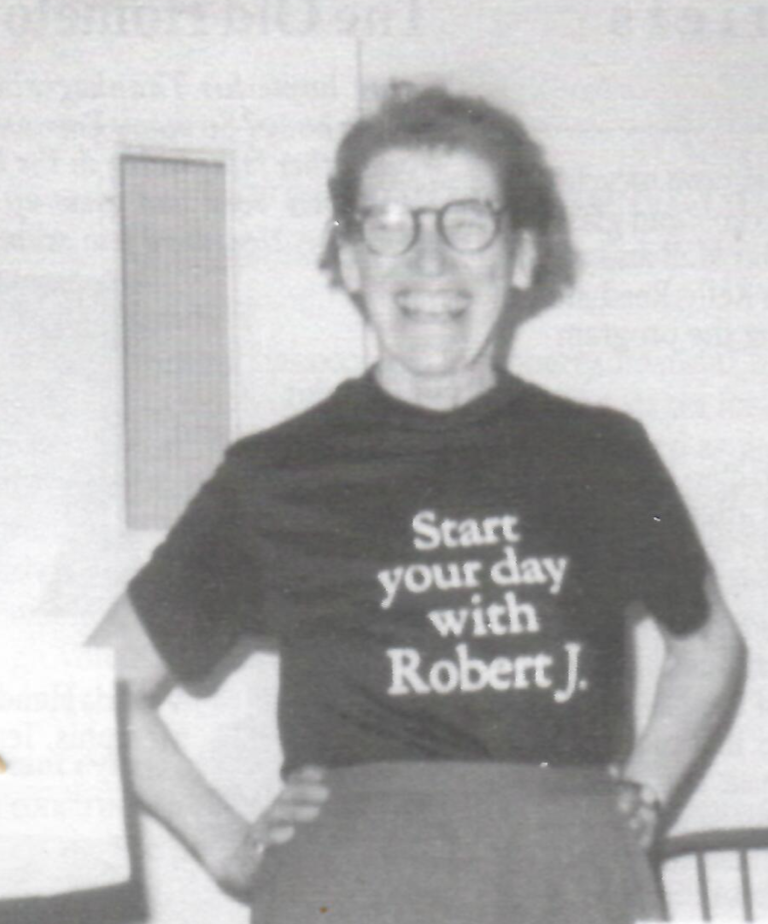
“Start your day with Robert J.”  says Priscilla Young’s T-shirt.

Robert J. Lurtsema took over Morning Pro Musica on WGBH’s FM station.  On Sunday mornings he often broadcast a Bach cantata from Emmanuel.  Our benefactor Priscilla Rawson Young supported not only our cantatas but also GBH and the Boston Symphony Orchestra.

For more about PR Young, see: 19091939, 19421973, 1994 & 2000.


1945

  • 8 May. Germans surrendered, leading to the end of World War II in Europe.
  • June.  Rector P. E. Osgood preached his last sermon at Emmanuel.
  • 15 July.  The Rev. Dr. H. Robert Smith, formerly of Grace Church, Newton MA, accepted the position of Minister-in-Charge to serve until a new rector could be called.
  • 6 & 9 August. US dropped atomic bombs on Hiroshima and Nagasaki, leading to Japanese  surrender a week later.
  • October.  After many years in charge of our Church School, Elizabeth Varney departed, and Nancy Currier took over.
  • 28 November.  The vestry assigned the church’s reading rights at the Boston Athenæum to rector-elect, The Rev. Robert Gifford Metters. For more about his tenure, please see the chapter on him in Emmanuel Church, 1860-1960: The First Hundred Years.

1914


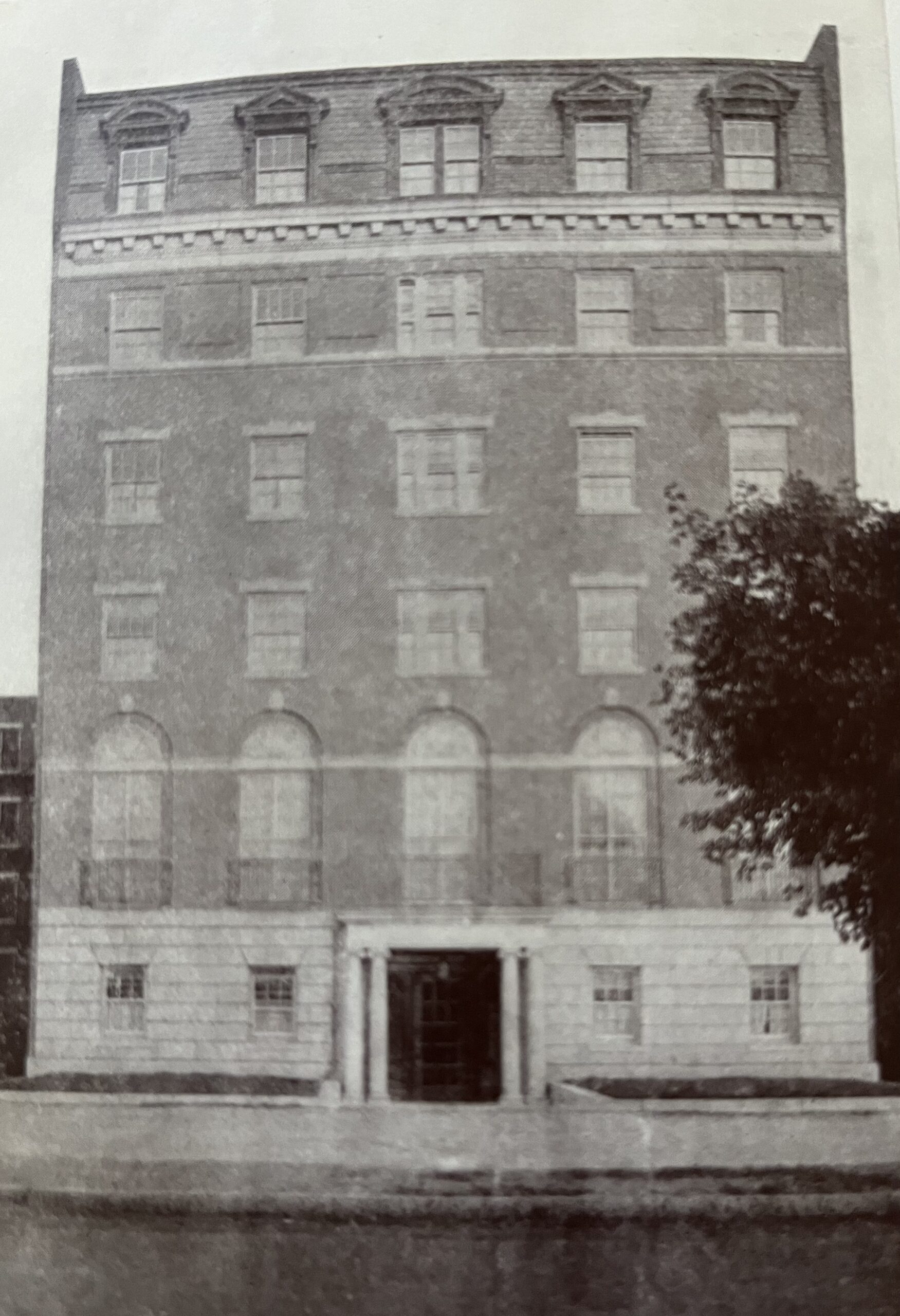
The Students’ House Corporation, under the direction of Mary S. Holmes and Charlotte Upham Baylies, built at 96 The Fenway a home for our Students’ House, which had been in rented quarters since its inception in 1899. They engaged architects Kilham & Hopkins, raised a large portion of its construction cost ($124K), and secured a mortgage for the remainder.  The building is now Kerr Hall, a Northeastern University dormitory.


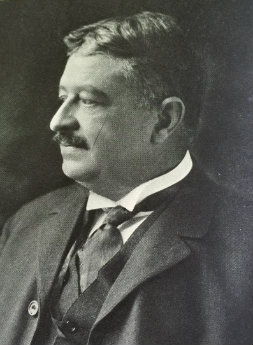
October 6.  About a thousand people attended the funeral service for financier, philanthropist, and parishioner Gardiner Martin Lane (born 1859).  The Rev. Dr. Elwood Worcester, The Rt. Rev. William Lawrence,  The Rev. John W. Suter of Winchester, and The Rev. Prescott Evarts from Lane’s Harvard Class of 1881 officiated.  Pallbearers included President  A. Lawrence Lowell of Harvard, Sen. Henry Cabot Lodge, Charles Francis Adams, and several of his partners from Lee Higginson & Co.. Lynnwood Farnum played a Tchaikovsky funeral march and “Dead March” from Handel’s “Saul”. The boys choir sang “Abide with me” and “The strife is over”.

Gardiner Martin Lane from Harvard College Class of 1881 biography of him in the papers of Katharine Lane Weems at the Schlesinger Library, Radcliffe.

As treasurer of the New England chapter of the International Red Cross, Lane collected and distributed relief funds for the Salem fire (1914), the San Francisco earthquake (1906), and other disasters.  Appointed trustee of the Museum of Fine Arts in 1906, and elected its president in 1907, he oversaw its move from Copley Square to the Evans Building on Huntington Ave., which was designed by Emmanuelite Guy Lowell.  Spearheading the Museum’s fundraising effort for the new facility, Lane said, “A mere collection of beautiful objects is of little value unless seen, appreciated, and understood by many.”

Gardiner was born in Cambridge in 1859 to Fannie Bradford and Harvard philologist George Martin Lane, who became the first Harvard professor to receive a pension. Gardiner graduated from Harvard in 1881 and married Emma Louise, a daughter of Basil L. Gildersleeve, his father’s colleague at Johns Hopkins U.. The Lanes are buried in Mt. Auburn Cemetery’s Lot 1727 on Yarrow Path. His widow and daughter Katharine Lane Weems, were parishioners for years after his death and generous benefactors of Emmanuel.

See also our pages World War I Memorial and Katharine Lane Weems.

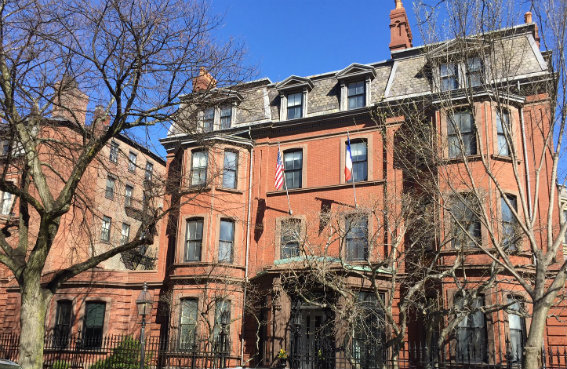
The Lanes’ home at 53 Marlborough is now the French Cultural Center.

The Lanes’ summer house, The Chimneys, in Manchester by the Sea, MA was designed by Emma G. Lane’s brother Raleigh C. Gildersleeve.

1906

Camp Lowell was established by the shores of Lake Annabessacook in Winthrop ME to provide a summer camp for the choir boys of Emmanuel and  Church of the Redeemer, Chestnut Hill.  Boys from our mission Church of the Ascension also attended for two weeks in its first summer.  The camp, which had sleeping accomodations for 28 campers and 2 staff, was named in memory of Charles Lowell, late treasurer of Emmanuel.  Its trusttees were Charles H. Kip, John Lowell, and William Blodgett.

John Collins Bossidy famously toasted, “Boston, the land of the bean and the cod / where Lowells speak only to Cabots / and Cabots talk only to God.” It was (no doubt) belied by the fellowship of Emmanuel.  Walter Cabot Baylies purchased the lots of 11-13 Newbury St. for the creation of a parish house.  Offices for the rector and his secretary were created in the space now occupied by the Emmanuel Room and our kitchen.

Our Girls Choir

1897

October 28. Rector Leighton Parks set up the Emmanuel Club to give young men of the parish a venue for fellowship.  Samuel Taylor was its first secretary.  They met several times a year for dinner with speakers or entertainment at the newly formed University Club at 270 Beacon Street.   Fitz-Henry Smith Jr. was secretary during its last year in 1911.  A member of the Harvard College Class of 1896, he went on to write these works about Boston:

  • The story of Boston light, with some account of the beacons in Boston harbor (1911).
  • The French at Boston during the Revolution : with particular reference to the French fleets and the fortifications in the harbor (1913).
  • Storms and shipwrecks in Boston and the record of the life savers of Hull (1918).

November.  The Rev. Henrietta Rue Goodwin began her service as deaconess at Emmanuel, which included distributing clothing, monitoring the Mothers’ Meeting, helping to fund choir vestments, and overseeing a Bible class and the Students’ Club.  Her reports in our Yearbooks (1897-1906), give her accounting of Special Funds for distribution of aid to the poor and her other activities, which included thousands of visits to the sick and needy.

Children of Anne & Benjamin Rotch (clockwise): Aimee, Edith, Arthur & Lawrence

Work of Emmanuel House in the South End was transferred to our mission there, Church of the Ascension.

Edith Rotch, the younger daughter of Anne Bigelow Lawrence & Benjamin S. Rotch died at the age of fifty.  She was memorialized by her sister Aimee R. Sargent in our Rotch reredos.

1872

  • Consuming 65 acres downtown, the Great Boston Fire killed 12 firefighters and several dozen residents. On Summer Street it destroyed Trinity Church, which the congregation rebuilt 5 years later on Copley Square, several blocks from Emmanuel. Above is John Adams Whipple‘s panorama of the damage looking east from Washington St. at Bromfield Street.
  • Eben Dyer Jordan (1822-95). Credit: WikiCommons

    Parishioner and founder of Jordan Marsh Co., Eben Dyer Marsh and five others founded the Boston Globe.  See also this 1890 biographical sketch by John C. Rand.