“What is your hand in this?”

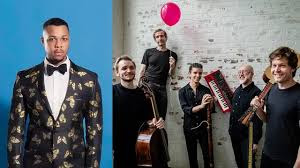
Commemorative concerts for America’s 250th anniversary will be dotting the musical landscape in 2026. An inventive program that may prove to be one of the most challenging for audiences has been launched by Davóne Tines and Ruckus, “a shapeshifting, collaborative, baroque ensemble with a visceral and playful approach to early music.” Sanders Theater hosted them on January 31, 2026, as part of their ten-cities tour.

Created by bass-baritone Davóne Tines, bassist Douglas Adam August Balliett, and Clay Zeller-Townson, founder of Ruckus, the program called “What is your hand in this?” recasts “Colonial and Revolutionary-era hymns, ballads, and Baroque compositions, on a musical journey that weaves through the pre-Civil War period, the Civil Rights era, and into the present day.” (Everyone 250 Continue reading

The Fierce Urgency of Now

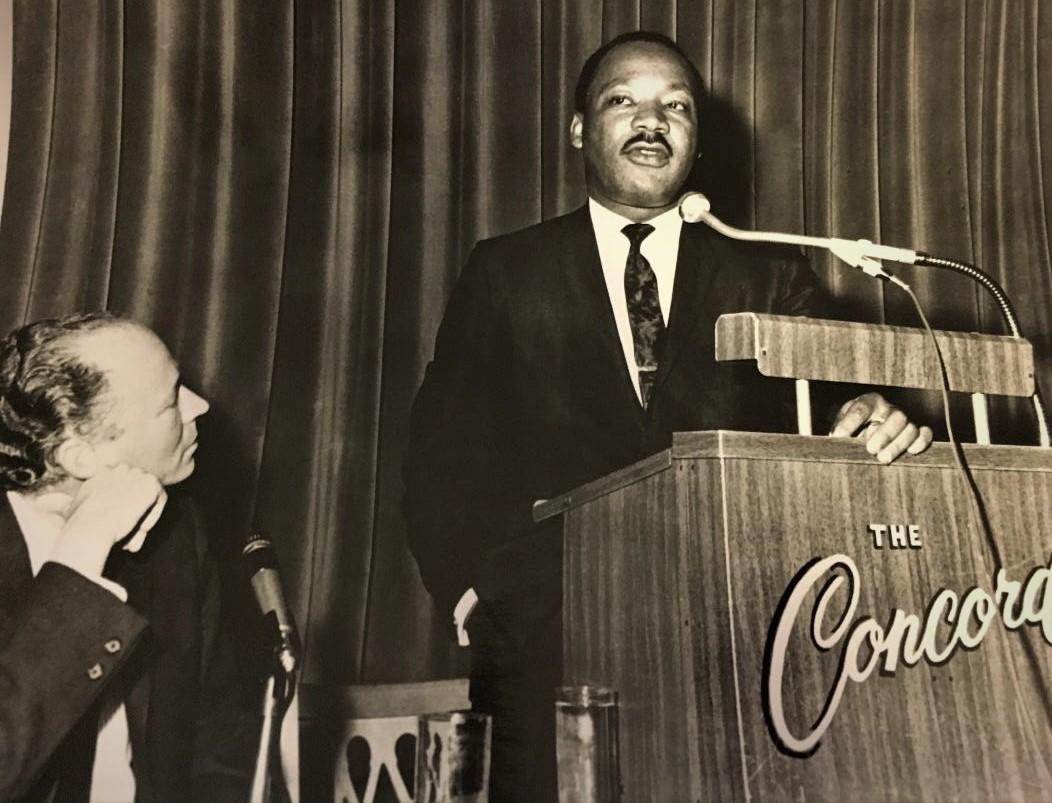
On Monday, January 19th, 2026, the 56th Annual Martin Luther King Jr. Memorial Breakfast will be held in Boston.

The MLK Breakfast Memorial Committee is comprised of representatives from St. Cyprian’s Episcopal Church and Union United Methodist Church. The event is the longest-running celebration of its kind in the U.S.; scholarships are provided each year to students from nine Boston public high schools.

Continue reading

An Artist’s Sketchbook of the South End

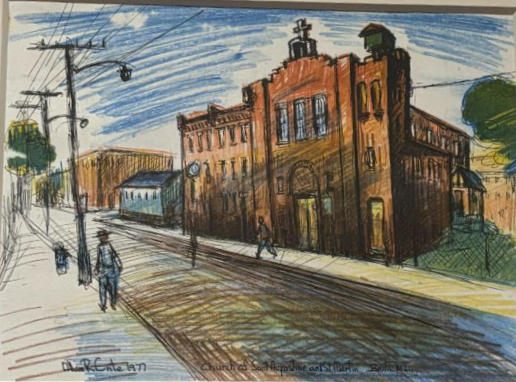
Church of St. Augustine & St. Martin on Lenox St. in Boston’s South End by AR Crite

For a respite from the bustle of the holidays, a visit to the Gardner Museum was in order. There, in the exhibit Allan Rohan Crite: Urban Glory, we learned of the project that Crite completed as an artist in residence at the Museum of African American History on Beacon Hill. Continue reading

Work of Allan Rohan Crite on View in Boston


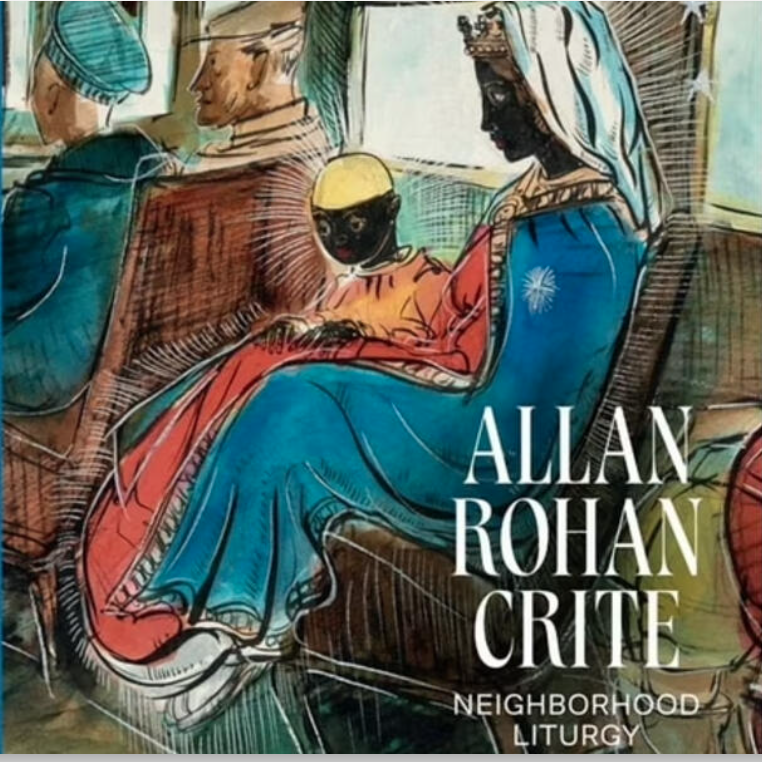
Cover of A.R.C. Neighborhood Liturgy (Princeton U. Press, 2025) 

The Gardner Museum and the Boston Athenaeum are hosting exhibitions of the work of Allan Rohan Crite, artist and chronicler of life in Boston’s Lower Roxbury and South End neighborhoods. Both shows opened on October 23, 2025.  Allan Rohan Crite: Urban Glory and Allan Rohan Crite: Griot of Boston are creating a resurgence of interest in the work of Crite (1910-2007), who was known as a civic leader, storyteller, and community activist. Influenced by his lifelong devotion to his faith and to local Episcopal churches he supported and loved, his work is again in our midst.

Continue reading

Virginia Theological Institute’s Reparations

Our Racial Justice Working Group follows the news of ongoing reparations processes as they unfold in institutions of The Episcopal Church. One of TEC’s oldest seminaries, the Virginia Theological Seminary (VTS), recently announced the next phase of its historical research and monetary reparations: “VTS breaks ground on reparations memorial honoring at least 557 African American laborers.” —Episcopal News Service, September 26, 2025 Continue reading

#DouglassWeek

Fall has arrived and we are back to learning about and attending programs related to racial justice. As we write, Boston and other Massachusetts cities are hosting the annual celebration of #DouglassWeek.

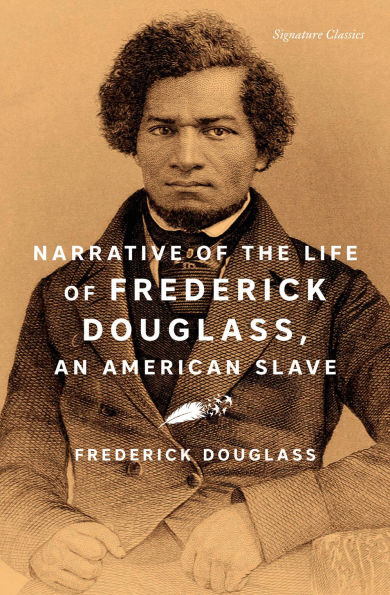
Launched in 2021, the collaborative event series highlights Frederick Douglass’s time in Ireland in 1845. He spent about four months there in self-imposed exile after the publication of the first edition of Narrative of the Life of Frederick Douglass, an American Slave.

Continue reading

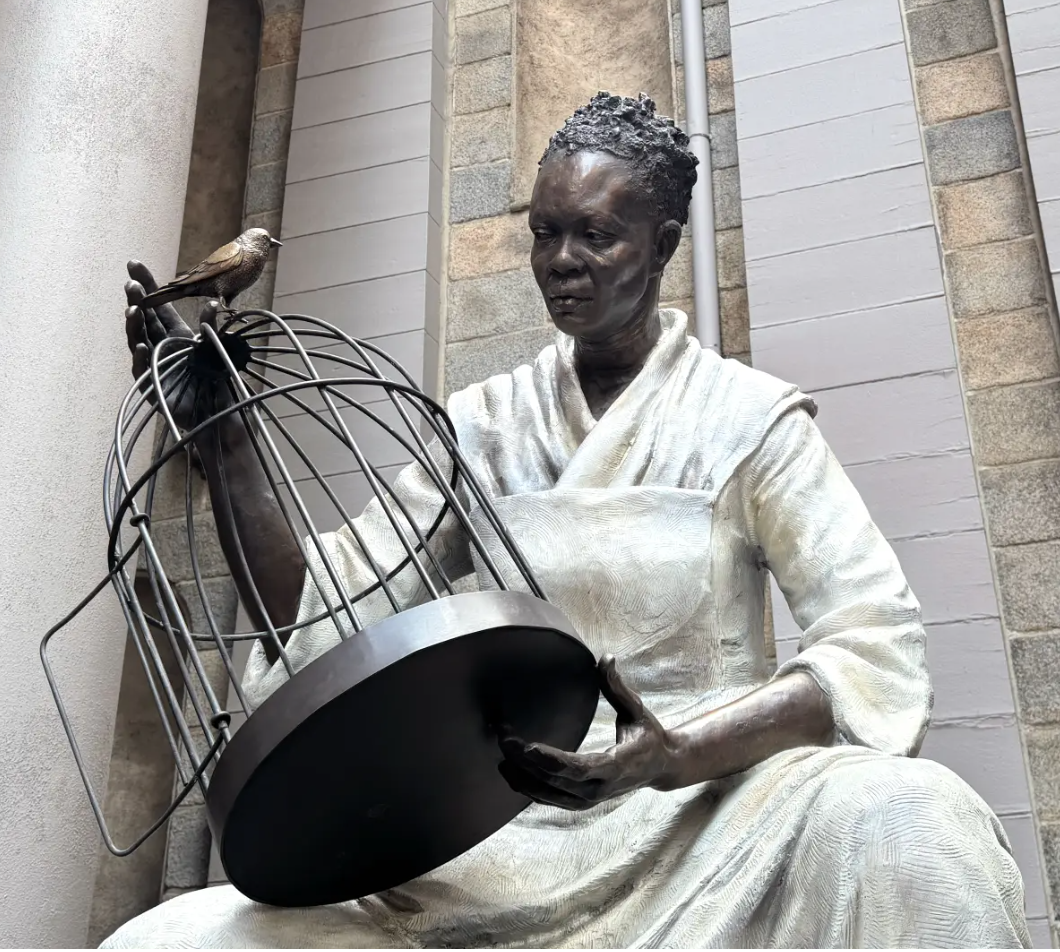
King’s Chapel unveils ‘Unbound’.

photo credit: WGBH Boston

On September 14, 2025, King’s Chapel unveiled its Memorial Sculpture, “Unbound,” by artist Harmonia Rosales.

Rosales’s work was stewarded by the MASS Design Group. It is a tribute to the 219 enslaved parishioners brought to church by their enslavers.

As many of you know, King’s Chapel has been actively engaged in studying and revealing many aspects of its racial history over recent years. A rich summary, including their plans for an ongoing project, is presented online via the page entitled King’s Chapel Memorial to Enslaved Persons.

September 22, 2025 –Mary Beth Clack, Mary Blocher, Cindy Coldren, Pat Krol, Liz Levin.

Juneteenth Events in the Boston Area

Aside

The local commemorations of Juneteenth included three events of note. Dio Mass held its Juneteenth service at St. Stephen’s Church, Lynn, with the Rev Bernadette Hickman-Maynard presiding. At Old South Church. The Reverend June Cooper, Theologian in the City of Boston and alum of the United Boston Sankofa Cohort, preached. Her reflection on the holiday, and the unfinished work of repair, appears in this blog post, Juneteenth, and the Unfinished Work of Freedom.

Juneteenth at Longfellow House-Washington’s Headquarters was held on June 22, 2025. The accompanying video, Who are my ancestors? highlights the reflections of the descendants of Cuba and Darby Vassall, who lived at the house. Continue reading

The Green Book Tour of Boston’s South End

May 26, 2025

A reprise of the Green Book Tour of Boston was offered on May 17, 2025. The tour was organized by The Reverend June Cooper, social justice educator, activist, and Theologian in the City at Old South Church.

She invited Byron Rushing to be our guide. Byron was Massachusetts State Representative for the South End from 1983-2019 and has been lay deputy to our General Convention since 1973. The tour was supported by the Boston Faith and Justice Network.

Victor Hugo Green, a postal worker, created the first Green Book in 1936. It was published until 1966 (with the exception of the years 1940-1946). A guide to establishments open to black travelers during the Jim Crow era, it served as an essential tool in welcoming them to many U.S. towns and cities.

Included on the Boston tour are the Union Combined Parish, the Columbus Avenue AME Zion Church, and Harriet Tubman Park, along with jazz club locations, other  community gathering places, and Slade’s, operating since 1929. We also stopped at the home of Julia Henson, 25 Holyoke Street, which was the first Harriet Tubman House, founded to provide housing for black women who were excluded from college dormitories and rooming houses. Henson founded the African American Northeastern Federation of Women’s Clubs and was active in the settlement house movement. Harvard’s Houghton Library acquired a copy of the 1949 edition of the Green Book, and it is freely accessible via this link.

The chapter on Massachusetts lists 50 businesses open to Black travelers in Boston, including hotels, restaurants, beauty parlors, barber shops, tailors, and one jazz club. In the Introduction, we read: “There will be a day sometime when this guide will not have to be published. That is when we as a race will have equal opportunities and privileges in the United States. It will be a great day for us to suspend this publication for then we can go wherever we please, and without embarrassment. But until that time comes, we shall continue to publish this information for your convenience each year.”

—Mary Beth Clack, Mary Blocher, Cindy Coldren, Pat Krol, Liz Levin

Suzanne Hiatt & Pauli Murray

Emmanuel Church dedicated its third pulpit statue this past Sunday to the Rev. Dr. Suzanne Radley Hiatt (1936-2002), priest, theologian, prophet, professor, and advocate. Sue Hiatt was ordained as one of the Philadelphia 11 (July 29, 1974), and served as an inspirational mentor to many, including our rector.

Pam’s sermon on Sunday included examples of Hiatt’s devotion to equality and justice; as “bishop to the women,” Pam said that she was “pressing the Church to deeper inclusion and fuller love.”

It was interesting to learn that Suzanne Hiatt wrote about her connections to Pauli Murray (1910-1985), who had discerned from our parish and in 1977 became the first African American woman to be ordained in the Episcopal Church. In April 1970, they attended the Graymoor Conference, an important event in the history of women’s ordination, attended by about 60 women and numerous male supporters. One of the organizers, Hiatt was stalwart in her advocacy of the movement.  After years of experiences as a civil rights lawyer, professor, and Women’s Movement activist, Murray attended Graymoor.   After the conference, she and Henry Rightor, a former lawyer and professor of pastoral care at Virginia Theological Seminary, studied the Church’s Canons and Constitutions. Their report presenting their findings after the conference set the stage for persuasive arguments for women’s ordination.

Sue Hiatt’s admiration for Pauli Murray was expressed in an article she wrote in the Journal of Feminist Studies in Religion.* She noted that she had learned a lot from delving into Pauli Murray’s writings about her unceasing dedication to the pursuit of justice. Hiatt considered Murray a “foremother, not only to be proud of, but also to learn from and emulate.” Those who came before Hiatt’s generation “shook the foundations so that we could topple the walls.” Hiatt deeply admired Murray’s contributions: “Pauli believed above all in justice, and despite a lifetime of disappointments and tragedies, she never stopped seeking it. She just never quit.”

May we be inspired by the women who now live on in our sanctuary, and, as Pam said in her Eastertide sermon: “Arise, wake up, come alive to become who and whose you are called to be.”

*Hiatt, Suzanne, “Pauli Murray (1910-1985): May Her Song Be Heard at Last,” Journal of Feminist Studies in Religion 4 (Fall 1988), 69-73.

See also the chapter of the same title in The Spirit of the Lord is upon Me: The writings of Suzanne Hiatt, ed. Carter Heyward and Janine LeHane (New York: Seabury, 2014). This compilation of Hiatt’s writings is a wonderful tribute to her.

—May 15, 2025.  Mary Beth Clack, Mary Blocher, Cindy Coldren, Pat Krol, Liz Levin