Begging Your Freedom

Proper 17C, September 1, 2013; The Rev. Pamela L. Werntz

Jeremiah 2:4-13 Be appalled, O heavens, at this be shocked, be utterly desolate…for my people have committed two evils.
Hebrews 13:1-8, 15-16 Let mutual love continue….Do not neglect to show hospitality to strangers.
Luke 14:1, 7-14 “He told them a parable.

O God of our help, grant us the strength, the wisdom and the courage to seek always and everywhere after truth, come when it may, and cost what it will.

Once upon a time, in the olden days, according to the prophet Jeremiah, the people of God found fault with God and started following worthless idols. Once upon a time, a long time ago, people forgot how beloved and beautiful they were. In other words, they lost their sense of identity as people made in the image of Love, and they forgot their mandates to love. They started following everything but love. (For anyone who has never heard me preach, I want to start by telling you that one of the best Biblical names for God is Love, and I always appreciate the opportunity to substitute the word Love for the word God.) When the people lost the way of Love, they lost their sense of worth, their sense of glory. When they stopped remembering that they were beloved, they stopped behaving as if they were beloved. There’s a word play in the Hebrew that gets lost in translation: Ba-al means worthless or no profit, and Ya-al means benefit or value or worth. Continue reading
Love Dogs

Proper 12C, July 28, 2013; The Rev. Pamela L. Werntz

Hosea 1:2-10 In the place where it was said to them, “You are not my people,” it shall be said to them, “Children of the living God.”
Colossians 2:6-19 Do not let anyone disqualify you.
Luke 11:1-13 Everyone who asks…everyone who searches…everyone who knocks.

O God of everyone, grant us the strength, the wisdom and the courage to seek always and everywhere after truth, come when it may, and cost what it will.

In our Hebrew Scripture lesson for this morning, Hosea – a prophet of Israel – is crying out against the people of Israel for breaking the covenant by not listening to God alone – a covenant that requires full-bodied attentiveness to the Holy One of Israel. Idolatry and whoredom, in ancient Hebrew, are the same word – the same thing. Fidelity to the Holy One of Israel is expected, and the people have been seeing other gods. They have been engaged in lewd living, moral defection, improper intercourse with other deities. The lesson begins with, “When the Lord first spoke within Hosea, Hosea heard, ‘find a wife who is seeing other gods – because you’ll not be able to find one who is not seeing other gods – everyone in the land is doing it.’” Continue reading

1974

  • The Rev. Dr. Mark Harvey began his jazz ministry and founded the Jazz Coalition (later the Aardvark Jazz Orchestra), which sponsored concerts, liturgies, and festivals here over the next four decades.  See also his Timeline of Jazz @ Emmanuel.
  • March 3.  As our sponsored seminarian, Pauli Murray preached from our pulpit her inaugural sermon on a passage she had selected (Isaiah 61: 1-4), entitled ” Women Seeking Admission to Holy Orders: As Crucifers Carrying the Cross”.* Saying that Emmanuel “sent me forth as a member of your congregation with your blessings and prayers to begin my training for the Sacred Ministry”, she asked:

Why in the face of the devastating rejection at the Louisville General Convention of last October, 1973–a rejection which Bishop Paul Moore of NY has called the violation of the very core of their personhood–[have the women seeking ordination to the priesthood] only increased their determination to enter the higher levels of the clergy?

Then paraphrasing Isaiah 53:3, she prophesied:

I believe that these women are in truth the Suffering Servants of Christ, despised and rejected, women of sorrows and acquainted with grief.  They are answering to a higher authority than that of the political structures of our Church, and in the fullness of time God will sweep away those barriers and free the Church to carry forward its mission of renewal as a living force and God’s witness in our society.

* Reprinted in Daughters of Thunder:  Black women preachers and their sermons, 1850-1979, Bettye Collier-Thomas (NY: Jossey Bass, 1998),  pp. 240-44.  Please see also About Pauli Murray and our Timeline entries about her:  1951,1970, 1973, 1977, 1985, 1987, 2012 & 2015.

1973

  • Pauli Murray, who was a vestry member, left her tenured position at Brandeis U. and  entered the General Theological Seminary. The Rev. Alvin L. Kershaw had helped her discern a call to ordination.

Once I admitted the call of total commitment to service in the church, it seemed that I had been pointed in this direction all my life and that my experiences were merely preparation for this calling.  In spite of my own intellectual doubts and the opposition to women’s ordination which was widespread within the Episcopal Church at the time, I took the fateful step of applying to The Rt. Rev. John Melville Burgess, Bishop of the Diocese of Massachusetts, for admission to holy orders. (Autobiography, 1989, p. 427)

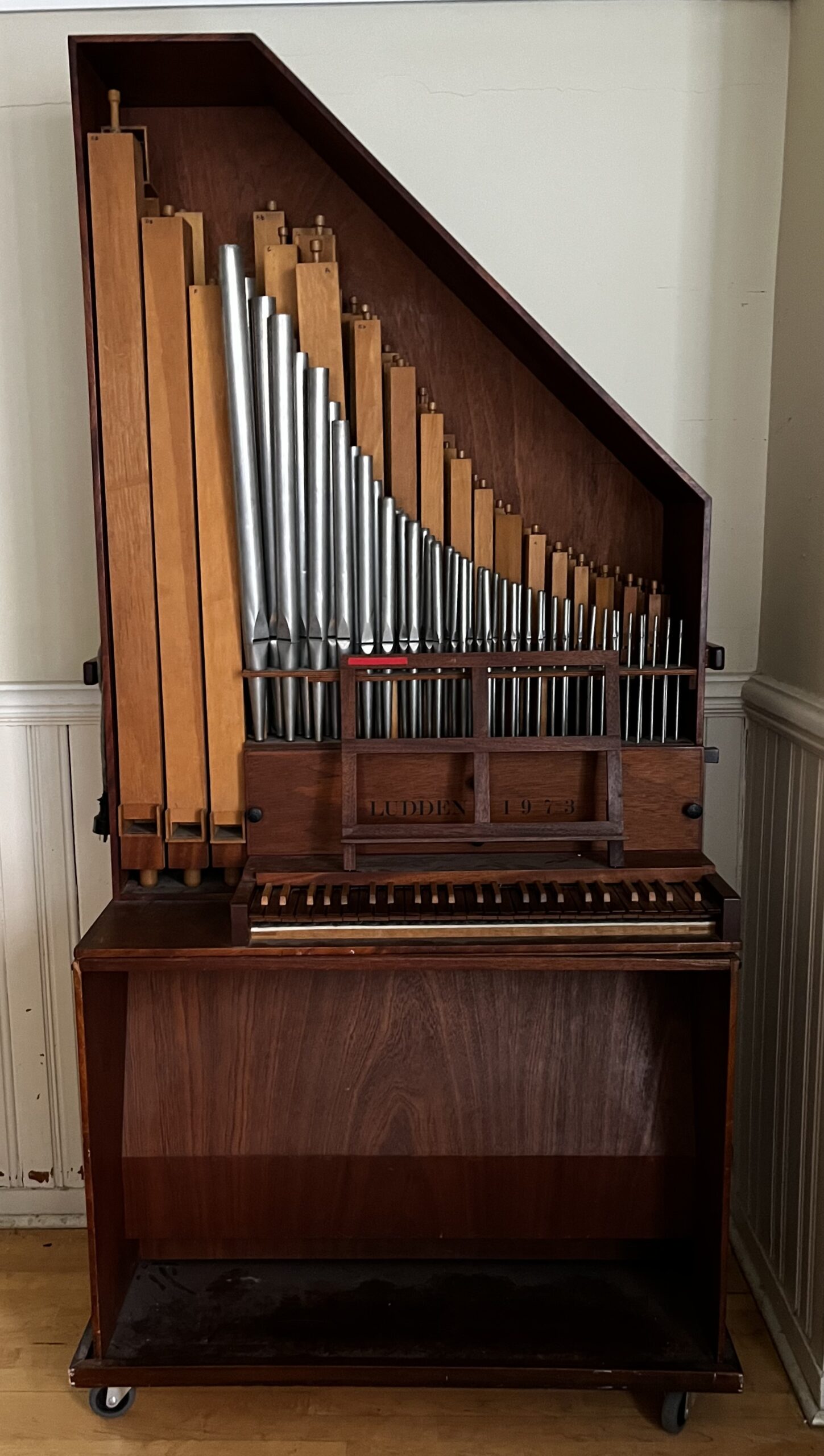
  • Organ built by James Ludden, given by Priscilla Rawson Young in 1973

    4 Nov. Priscilla Rawson Young gave a portable pipe organ, built by James Ludden, which is still used for rehearsals in our Music Room.

See also:

  1. Pauli Murray and Timeline entries:  1970, 1977,1985, 1989, 2012 & 2015.
  2. Priscilla Young:  Timeline entries: 1909, 1939194219711994 & 2000.

1971

Rosemary Dodge Hutcheson became our first woman officer.  Former president of the Junior League of Boston, she served as Clerk of the Vestry for two years.  See also 1931.

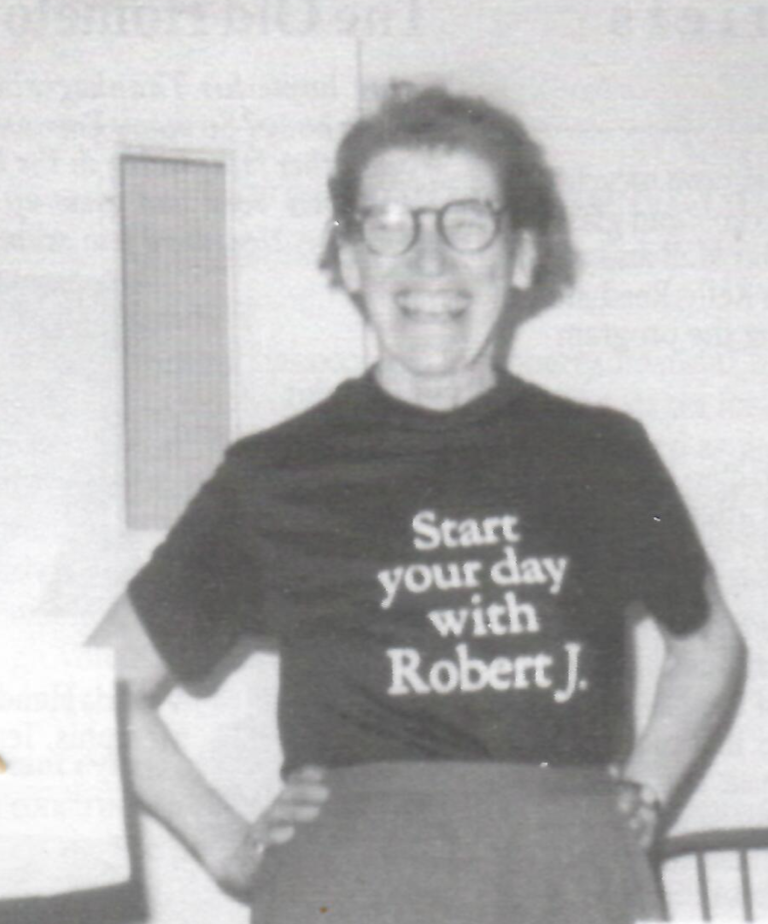
“Start your day with Robert J.”  says Priscilla Young’s T-shirt.

Robert J. Lurtsema took over Morning Pro Musica on WGBH’s FM station.  On Sunday mornings he often broadcast a Bach cantata from Emmanuel.  Our benefactor Priscilla Rawson Young supported not only our cantatas but also GBH and the Boston Symphony Orchestra.

For more about PR Young, see: 19091939, 19421973, 1994 & 2000.


1969

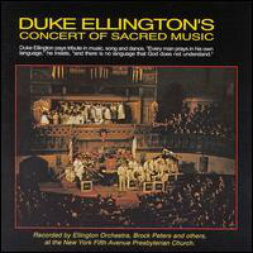
EllingtonConcert_of_Sacred_Music

Thanks to Radio Corporation of America for use of this image.

  • J. Barkev Kassarjian joined our vestry.  His wife Mary Catherine Bateson gave birth to their daughter Savanne (Vanni) Margaret, who was baptized here.
  • April 20.  Edward Kennedy “Duke” Ellington‘s Second Concert of Sacred Music, sponsored by the Episcopal Chaplaincy at Harvard and Radcliffe, was performed for a large audience in our Sanctuary with our ninth rector, The Rev. Al Kershaw presiding.  Please see Wikipedia for information about this and Ellington’s other sacred concerts.

See also Timeline entries about Kershaw: 1956, 19631966.

1966

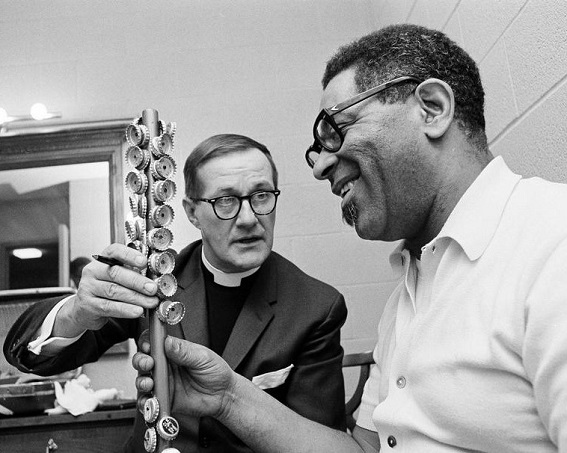
Jan. 14.  The Rev. Alvin L. Kershaw served as master of ceremonies for the first  Boston Globe Jazz and Blues Festival, held at the Boston War Memorial Auditorium (now the Hynes Convention Center).

April 24.  More than 500 people attended a jazz service with Al Kershaw presiding.  Trumpeter Herb Pomeroy and his sextet played saxophonist Edgar (Ed) Summerlin‘s “Liturgy of the Holy Spirit”, with text based on the Eucharistic Prayer of Hippolytus (c. 217 CE) and adapted by the New York poet William Robert Miller.

See also Timeline of Jazz @ Emmanuel & this Timeline’s entries about Kershaw: 1956, 19631969.

The Rev. Al Kershaw & Dizzie Gillespie. Thanks to MetroWest Daily News for this image.

1963

The Rev. Alvin L. Kershaw became our ninth rector. He had previously served as  rector of Christ Church Episcopal Church in Bowling Green, Kentucky (1944 – 1947); Holy Trinity Episcopal Church in Oxford, Ohio (1947 – 1956); and All Saints Episcopal Church in Peterborough, New Hampshire (1956 – 1963).

See his biography & papers.

See also our Timeline entries:  195619661969.

1959

The Business & Professional Women’s Guild (formerly Club) had 98 members.  Its officers were Miss Lydia LeBaron Walker, President; Miss Caroline G. Whitney, Vice-President and Recording Secretary; Miss Margaret A. Cooke, Corresponding Secretary; Maude D. Gowen; Treasurer.  Our archives has its membership directory for that church year. The Guild was active for another decade.

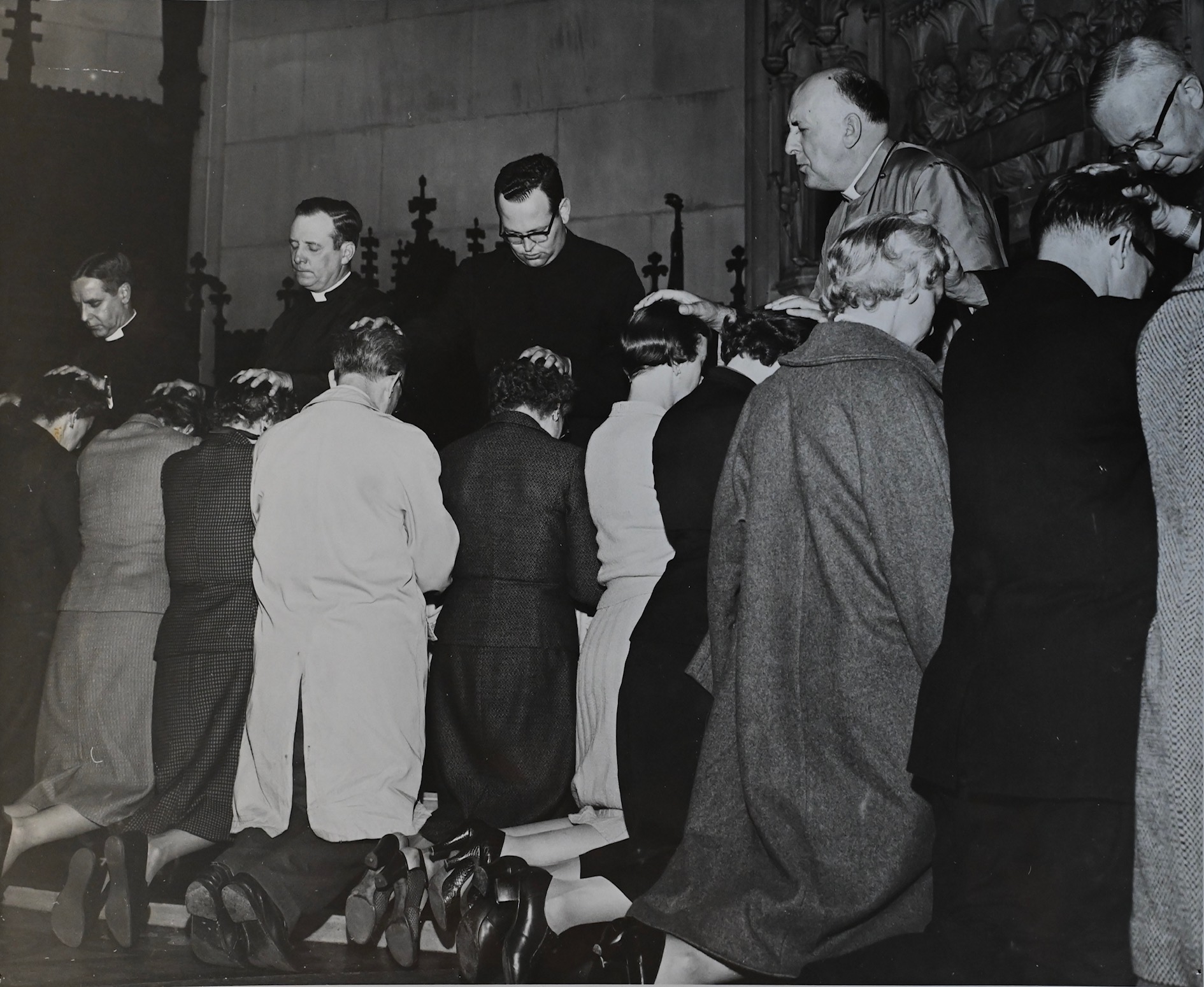
Oct. 18-20. A series of five Healing Services were held with the Rev. Canon Alfred W. Price presiding, assisted by Rector Harold Sedgwick, the Rev. Dr.  Rollin J. Fairbanks,  and other clergy.  Their hands were laid upon more than 3600 heads.  After a nationwide outbreak of polio in 1955, the Salk vaccine had been widely administered.  People in the Commonwealth became alarmed by a recurrence of paralytic poliomyelitis, which peaked here in September. Since about half of the patients had been properly vaccinated, the vaccine’s effectiveness was called into question.  When the Sabin attenuated vaccine was distributed in oral form in 1961, the nation heaved a sigh of relief.

Dr. Fairbanks (1908-1983) was the Robert Treat Paine Professor of Pastoral Theology at Episcopal Divinity School.  Canon Price (1899–1992), who had been awarded a Purple Heart for his service in WWII, was for many years an international warden of the Episcopal Church’s Order of St. Luke the Physician. His works include:  Healing:  The Gift of God (1955), Religion & Health (1962), and a God’s Health:  Handbook for the Practice of the Church’s Ministry of Healing (1976).

Left to right: Rector Sedgwick, Dr. Fairbanks, the Rev. Don Hargrove Gross, the Rev. Canon Alfred W. Price & ?

1956

  • Feb 15.  “Ole Miss” invited the Rev. Alvin Louis Kershaw to speak

on the subject of jazz, an area in which he was considered something of an expert. In the meantime, [he had become] a contestant on the television quiz show The $64,000 Question, where his expertise in the field of jazz helped him to win $32,000. In an interview after the program, he alluded to the possibility of donating a portion of his winnings to the National Association for the Advancement of Colored People (NAACP) to aid in the battle against segregation. When word of this reached Mississippi, the Rev. Kershaw became the target of a firestorm of criticism, which eventually led to cancellation of his scheduled visit to Ole Miss.

–Guide to his papers donated by his widow Doris to U. of Southern Mississippi, McCain Library and Archives.

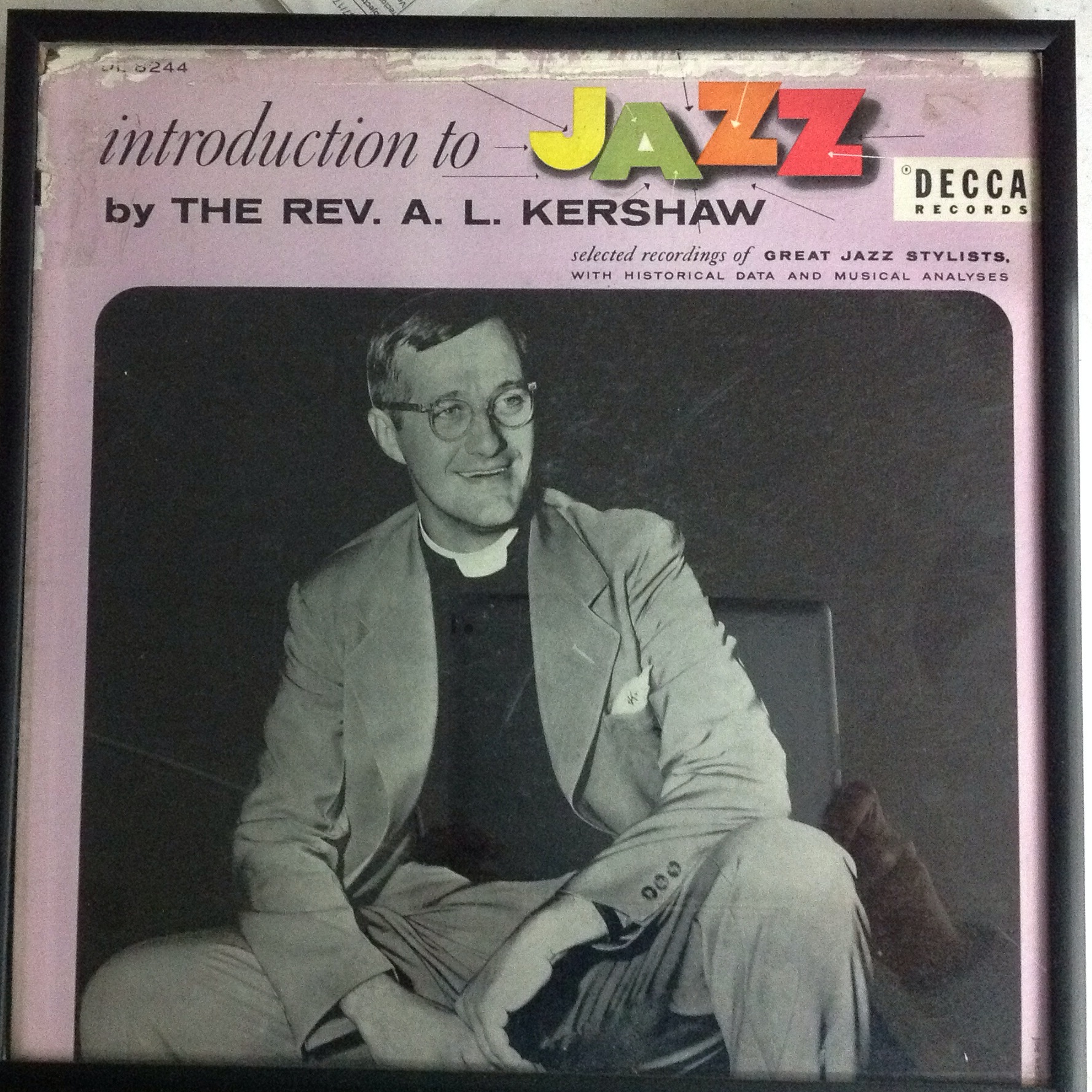
  • His album Introduction to Jazz was released by Decca Records.  Our archive has a copy of the record, which contains “Selected recordings of great jazz stylists, with historical data and musical analyses” and these tunes:
      1. Snag it (King Oliver’s Savannah Syncopators)
      2. Wild man blues (Johnny Dodds’ Black Bottom Stompers)
      3. I’ve found a new baby (Chicago Rhythm Kings)
      4. Tin roof blues (New Orleans Rhythm Kings)
      5. Davenport blues (Adrian Rollini’s Orchestra)
      6. The blues jumped a rabbit (Jimmy Noone’s New Orleans Band)
      7. Five point blues (Bob Crosby’s Bob Cats)
      8. Perdido Street blues (Louis Armstrong)
      9. Georgia cake walk (Art Hodes and his band)
      10. Impromptu ensemble no. 1 (Bobby Hackett et al.)
      11. Tishomingo blues (Bunk Johnson)
      12. Chimes blues (George Lewis and his Ragtime Band).

See also Timeline entries:  1963, 1966, 1969.

Introduction to Jazz


  • March. Rector R.G. Metters in his annual report summarized the decade of his tenure, including:
    • Growth in communicants
    • Growth of investments by more than a quarter
    • Increase in pledges from $22K to almost $43K
    • Renovation of the church and parish house  at a cost of more than $115K
  • Oct. 1. Rector Metters resigned and later became headmaster of St. George’s School in Spokane WA.  The vestry appointed the Rev. David Siegenthaler priest-in-charge.