
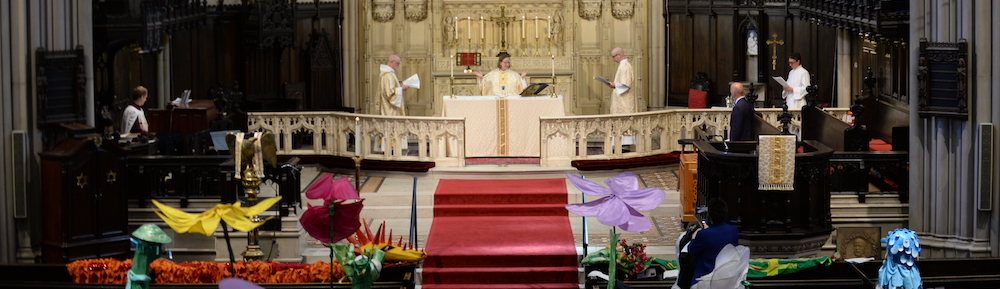
Our Racial Justice Working Group follows the news of ongoing reparations processes as they unfold in institutions of The Episcopal Church. One of TEC’s oldest seminaries, the Virginia Theological Seminary (VTS), recently announced the next phase of its historical research and monetary reparations: “VTS breaks ground on reparations memorial honoring at least 557 African American laborers.” —Episcopal News Service, September 26, 2025 Continue reading
Tag Archives: reparations
Parish Meeting on Creating a Culture of Repair & Other Events
We were delighted to have over 30 parishioners join in our October 5, 2025, parish meeting on creating a culture of repair at Emmanuel Church. The prompt for small-group discussion was: “What does it mean for Emmanuel Church to become a parish doing reparations?” A summary will be forthcoming from this Vestry-sponsored event. For now, we note that we are building on much good work done in our community in years past; and the work continues. Continue reading
#DouglassWeek
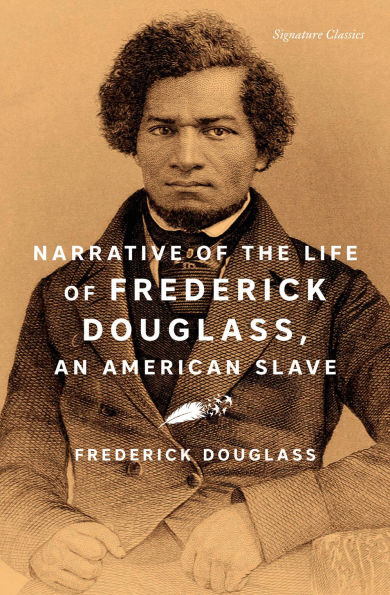 Fall has arrived and we are back to learning about and attending programs related to racial justice. As we write, Boston and other Massachusetts cities are hosting the annual celebration of #DouglassWeek.
Launched in 2021, the collaborative event series highlights Frederick Douglass’s time in Ireland in 1845. He spent about four months there in self-imposed exile after the publication of the first edition of Narrative of the Life of Frederick Douglass, an American Slave.
King’s Chapel unveils ‘Unbound’.
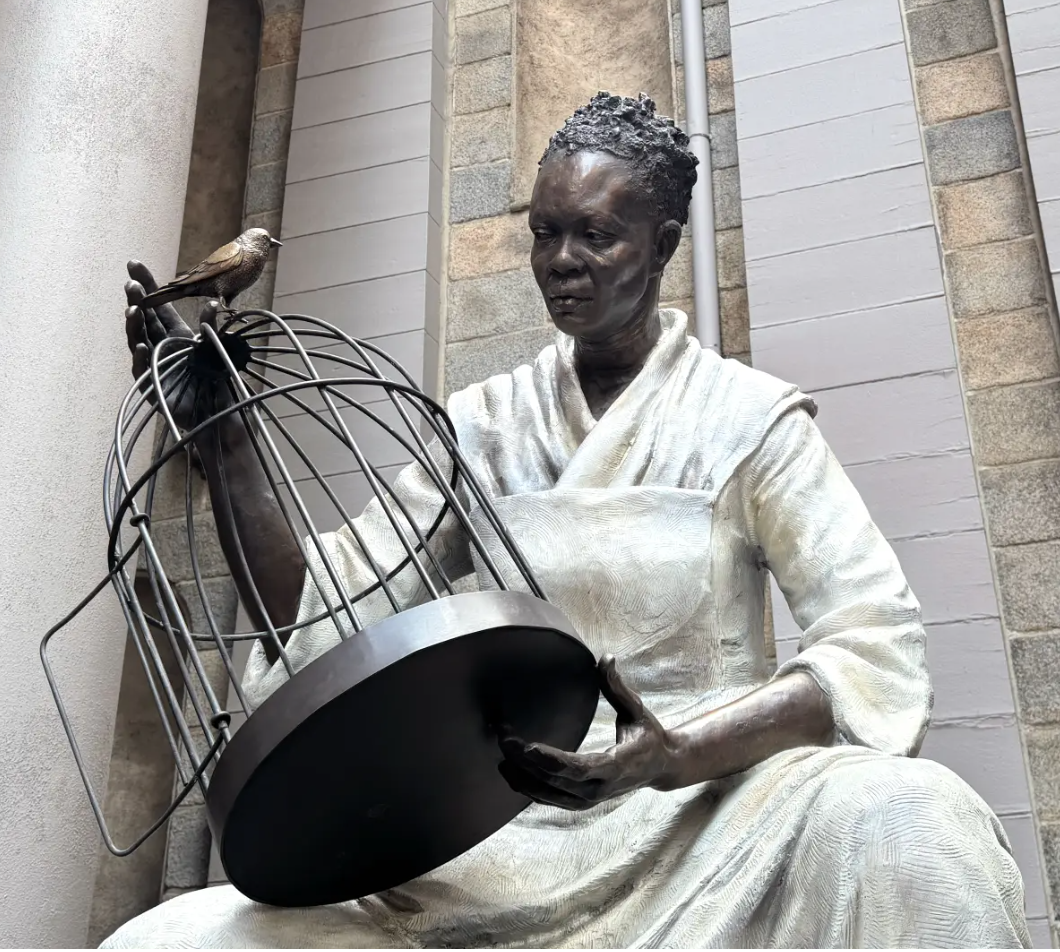
photo credit: WGBH Boston
On September 14, 2025, King’s Chapel unveiled its Memorial Sculpture, “Unbound,” by artist Harmonia Rosales.
Rosales’s work was stewarded by the MASS Design Group. It is a tribute to the 219 enslaved parishioners brought to church by their enslavers.
As many of you know, King’s Chapel has been actively engaged in studying and revealing many aspects of its racial history over recent years. A rich summary, including their plans for an ongoing project, is presented online via the page entitled King’s Chapel Memorial to Enslaved Persons.
September 22, 2025 –Mary Beth Clack, Mary Blocher, Cindy Coldren, Pat Krol, Liz Levin.
Juneteenth Events in the Boston Area
Aside
The local commemorations of Juneteenth included three events of note. Dio Mass held its Juneteenth service at St. Stephen’s Church, Lynn, with the Rev Bernadette Hickman-Maynard presiding. At Old South Church. The Reverend June Cooper, Theologian in the City of Boston and alum of the United Boston Sankofa Cohort, preached. Her reflection on the holiday, and the unfinished work of repair, appears in this blog post, Juneteenth, and the Unfinished Work of Freedom.
Juneteenth at Longfellow House-Washington’s Headquarters was held on June 22, 2025. The accompanying video, Who are my ancestors? highlights the reflections of the descendants of Cuba and Darby Vassall, who lived at the house. Continue reading
The Green Book Tour of Boston’s South End
May 26, 2025
A reprise of the Green Book Tour of Boston was offered on May 17, 2025. The tour was organized by The Reverend June Cooper, social justice educator, activist, and Theologian in the City at Old South Church.
She invited Byron Rushing to be our guide. Byron was Massachusetts State Representative for the South End from 1983-2019 and has been lay deputy to our General Convention since 1973. The tour was supported by the Boston Faith and Justice Network.
Victor Hugo Green, a postal worker, created the first Green Book in 1936. It was published until 1966 (with the exception of the years 1940-1946). A guide to establishments open to black travelers during the Jim Crow era, it served as an essential tool in welcoming them to many U.S. towns and cities.
Included on the Boston tour are the Union Combined Parish, the Columbus Avenue AME Zion Church, and Harriet Tubman Park, along with jazz club locations, other community gathering places, and Slade’s, operating since 1929. We also stopped at the home of Julia Henson, 25 Holyoke Street, which was the first Harriet Tubman House, founded to provide housing for black women who were excluded from college dormitories and rooming houses. Henson founded the African American Northeastern Federation of Women’s Clubs and was active in the settlement house movement. Harvard’s Houghton Library acquired a copy of the 1949 edition of the Green Book, and it is freely accessible via this link.
The chapter on Massachusetts lists 50 businesses open to Black travelers in Boston, including hotels, restaurants, beauty parlors, barber shops, tailors, and one jazz club. In the Introduction, we read: “There will be a day sometime when this guide will not have to be published. That is when we as a race will have equal opportunities and privileges in the United States. It will be a great day for us to suspend this publication for then we can go wherever we please, and without embarrassment. But until that time comes, we shall continue to publish this information for your convenience each year.”
—Mary Beth Clack, Mary Blocher, Cindy Coldren, Pat Krol, Liz Levin
Suzanne Hiatt & Pauli Murray
Emmanuel Church dedicated its third pulpit statue this past Sunday to the Rev. Dr. Suzanne Radley Hiatt (1936-2002), priest, theologian, prophet, professor, and advocate. Sue Hiatt was ordained as one of the Philadelphia 11 (July 29, 1974), and served as an inspirational mentor to many, including our rector.
Pam’s sermon on Sunday included examples of Hiatt’s devotion to equality and justice; as “bishop to the women,” Pam said that she was “pressing the Church to deeper inclusion and fuller love.”
It was interesting to learn that Suzanne Hiatt wrote about her connections to Pauli Murray (1910-1985), who had discerned from our parish and in 1977 became the first African American woman to be ordained in the Episcopal Church. In April 1970, they attended the Graymoor Conference, an important event in the history of women’s ordination, attended by about 60 women and numerous male supporters. One of the organizers, Hiatt was stalwart in her advocacy of the movement. After years of experiences as a civil rights lawyer, professor, and Women’s Movement activist, Murray attended Graymoor. After the conference, she and Henry Rightor, a former lawyer and professor of pastoral care at Virginia Theological Seminary, studied the Church’s Canons and Constitutions. Their report presenting their findings after the conference set the stage for persuasive arguments for women’s ordination.
Sue Hiatt’s admiration for Pauli Murray was expressed in an article she wrote in the Journal of Feminist Studies in Religion.* She noted that she had learned a lot from delving into Pauli Murray’s writings about her unceasing dedication to the pursuit of justice. Hiatt considered Murray a “foremother, not only to be proud of, but also to learn from and emulate.” Those who came before Hiatt’s generation “shook the foundations so that we could topple the walls.” Hiatt deeply admired Murray’s contributions: “Pauli believed above all in justice, and despite a lifetime of disappointments and tragedies, she never stopped seeking it. She just never quit.”
May we be inspired by the women who now live on in our sanctuary, and, as Pam said in her Eastertide sermon: “Arise, wake up, come alive to become who and whose you are called to be.”
*Hiatt, Suzanne, “Pauli Murray (1910-1985): May Her Song Be Heard at Last,” Journal of Feminist Studies in Religion 4 (Fall 1988), 69-73.
See also the chapter of the same title in The Spirit of the Lord is upon Me: The writings of Suzanne Hiatt, ed. Carter Heyward and Janine LeHane (New York: Seabury, 2014). This compilation of Hiatt’s writings is a wonderful tribute to her.
—May 15, 2025. Mary Beth Clack, Mary Blocher, Cindy Coldren, Pat Krol, Liz Levin
Thoughts of Reparations in Lent
April 15, 2025
“Repairer of the breach,” they shall call you, “Restorer of ruined dwellings.” Isaiah 58: 9–10, 12
Reparation is not a task or a moment; it is a process and a movement. As the prophet Isaiah and at least one diocesan mission statement make more clear, reparation, and its sibling “restoration”, line the path which leads from remembrance to reconciliation and, I would add, redemption. No matter recent, lawless chaos and profuse oppression, I believe that it is important to remember that this path persists and we have made a covenant to labor on.
As stated in the Diocese of Washington’s commission on reparations mission: “It [reparations] involves a process to remember, repair, restore, and reconcile historical and continuing wrongs against humanity that can never be singularly reducible to monetary terms, but must include a substantial investment and surrender of resources.
”This reminds me of another covenant we are in the midst of, namely to keep a holy Lent, to engage in the process of prayer, fasting and almsgiving that we might deepen our relationship with God and offer compassion and mercy to one another in more profound ways.
Not only might the process of engaging Lent be reparative of self and soul, it also might lead us to a new understanding of how we might become repairers of the breach and restorers of ruined dwellings.
For me the agents of repair and restoration are mercy and compassion. They are the compass which identifies brokenness and the glue which joins jagged edge to jagged edge.
Goodness knows jagged, shattered edges surround us in this wilderness. And I believe there is another agent which assists us in finding the courage and hope to even tackle the work of reparation and restoration when we have almost given up on grace…almost. It is memory.
Remembering is the agent which precedes restoration and reparation, catalyzes and inspires us toward action.
In my own quest I am remembering Bishop Budde’s sermon at the National Cathedral on January 21, 2025, when she courageously reminded the newly inaugurated president of his and our mandate to be merciful. In that reminder I felt some, albeit thin, thread of grace reenter political discourse repairing frayed hope.
Remembering, summoning our life stories of mercy and justice, is the first step toward the grace of redemption.
Remembering can be as a light which shines on possibility in the face of what seems impossible.
Remembering called us into the wilderness and will sustain us in our summoning of mercy and compassion, in our beloved communal work toward reparation and restoration.
Remember that you are dust and to dust you shall return. It is in returning, re turning, that we know God’s whole and perfect grace.
— The Rev. Dr. Martha Tucker
Boston’s Home for Aged Colored Women
March 3, 2025
To honor women’s history this month, we turn to a story of little seen women in Boston at the time Emmanuel was being founded. The Boston Globe published an article about the discovery of a marker for the Home for Aged Colored Women (1860-1944) in Dorchester’s Cedar Grove Cemetery (“From a mass grave in Boston, unearthing Black women’s lives” by Karilyn Crockett (February 3, 2025)
The Home, founded in 1860, was among the Boston institutions that offered shelter and support to women who did not have financial or other family support. In the case of the Home for Aged Colored Women, historical news accounts and the organization’s records (located at the Massachusetts Historical Society) state that women of color applied to the Home after not being welcomed at almshouses and other benevolent institutions.
We discovered that Emmanuel parishioners were benefactors of the Home from the 1860s onward (among them was Susan Coombs Dana (Mrs. Wiliam R. Lawrence).
We invite you to explore these sites which explore the Home’s history in more detail
—The National Park Service’s page about the Home.
–Mary Beth Clack, Mary Blocher, Cindy Coldren, Pat Krol, Liz Levin
For the Next Generation
February 17, 2025
During Black History Month, we invite you to read some of the works written by authors speaking to the next generation. Our suggestions include:
–Langston Hughes’s poem, “Mother to Son” (first published in 1922 in The Crisis, the official magazine of the National Association for the Advancement of Colored People (NAACP); in 1926, the poem was included in his Hughes’s poetry collection, The Weary Blues)
–James Baldwin’s “A Letter to My Nephew” (published as “My Dungeon Shook: Letter to My Nephew on the One Hundredth Anniversary of the Emancipation,” in The Fire Next Time (New York: Knopf Doubleday, 2013)
–Imani Perry’s Breathe: A Letter to My Sons (Boston: Beacon Press, 2019). Perry offers a layered meditation.
–Ta-Nehisi Coates’s Between the World and Me (New York: Random House, 2015)
–Mary Beth Clack, Mary Blocher, Cindy Coldren, Pat Krol, Liz Levin