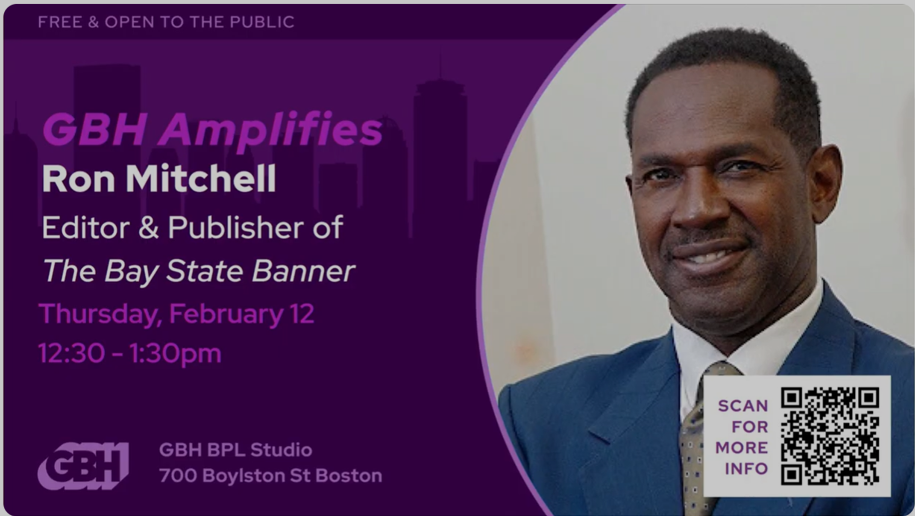
 In its 60th Anniversary Forum Series The Bay State Banner presented on February 12, “The State of Black America.” Two open forums complemented the newspaper’s special essay section to commemorate Boston and black history. WGBH sponsored mid-day talks at the Boston Public Library moderated by the Banner’s editor Ron Mitchell. Panelists included Dr. Noelle Trent, executive director of the Museum of African American History of Boston & Nantucket, who spoke about the effort to restore last year’s funding cuts from the Institute of Library and Museum Services. Because black museums are grassroots efforts, the funding has been crucial to the health of the organization. With the community activated an appeal was filed, which resulted in an injunction and restoration of funding. She also elaborated on how other American black museums have contributed to laying the foundation for African American museum scholarship. Continue reading
Tag Archives: museums
Work of Allan Rohan Crite on View in Boston
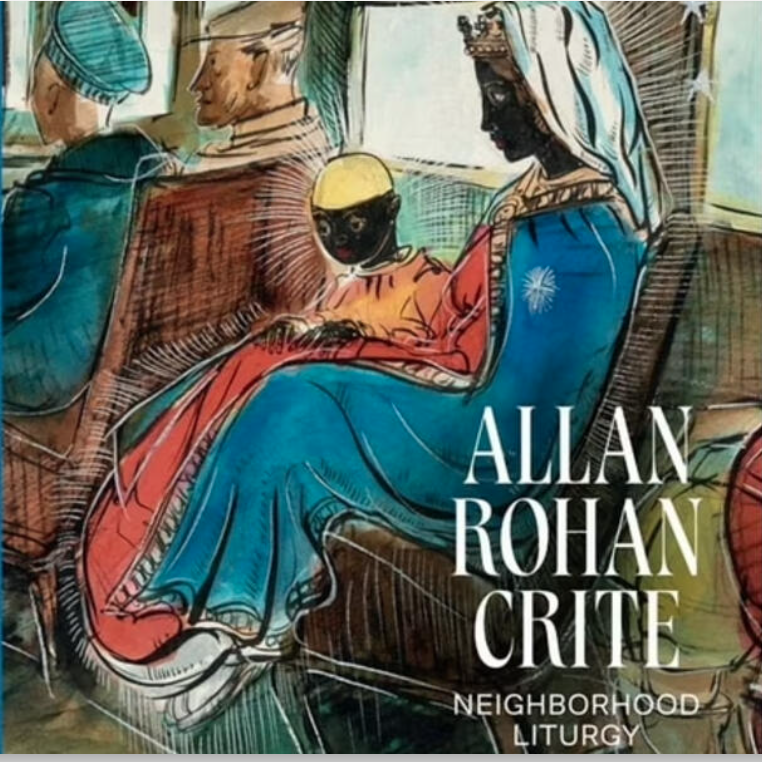
Cover of A.R.C. Neighborhood Liturgy (Princeton U. Press, 2025)
The Gardner Museum and the Boston Athenaeum are hosting exhibitions of the work of Allan Rohan Crite, artist and chronicler of life in Boston’s Lower Roxbury and South End neighborhoods. Both shows opened on October 23, 2025. Allan Rohan Crite: Urban Glory and Allan Rohan Crite: Griot of Boston are creating a resurgence of interest in the work of Crite (1910-2007), who was known as a civic leader, storyteller, and community activist. Influenced by his lifelong devotion to his faith and to local Episcopal churches he supported and loved, his work is again in our midst.
2007
Nov. 14. Craig Smith, our music director and founder of Emmanuel Music, died. Richard Dyer wrote an obituary for Emmanuel Music.
Piano-collector Hu Youyi purchased our Casavant organ and shipped it to the Organ Art Center on Gulangyu Island, Fujian Province, China, where it was restored by Rieger Orgelbau and installed in a concert hall (above) in 2017. See also the record for Opus 700 in the Pipe Organ Database.
1989
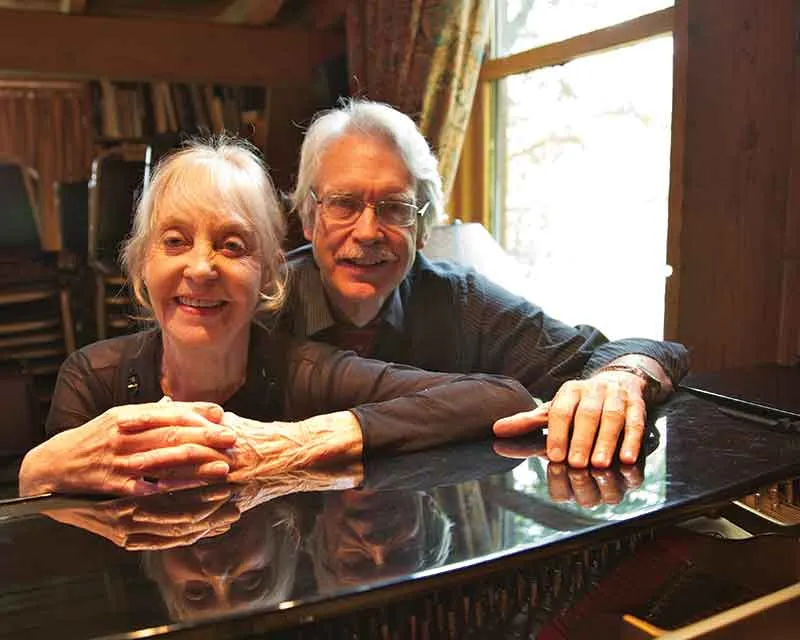
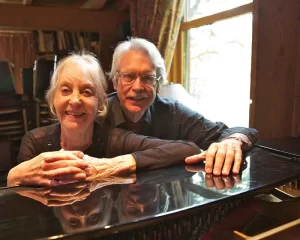 April 8. Emmanuel Music gave a concert in honor of Principal Guest Conductor John Harbison’s 50th birthday (20 Dec. 1988). His wife Rose Mary Pederson Harbison opened with a violin concerto she had played at its 1980 premiere.
- Katharine Ward Lane Weems died and bequeathed a pair of Spanish candelabra now standing in the baptistery of our Sanctuary. Born 22 Feb.1899, she was the only child of Emma Gildersleeve and Gardiner Martin Lane, who was chairman of the Board of Trustees of the Museum of Fine Arts from 1907 until his death in 1914. They lived at 53 Marlborough Street and were members of Emmanuel.
Katharine attended the Museum School from 1915 and began to show her work in 1920. She designed the brick friezes and bronze doors of Harvard’s Biological Laboratories with two massive bronze rhinoceri (one pictured below) installed in the courtyard in 1937.
See also
- Gardiner Martin Lane
- Her other works including the Dolphins of the Sea at the New England Aquarium and the Lotta Fountain on Boston’s Esplanade.
- Finding aid (with biography) for her papers at the Schlesinger Library, Radcliffe
- Her Odds Were Against Me: A Memoir as told to Edward Weeks (NY: Vantage Press, 1885)
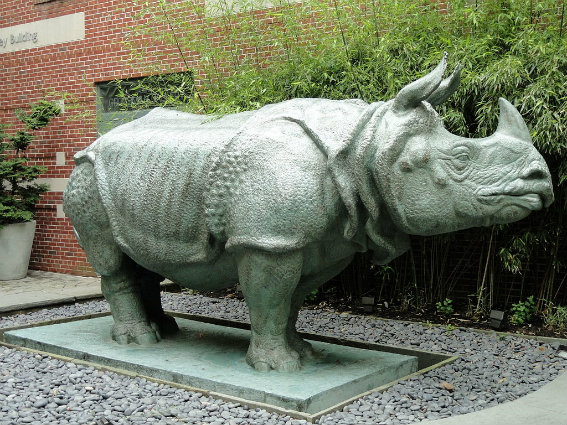
Image by Daderot, WikiCommons, of her sculpture at the Museum School, Boston
1909
-
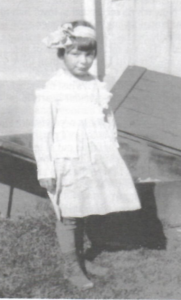
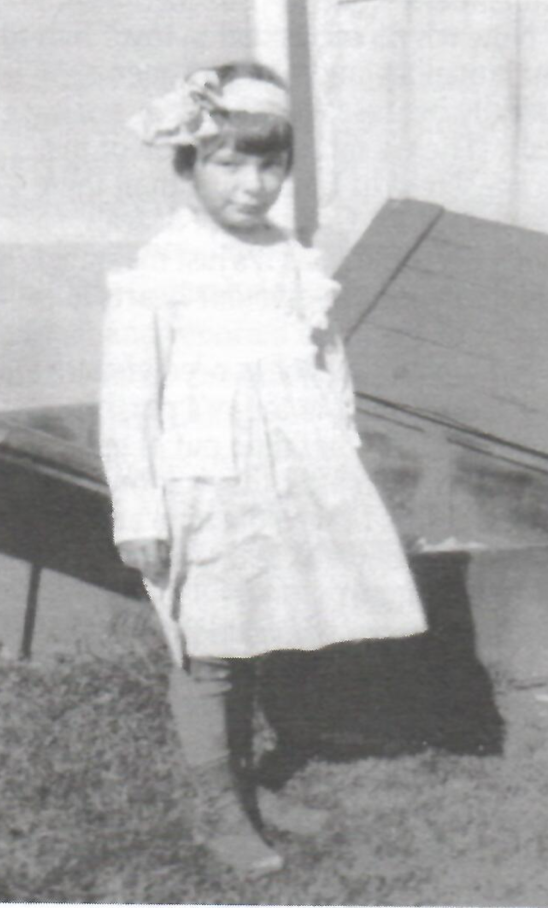
Thanks to the late Craig Smith for this image of Priscilla as a girl, c1915.
7 May. Benefactor of our cantata program, Priscilla Rawson (Young) was born in Bayside, NYC to Clementine Herschel of Holyoke MA & Hobart Rawson of Cincinnati OH. She was named for her Mayflower ancestor Priscilla Mullins Alden, who in turn was the namesake of Priscilla, now thought to have been the amanuensis of Paul the Apostle and author of the Epistle to the Hebrews [1]. See also 1939, 1942, 1971, 1973, 1994 & 2000.
- Elwood Worcester and Samuel McComb published The Christian Religion as a Healing Power: A Defense and Exposition of the Emmanuel Movement (NY: Moffat, Yard), full text. It is an addendum to their Religion and Medicine: The Moral Control of Nervous Disorders (NY: Moffat, Yard, 1908), full text.
-

Charlotte Spaulding (Mrs. Ernest) Jacoby, c. 1907. Photo credit: Buffalo AKG Art Museum
Parishioner Ernest Jacoby started a group for alcoholic men with special emphasis on fellowship as a path to recovery. It eventually moved from our basement and continued into the 1930s as the Jacoby Club. The first meeting of Alcoholics Anonymous in Boston was held in 1940 at the Club, then at 115 Newbury Street. Papers of the Club are archived at the Mass. Historical Society.
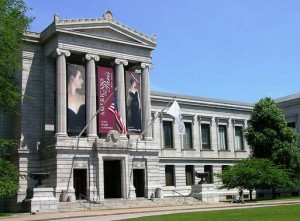
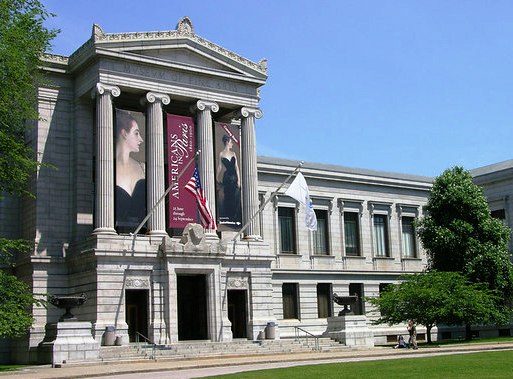
Entrance of the Museum of Fine Arts, Boston
- The first section of parishioner Guy Lowell‘s design for the Museum of Fine Arts was completed. Lowell (1870-1927) also designed the Charles River Dam (built in 1910) and the Esplanade from the Charlesgate to the dam. For more about him and his other architectural achievements, please see Wikipedia.

1. Ruth Hoppin, Priscilla’s Letter: Finding the Author of the Epistle to the Hebrews. Ft. Bragg CA: Lost Coast Press, 2000.
1864

The Rev. Mary Douglass Burnham, 1899, by permission of SUNY Upstate Medical University
Having learned of a recent massacre of Sioux Indians from her friend Evelina Bogart of Albany NY, parishioner Mary Douglass Saville (Mrs. Wesley) Burnham (1832-1904) founded the Dakota League, a mission of our diocese (and eventually other Boston-area churches) to support Native Americans in the Dakota Territory.
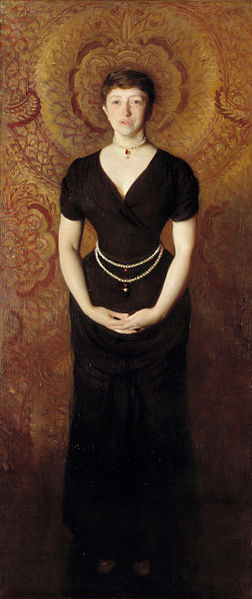
Isabella Stewart Gardner by John Singer Sargent, courtesy of the Gardner Museum via WikiCommons
April 10.Isabella Stewart Gardner was confirmed at Emmanuel by the Rt. Rev. Dr. Manton Eastburn, Bishop of Massachusetts. It was the fourth anniversary of her marriage to John Lowell Gardner, Jr., who had purchased Pew 28 in 1862. Although the Stewarts had been members of Grace Church in New York City, their children were not confirmed until they reached adulthood. Louise Hall Tharp in her biography Mrs. Jack hypothesizes that Isabella’s confirmation “might have been a sort of thank-offering for the child she so much wanted”. John Lowell 3rd, born on June 18, 1863, unfortunately died on March 15, 1865. His baptism and burial are recorded in our parish register. The Gardners, who lived nearby at 152 Beacon St., later raised their orphaned nephews, sons of Jack’s brother Joseph, also owned a pew until his death in 1875.
Take a visual tour of her museum and its collection at Google’s Cultural Institute.