Risen

Easter 2C, April 27, 2025.  The Very Rev. Pamela L. Werntz

Acts 5:27-32. Jesus, whom you had killed by hanging him on a tree.
Revelation 1:4-8. To him who loves us and freed us from our sins by his blood.
John 20:19-31. Peace to you…peace to you…peace to you.

O God of love, grant us the wisdom, the strength and the courage to seek always and everywhere after truth, come when it may, and cost what it will.


Blessed are you who come to church on the Sunday after Easter, in spite of a trifecta of truly terrible theological ideas that get repeated every single year on this day, no matter what.  The first is from Luke the Evangelist in the Acts of the Apostles, where Peter accuses the high priests of having Jesus executed.  The second is from John the Divine in Revelation, the idea that Jesus’ death was a blood sacrifice required for atonement with God.  The third is the disparagement of doubt from John the Evangelist. We will hear some good and comforting news today from the prophet Isaiah, but you’ll have to wait to hear it until after communion. These four texts (the first three from the New or Second Testament, and then the text from Isaiah in the Old or First Testament) do not support the fallacious idea that the God of the Old Testament is a God of wrath and the God of the New Testament is a God of love. I cannot say often enough that the God of Jesus is the God of Israel. There is plenty of love from God in the First Testament and plenty of wrath in the Second Testament, but Christians tend not to hear or read scriptures in a way that facilitates our comprehension. Continue reading
1911

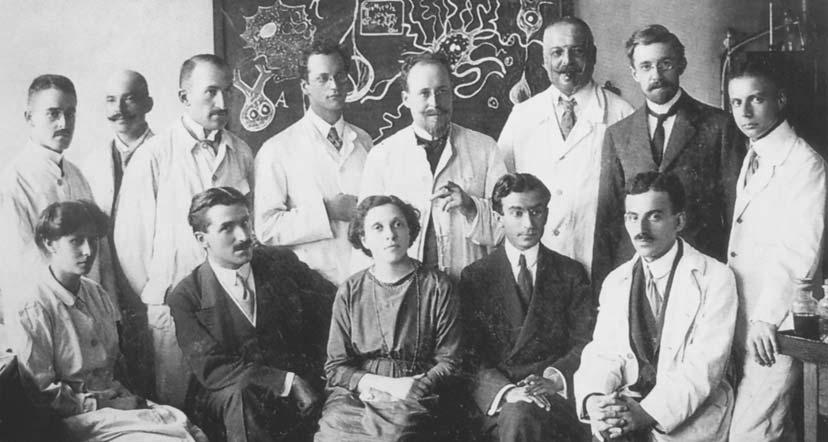
June 2. Rector Elwood Worcester presided at the funeral of Dr. Emma W. Davidson Mooers, who had been a parishioner since 1880. She had died on May 31 at 52 of streptococcal meningitis contracted when she and Dr. Elmer Ernest Southard were performing an autopsy.  She was one of 13 women to receive an MD from U. of Michigan in 1884, then worked at Northampton State HospitalMcLean Hospital, and the neuropathology laboratory of Dr. Alois Alzheimer in Munich before becoming Custodian of Harvard’s Neuropathological Collection in 1910.  Her articles on syphilis and other bacterial infections of the nervous system were published in the precursors to the American Journal of Psychiatry and  New England Journal of Medicine. May this pioneer rise in glory!

Dr. Emma W.D. Mooers seated in center with Dr. Alois Alzheimer (back row 3d from right) and co-workers in his Laboratory for Neurology, Munich, 1909.
Credit: Wikicommons

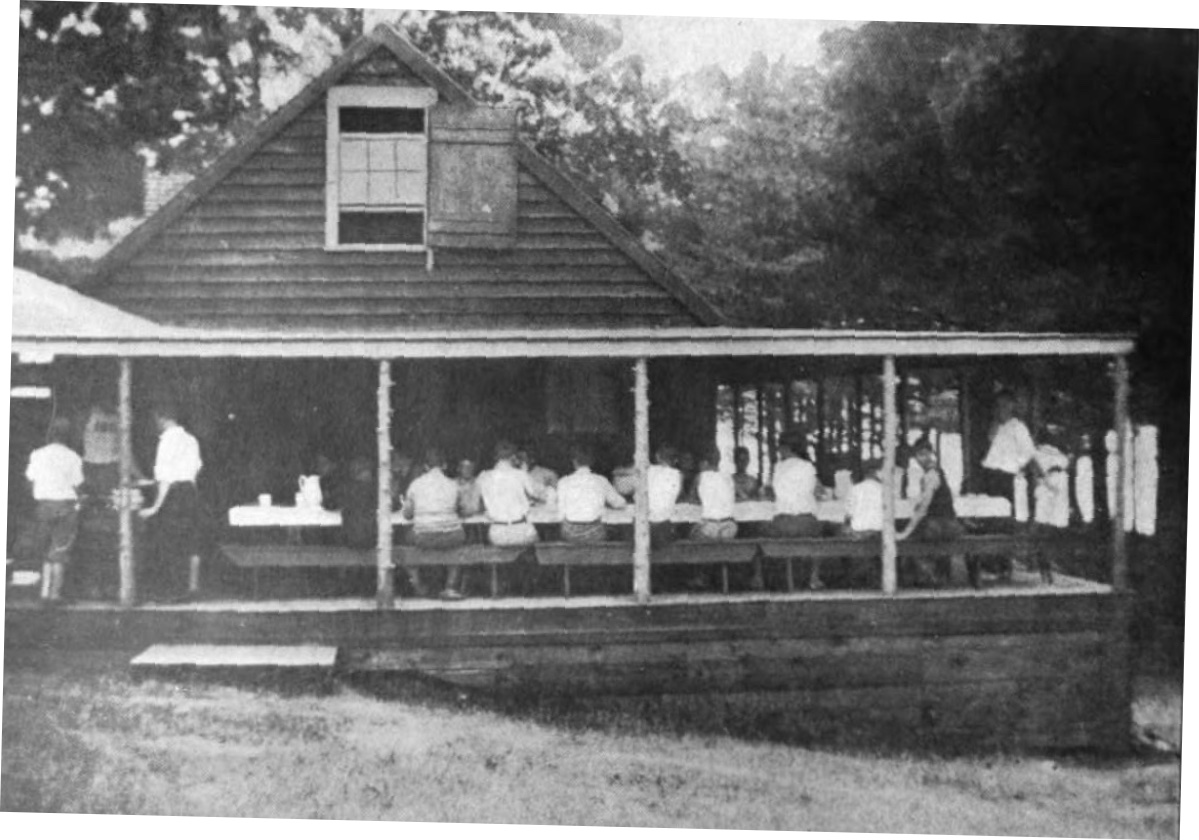
July.  Choirmaster Weston Spies Gales, young William Appleton Lawrence (1889-1968), and a cook, Mr. Wood, took thirty choirboys to Camp Lowell in Winthrop, Maine, for a fortnight of fellowship.


1909

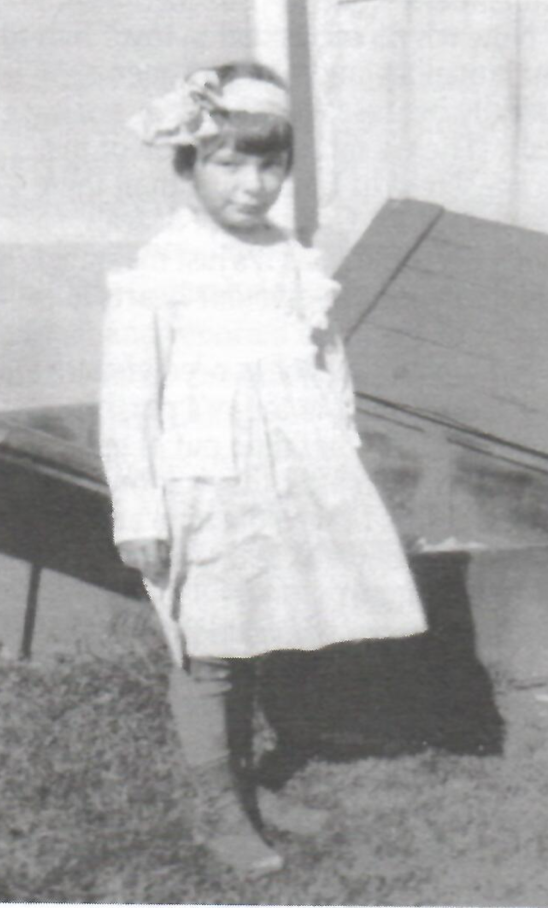
  • Thanks to the late Craig Smith for this image of Priscilla as a girl, c1915.

    7 May.  Benefactor of our cantata program, Priscilla Rawson (Young) was born in Bayside, NYC to Clementine Herschel of Holyoke MA & Hobart Rawson of Cincinnati OH. She was named for her Mayflower ancestor Priscilla Mullins Alden, who in turn was the namesake of Priscilla, now thought to have been the amanuensis of Paul the Apostle and author of the Epistle to the Hebrews [1].  See also 1939, 1942, 1971, 1973, 1994 & 2000.

  • Elwood Worcester and Samuel McComb published The Christian Religion as a Healing Power: A Defense and Exposition of the Emmanuel Movement (NY: Moffat, Yard), full text.  It is an addendum to their Religion and Medicine:  The Moral Control of Nervous Disorders (NY: Moffat, Yard, 1908), full text.
  • Charlotte Spaulding (Mrs. Ernest) Jacoby, c. 1907. Photo credit: Buffalo AKG Art Museum

    Parishioner Ernest Jacoby started a group for alcoholic men with special emphasis on fellowship as a path to recovery.  It eventually moved from our basement and continued into the 1930s as the Jacoby Club.  The first meeting of Alcoholics Anonymous in Boston was held in 1940 at the Club, then at 115 Newbury Street.  Papers of the Club are archived at the Mass. Historical Society.


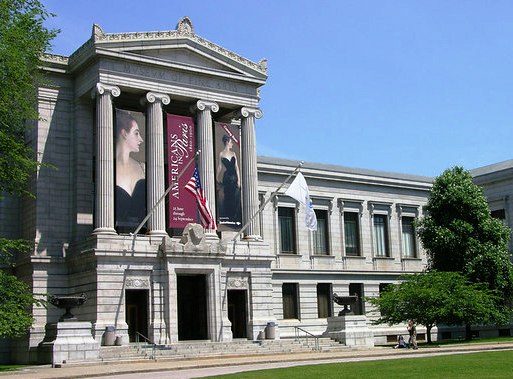
    Entrance of the Museum of Fine Arts, Boston


  • The first section of parishioner Guy Lowell‘s design for the Museum of Fine Arts was completed. Lowell (1870-1927) also designed the Charles River Dam (built in 1910) and the Esplanade from the Charlesgate to the dam.  For more about him and his other architectural achievements, please see Wikipedia.


1. Ruth Hoppin, Priscilla’s Letter: Finding the Author of the Epistle to the Hebrews. Ft. Bragg CA: Lost Coast Press, 2000.