
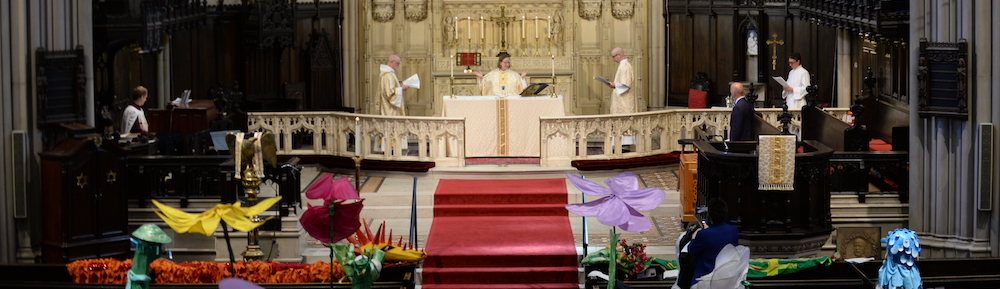
Easter 2C, April 27, 2025. The Very Rev. Pamela L. Werntz
Acts 5:27-32. Jesus, whom you had killed by hanging him on a tree.
Revelation 1:4-8. To him who loves us and freed us from our sins by his blood.
John 20:19-31. Peace to you…peace to you…peace to you.
O God of love, grant us the wisdom, the strength and the courage to seek always and everywhere after truth, come when it may, and cost what it will.
Blessed are you who come to church on the Sunday after Easter, in spite of a trifecta of truly terrible theological ideas that get repeated every single year on this day, no matter what. The first is from Luke the Evangelist in the Acts of the Apostles, where Peter accuses the high priests of having Jesus executed. The second is from John the Divine in Revelation, the idea that Jesus’ death was a blood sacrifice required for atonement with God. The third is the disparagement of doubt from John the Evangelist. We will hear some good and comforting news today from the prophet Isaiah, but you’ll have to wait to hear it until after communion. These four texts (the first three from the New or Second Testament, and then the text from Isaiah in the Old or First Testament) do not support the fallacious idea that the God of the Old Testament is a God of wrath and the God of the New Testament is a God of love. I cannot say often enough that the God of Jesus is the God of Israel. There is plenty of love from God in the First Testament and plenty of wrath in the Second Testament, but Christians tend not to hear or read scriptures in a way that facilitates our comprehension. Continue reading