
Pauli Murray’s Reflections on Issues Dividing the Church

July 29,2024

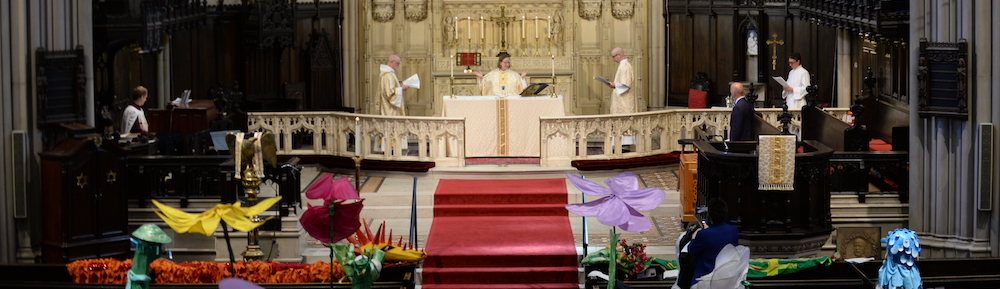
Following our Chapel Camp on the eve of the ordination of the Philadelphia 11, we turn to listen to Pauli Murray’s reflections on the issues that were dividing the Church at the time. From her March 18, 1977, conversation with Heather Huyck (on audiotape streamed by the Schlesinger Library), we learn about her activism prior to the vote on ordination in 1976.

She regularly supported the women seeking ordination, attending the major events from 1973-1976, writing letters to bishops, and participating in the conferences and discussions leading up to the 1976 General Convention. Pauli said that she chose not to attend that convention. She had just entered seminary and was refreshingly candid about her position. She said she told herself, “It’s your business to prepare yourself for the priesthood… and then when you’re prepared you have something to say… I thought the best thing was for me to stay home and pray.” Continue reading
Pauli Murray on Women’s Ordination

July 24th, 2024

Our upcoming Chapel Camp on July 29, 2024, will mark the 50th anniversary of the ordination of women as priests in the Episcopal Church. The first ordination of women took place on July 29, 1974, at the Church of the Advocate in Philadelphia.

The litany written by our Assistant Bishop, the Rt. Rev. Carol Gallagher, for this commemorative year emphasizes both the struggles and firmness of faith of the Philadelphia 11 and the brave women who followed the path to ordination.

We write today about Pauli Murray’s contributions to the movement for women’s ordination a few years leading up to 1974. Pauli actively championed women’s issues before considering her own ordination as the first African American woman to become a priest in 1977. She described her efforts in this way:

“The burgeoning women’s movement absorbed much of my energies, for I was serving on a faculty committee to improve the status of women at Brandeis, on the national board of the ACLU to win support for the ERA, and on the Commission on Women organized by Church Women United and chaired by my good friend Thelma Stevens.” (Song in a Weary Throat, p. 545) Continue reading

Our Diocese’s Report on Slavery and Its Legacy

May 14, 2024

The Diocese of Massachusetts Toolkit for Reparations has a new resource. As of
March 2024, their list of sources includes “And You Will Know the Truth, and the Truth Will Make You Free: A Historical Framework (1620-1840) for Understanding How the Episcopal Diocese of Massachusetts Benefits Todayfrom Chattel Slavery and Its Legacy.”

This report, written by Alden Fossett, a postulant for ordination to the priesthood and Master of Divinity student at Berkeley Divinity School at Yale, was released by the Subcommittee on Reparations of DioMass’s Racial Justice Commission.

The focus of the report is on the “12 Church of England parishes founded in Massachusetts before the American Revolution and the sources of wealth that funded their construction, as well as industries that funded the expansion of the Diocese of Massachusetts during the 19th century.” It complements the earlier history, “The Episcopal Church and Slavery: A Historical Narrative,” written by the Subcommittee on Reparations in November 2021. Continue reading

We Celebrate Bishop Barbara Harris

April 30, 2024

This past Sunday, The Rt. Rev. Dr. Carol J. Gallagher, visited us, presiding and preaching at our Eucharist for the Fifth Sunday of Easter. Bishop Gallagher also dedicated our second pulpit statue. Bishop Barbara Harris’s statue joins that of the Rev. Dr. Pauli Murray, both carved by our resident sculptor, Ted Southwick. Bishop Barbara was known to many of us and stories about her forthright manner and other qualities are legendary. We honor her in this column. While it would be impossible to cite her writings and writings about her, we present a few here.

“I would like to see the church come to some better understanding of what it means to be an inclusive fellowship, how to more fully exhibit the love of Christ in the world.”

— Barbara Harris, The Right Reverend Barbara C. Harris, 1930-2020

Harris, Barbara C. Hallelujah Anyhow! A Memoir. New York: Church Publishing,
2018.

Johnson, Qiana M., “The First Five Black Women Episcopal Priests,” Anglican
and Episcopal History 92:1 (March 2023), p. 81-102. An article about Pauli Murray, Mary, Adebonojo, Barbara C. Harris, Sandye Wilson, and Gayle Harris.

–Mary Beth Clack, Mary Blocher, Cindy Coldren, Pat Krol, Liz Levin
–Published in This Week @Emmanuel Church April 30, 2024

“The Church Awakens”

April 15, 2024

Our recent discovery of “The Church Awakens: African Americans and the Struggle for Justice,” the exhibit website hosted by the Archives of the Episcopal Church, leads us to describe it briefly for you in this column. We encourage you to spend some time with it: there is much to read, listen to, and explore. The timelines include the key moments in which African Americans and their struggle for justice in the Episcopal Church came to the fore.

Other historical information is found in the topical pages (Legacy, Divergence, ESCRU, Transitions, The Special Program, and Awakening). In the Leadership Gallery, you’ll find important figures who have been the subjects of inquiry and discussion at Emmanuel Church, such as William Stringfellow and Pauli Murray.

Among the important lay leaders, Boston’s Byron Rushing is cited. Byron generously offered Emmanuelites two tours during Chapel Camp 2021, giving us a better sense of the history of Black South Boston writ large, and an opportunity to learn about Emmanuel Church’s connections to the African American community. We visited the building that housed Emmanuel’s mission church, the Church of the Ascension and the original Emmanuel House. Visit the Social Justice page under the Missions heading at the Emmanuel Church website for more on those tours.

Do take some time perusing “The Church Awakens” website; it has much to offer.

–Mary Beth Clack, Cindy Coldren, Mary Blocher, Liz Levin, Pat Krol
–Published in This Week @Emmanuel Church April 17 & 24, 2024

Initiatives of Episcopal Dioceses & City of Boston

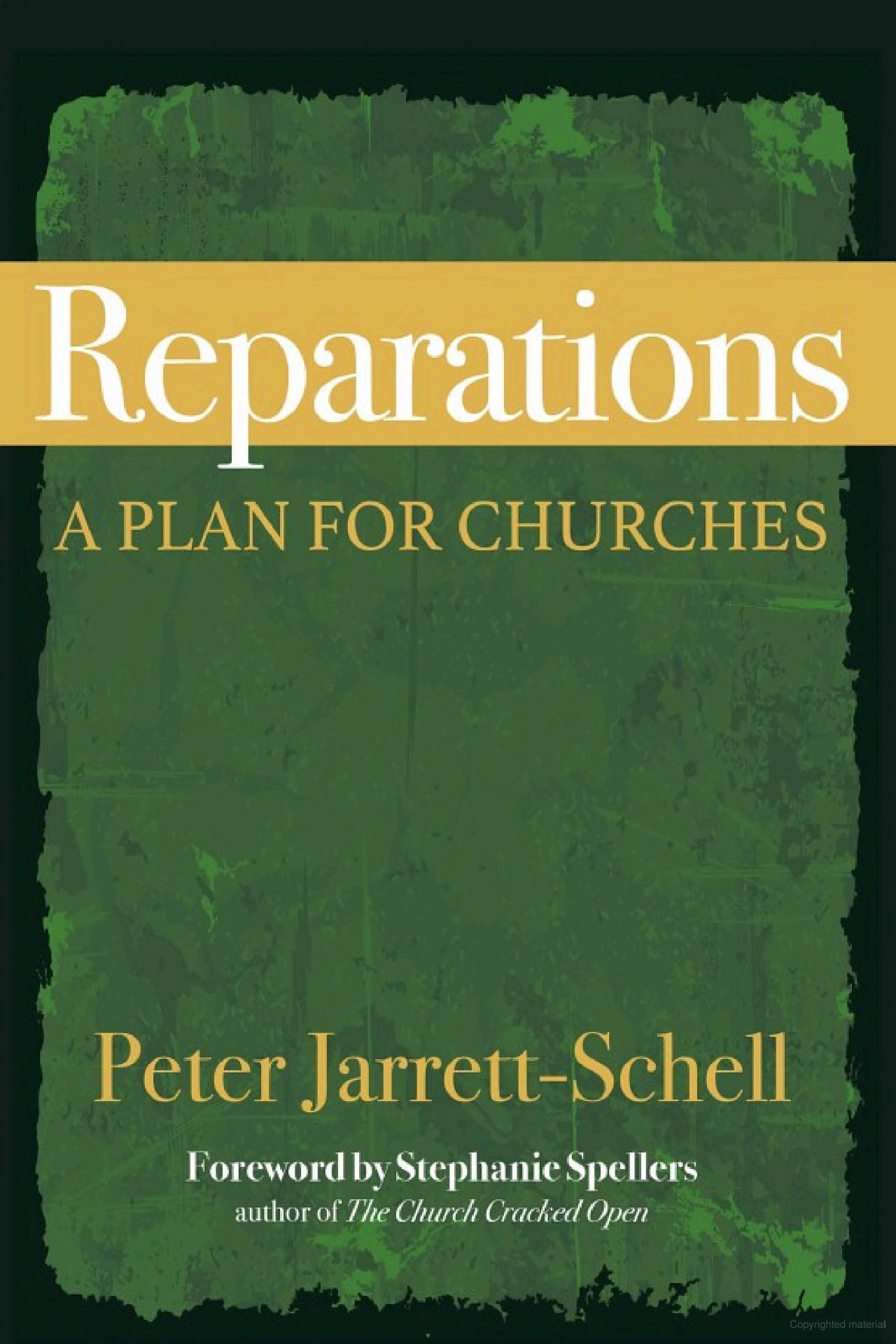
When we met last July in Chapel Camp, Emmanuelites said that they would welcome learning more about resources related to repair, reconciliation, and reparations. Last week, we offered a glimpse of Diomass’s journey on the topic. We’ve begun to explore other dioceses’ postings about discussions and/or commitments to ongoing processes and approaches to restoration and healing. We are gradually learning, too, about other local churches’ processes of inquiry and action in this regard. Continue reading

Chapel Camp Devoted to Repairing the Breach

Our Chapel Camp on July 30, 2023 was devoted to a discussion of our study and thoughts about the Church’s moral obligation and opportunity to engage in reparations. This responsibility rightly involves a relational approach that includes, but also goes beyond, focusing entirely on cash payouts toward addressing ongoing economic, educational, and health inequities.

Our Rector and other parishioners gathered to share initial thoughts on how we might, during sabbatical time this fall, offer resources to broaden our understanding of the moral and spiritual dimensions of reparations. To begin, our vestry discussed Luke 19:1-10, the story of Zacchaeus.

In addition, here are two resources recommended to vestry members during our introductory conversations:

We will continue this column as our exploration continues and will include other voices from our congregation.

–Mary Beth Clack, Cindy Coldren, Pat Krol

Published in This Week @Emmanuel Church August 30, 2023; Sept. 7, 2023

Blessed Pauli Murray

Feast of Pauli Murray.  9 July. 2023. The Very Rev. Pamela L. Werntz

  • Sirach 15:1-6. They will lean on her and not fall.
  • Galatians 3:23-29. There is no longer Jew or Greek…slave or free…male and female.
  • Mark 12:1-12.  The stone the builders rejected has become the cornerstone [or keystone]; this was the Lord’s doing, and it is amazing.

O God of reconciling love, grant us the wisdom, the strength and the courage to seek always and everywhere after truth, come when it may, and cost what it will.


Today is a long-anticipated, special day at Emmanuel Church because we are celebrating the Feast Day of The Rev. Dr. Pauli Murray with the unveiling of a statue of her, beautifully rendered by our Artist-in-Residence Ted Southwick. The statue is installed on the sanctuary pulpit, from which Dr. Murray preached. We are thrilled and honored to welcome her niece Rosita Stevens-Holsey, who will speak with us after the service. While Dr. Murray’s feast day is July 1, the day that she completed her earthly mission, today is the 112th anniversary of her baptism at St. James’ Episcopal Church in Baltimore. Just prior to being ordained, she had described herself as: woman, Christian, seminarian, poet, lawyer, person of color, and senior citizen. Last week in Supreme Court Justice Sotomayor’s dissenting opinion in the bigoted-website case, she recalled Murray’s pioneering work with regard to public accommodations.[1] I want to assure you that Pauli Murray is still speaking to us all. Continue reading

The realm of heaven has come near.

Advent 2A:  Dec. 4, 2022.  The Very Rev. Pamela L. Werntz.

Isaiah 11:1-10.  With the breath of his lips he shall kill the wicked. (That’s some powerful bad breath!)
Romans 15:4-13. On behalf of the truth of God.
Matthew 3:1-12.  He will baptize you with the Holy Spirit and fire.

O God, hope of the prophets, grant us the strength, the wisdom and the courage to seek always and everywhere after truth, come when it may, and cost what it will.


For our Second Sunday of Advent this year, our scripture lessons begin with the second half of a beautiful oracle or poem in Isaiah. Maybe the first half is omitted from our lesson because it is not as charming as the second half. The first half describes how the mighty have fallen like tall trees in a forest that has been clear cut. It’s a wasteland. There are only stumps left where there had been a beautiful forest. The context is the collapse of the Assyrian occupying military, which was itself in control as the result of the total failure of the dynasty of King David, which had utterly miscarried its obligations to care for those who were most vulnerable and weak: aliens, widows, orphans, and other impoverished people. The government of the people of God had neglected its duties to be morally responsible for doing no wrong, no violence, to the neediest people. Continue reading

Keep your hand on the plow and hold on.

Proper 8C, 26 June 2022, The Rev. Pamela L. Werntz.

1 Kings 2:1-2, 6-14. You have asked a hard thing….(Keep your eyes on me as I am taken).
Galatians 5:1,13-25.  The fruit of the spirit is love, joy, peace, patience, kindness, generosity, faithfulness, gentleness, and self-control.
Luke 9:51-62. Follow me.

O God our help and our hope, grant us the strength, the wisdom, and the courage to seek always and everywhere after truth, come when it may, and cost what it will.


Buckle up. On Friday, I was listening to a recording of Mahalia Jackson singing the African American spiritual “Keep your hand on the plow, hold on,” when the news came that the Supreme Court of the United States had overturned Roe vs. Wade, eliminating the Constitutional right to the bodily autonomy of people who are pregnant. It hit me like the news of a loved-one’s death after a prolonged illness. The news seemed sudden and felt devastating, even though I expected it. It’s like a gut punch or, to put a finer point on it, for some of us it’s a uterine punch. The majority decision that reproductive autonomy, when it comes to pregnancy, is a states-rights issue rather than a human-rights issue, will immediately eliminate access to legal abortions in 20 states, for about 25.5 million people with a uterus who are of reproduction age (which starts at about 12, by the way, and can go beyond 50). Continue reading