
- 1 Jan. Orbis Books published When Tears Sing: The Art of Lament in Christian Community by our 11th rector, The Rev. Dr. William Blaine-Wallace.
- 21 Jan. Boston Sun article by Seth Daniel, “Made for This Time: Surprisingly Emmanuel Church Was Engineered for COVID-19”, discussed the efforts of Michael Scanlon and Julian Bullitt to monitor air quality throughout our building, which was designed in the time of tuberculosis.
- March. The Rev. Tamra Tucker and our rector formed two mixed groups of parishioners from common cathedral and Emmanuel to follow The Episcopal Church’s Sacred Ground dialogue series on race and faith.
- July 6. Beloved parishioner Ann Taylor Roosevelt died. She endowed our Taylor Fund for Theological Education in memory of her father, The Rev. Charles Lincoln Taylor, who served as Dean of the Episcopal Theological School in Cambridge MA from 1944-1956.
- July 29. Kevin Neel retired as organist and parish administrator par excellence.
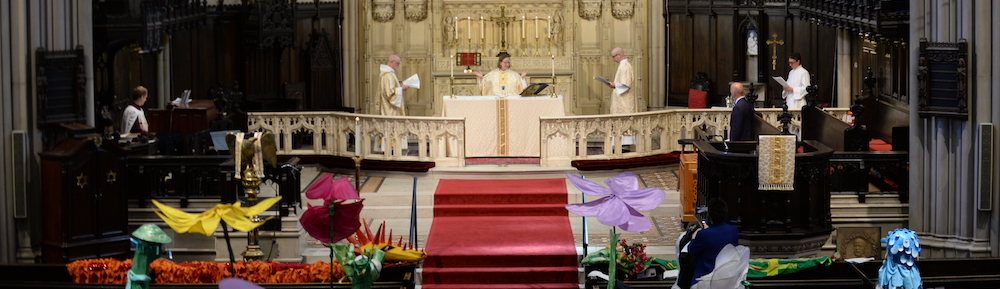
- 26 Sept.We celebrated the retirement of Pat Krol, who had served as Executive Director of Emmanuel Music and greeter since 2006. We funded the cantata and dedicated in her honor these doors, which she held open every Sunday while our choristers and liturgists to processed into the Sanctuary.
- 31 Oct.
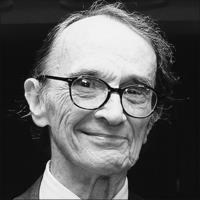 Memorial service for The Rev. Dr. David J. Siegenthaler (1926-2020), former priest in charge, was held in our well-ventilated sanctuary. After leaving Emmanuel, Dr. Siegenthaler had served as rector of St. John’s Episcopal Church, Duxbury MA, and then as archivist at the Episcopal Divinity School, where he taught for four decades.
 - Jill Zunshine funded restoration of two windows in our chancel’s clerestory, which had been broken by firefighters in 2000.
Tag Archives: racism
Turn around!
Advent 2B, December 6, 2020. The Rev. Pamela L. Werntz
Isaiah 40:1-11 Cry out!
2 Peter 3:8-15a Do not ignore this one fact, beloved, that with the Lord one day is like a thousand years, and a thousand years are like one day.
Mark 1:1-8 He will baptize you with the Holy Spirit.
O God of the prophets, may we have the wisdom, the strength, and the courage to seek always and everywhere after truth – come when it may and cost what it will.
Every year our branch of Christianity gives us a new year, advent, a new season for longing to hear and respond to lessons of prophetic wisdom and calls for repentance writ large. This morning our collect for the day gathers us as one to beg for grace to heed the prophets’ warnings and forsake our sins, our collective sins: the sins of our communities, corporations, governments, and churches. We beg for grace because we surely cannot forsake our sins without grace. If the good news is that God’s grace is abundantly available to us, all around us, completely accessible for the asking, then what? How do we drink from the deep well of God’s grace so that we heed the prophetic warnings and forsake our sins?
Continue reading
Repentance, Repair & Reconciliation
Advent 1B, November 29, 2020. The Rev. Pamela L. Werntz
Isaiah 64:1-9. O that you would tear open the heavens and come down.…We are your people.
1 Corinthians 1:1-9 So that you are not lacking in any spiritual gift as you wait for the revealing of our Lord Jesus Christ.
Mark 13:24-37 Keep awake.
1 Corinthians 1:1-9 So that you are not lacking in any spiritual gift as you wait for the revealing of our Lord Jesus Christ.
Mark 13:24-37 Keep awake.
O God of Repentance, may we have the wisdom, the strength, and the courage to seek always and everywhere after truth, come when it may, and cost what it will.
Today marks the beginning of a new Church year with the first Sunday in Advent. The Christian new year doesn’t begin with festivities or celebrations, but with lamentation in Isaiah, with a letter from Paul written in response to reports of in-fighting – of quarrelling in the church in Corinth, and with the Gospel of Mark’s “apocalypse” – Jesus’ prediction of the end of life as his disciples know it. The end, according to Mark, will be a very good thing because of the enormity of suffering, because of the desolation being experienced. I get this at a deeper level than I ever have before because of the revelations and devastations of this past year.
Continue reading
No Ordinary Time
Proper 6A
June 14, 2020
Genesis 18:1-15 (21:1-7) Sarah laughed to herself.
Romans 5:1-8 And hope will not disappoint us.
Matthew 9:35-10:8 (9-23) When he saw the crowds he had compassion for them, because they were harassed and helpless…the harvest is plentiful but the laborers are few.
Romans 5:1-8 And hope will not disappoint us.
Matthew 9:35-10:8 (9-23) When he saw the crowds he had compassion for them, because they were harassed and helpless…the harvest is plentiful but the laborers are few.
O most faithful and patient God, grant us the strength, the wisdom and the courage to seek always and everywhere after truth, come when it may, and cost what it will.
I want to begin by taking stock of the journey we’ve been on as a community of faith since early March, when the COVID-19 pandemic started to become real in the Boston area. We have endured great uncertainty and tremendous loss, concern for the safety of others and for ourselves, a lot of fear, grief, and more than a little shame. I hear see and hear these things in our phone conversations, on your faces via video conferencing, in your emails, and I feel them too. In our worship, we have navigated (with significant technological turbulence) the second half of Lent, Holy Week, Eastertide, the feasts of the Ascension, Pentecost and Trinity Sunday. And now we have entered the long stretch of what the Church calls Ordinary Time.
Continue reading
Unholy Trinity: Idolatry, Blasphemy & White Supremacy
Trinity Sunday (A), June 7, 2020. The Rev. Pamela L. Werntz
Genesis 1:1-2:4 These are the generations of the heavens and the earth when they were created.
2 Corinthians 13:11-13 Put things in order, listen to my appeal, agree with one another, live in peace.
Matthew 28:16-20 But some doubted.
2 Corinthians 13:11-13 Put things in order, listen to my appeal, agree with one another, live in peace.
Matthew 28:16-20 But some doubted.
O Trinity of blessed light, grant us the strength, the wisdom and the courage to seek always and everywhere after truth, come when it may, and cost what it will.
Happy Trinity Sunday everyone. I’m feeling particularly spun up by the Holy Spirit this week and I want to preach about the turbulence of civil and religious unrest. A mighty wind is blowing people out of their homes, as Bishop Gates preached last week, and into the streets, throughout our land. We are hearing the Spirit in a variety of languages. Last Sunday, because it was Pentecost, we renewed our baptismal promises, and this week I’m going to speak to those promises. I’m particularly speaking to the questions: Will you persevere in resisting evil, and whenever you fall into sin, repent and return to the Lord? And will you strive for justice and peace among all people, and respect the dignity of every human being? Because Emmanuel Church is a predominantly white parish, not entirely, but predominately, this white priest is preaching primarily to the white people who are listening today. I think you know deep in your hearts the things I’m going to say, and yet, I have to be sure even though it feels awkward.
Awkward Conversations
Last week I’d thought I’d made a mistake. I admitted to it in the first draft of this musing, in class, to my supervisor. I was really trying to own up to my perceived wrongdoing and showcase my newfound fondness for “learning through mistakes.” The thing is, the more people I spoke to, the more I realized that maybe it wasn’t a mistake after all; maybe it was a difficult conversation that felt like a mistake to me because of the tension and awkwardness I felt inside.
Weeds or No Weeds
Fifth Sunday after Pentecost, Proper 9A, July 9, 2017; The Rev. Pamela L. Werntz
Genesis 24:34-38, 42-49; 58-67. Please give me a little water from your jar to drink.
Romans 7:15-25a. For I do not do the good I want, but the evil I do not want is what I do.
Matthew 11:16-19, 25-30. Take my yoke upon you and learn from me.
O God with us, grant us the wisdom, the strength and the courage to seek always and everywhere after truth, come when it may, and cost what it will.
Some of the earliest Sunday School lessons I remember learning were from a class taught sitting in the weeds when I was about six years old. (When we sat down in a little circle, the weeds were over our heads.) The first scripture verse I learned was Psalm 122: “I was glad when they said unto me, let us go into the house of the Lord,” and my teacher told us that we were sitting in the house of the Lord. My dad was the pastor of a congregation that worshipped outdoors at a farm in the summer, which was a welcome respite from the gritty urban ministry that characterized the rest of the year. I remember the weather being steamy and hot and I remember being struck by how many bugs there were in the house of the Lord. That’s what came to me as I reflected on our Gospel lesson for this morning. It’s summertime and we’re in the weeds, and I’m still struck by how many things bug us in the house of the Lord. Continue reading
God sees and God hears.
Third Sunday after Pentecost, Proper 7A, June 25, 2017; The Rev. Pamela L. Werntz
Genesis 21:8-21 Then God opened her eyes and she saw a well of water.
Romans 6:1b-11 Should we continue in sin in order that grace may abound?
Matthew 10:24-39 I have not come to bring peace but a sword.
Romans 6:1b-11 Should we continue in sin in order that grace may abound?
Matthew 10:24-39 I have not come to bring peace but a sword.
O God of love, may we have the wisdom, the strength, and the courage to seek always and everywhere after truth – come when it may and cost what it will.
Our lectionary has dished up some hard readings for us today. Sometimes when I am feasting on the Word of God, I wish it were a little easier to chew and that it tasted better. The trouble starts with the story of the exile of Hagar and Ishmael, when baby Isaac had grown into a boy. Father Abraham is a biblical character that I have a hard time revering; he is so frequently willing (or feeling called by God) to sacrifice or dispose of his wives and his sons. It seems to me that to focus only on the tortured relationship between Sarah and Hagar is to ignore the oppressive patriarchy that is at work in both of their lives. Zimbabwean theologian, Dora Mbuwayesango points out that both Sarah and Hagar are caught in a “patriarchal web that is not easy to untangle,” [1] and I think that applies just as much to 21st century listeners.
Continue reading
2017
- Feb. 5. At our annual meeting we voted to update our parish by-laws.
- Oct 15. Rabbi Howard Berman preached about the 13th anniversary of our relationship with Central Reform Temple (formerly Boston Jewish Spirit).
- Jane Crow: The Life of Pauli Murray by Rosiland Rosenberg is published by Oxford U. Press. Amazon’s record describes her contribution: “Throughout her prodigious life, activist and lawyer Pauli Murray systematically fought against all arbitrary distinctions in society, channeling her outrage at the discrimination she faced to make America a more democratic country.”

Book jacket, Oxford U. Press
Its last chapter deals with Pauli’s call to ordained ministry. On p. 356, Rosenberg notes that in 1967 Pauli began to attend Emmanuel, where then rector Alvin Kershaw advised her and referred her to The Rt. Rev. John W. Burgess, who was our diocesan bishop and the first African-American Episcopal bishop.
See also Timeline entries for Pauli Murray: 1944, 1951, 1970, 1973, 1974, 1977, 1985, 1987, 2012 & 2015.
See also Timeline entry 2007 about the restoration of our former organ: Casavant Frères Opus 700.
The word is shalom.
Ninth Sunday after Pentecost, Proper 11C, The Rev. Pamela L. Werntz, July 17, 2016
Amos 8:1-12 A basket of summer fruit.
Colossians 1:15-28 Christ Jesus is the image of the invisible God.
Luke 10:38-42 The better part
Colossians 1:15-28 Christ Jesus is the image of the invisible God.
Luke 10:38-42 The better part
O God of shalom, grant us the strength, the wisdom and the courage to seek always and everywhere after truth, come when it may, and cost what it will.
What a hard week, in a series of hard weeks. There seems to be no end in sight to the violence at home and abroad. I want to say something about each of our three scripture readings this morning. I don’t know about you, but I hear the prophet Amos speaking directly to us from about 760 BCE. Amos, a shepherd and dresser of sycamore trees, was the first prophet of the Hebrew Bible to write his description of what happens when some people in a society get richer and more powerful, at the expense of those who are poor and getting poorer. He was writing at a time when his country had expanded in wealth and military might by taking advantage of the most vulnerable, the neediest people, violating the Torah commandments to care for refugees and aliens, and others who cannot care for themselves. Perhaps you already knew what it means that Amos was a dresser of sycamore trees, but I had to look it up. Sycamore trees in the Middle East produce fruit that smell like figs, but taste pretty bad. Only poor people eat it, because nobody with other options would touch it. If the fruit is punctured while it’s still on the tree, it ripens faster. A dresser of sycamores is someone who is helping to feed those who are poor.
Continue reading