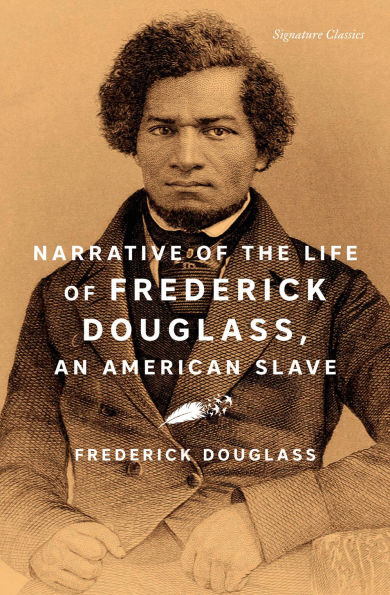
#DouglassWeek

Fall has arrived and we are back to learning about and attending programs related to racial justice. As we write, Boston and other Massachusetts cities are hosting the annual celebration of #DouglassWeek.

Launched in 2021, the collaborative event series highlights Frederick Douglass’s time in Ireland in 1845. He spent about four months there in self-imposed exile after the publication of the first edition of Narrative of the Life of Frederick Douglass, an American Slave.

Continue reading

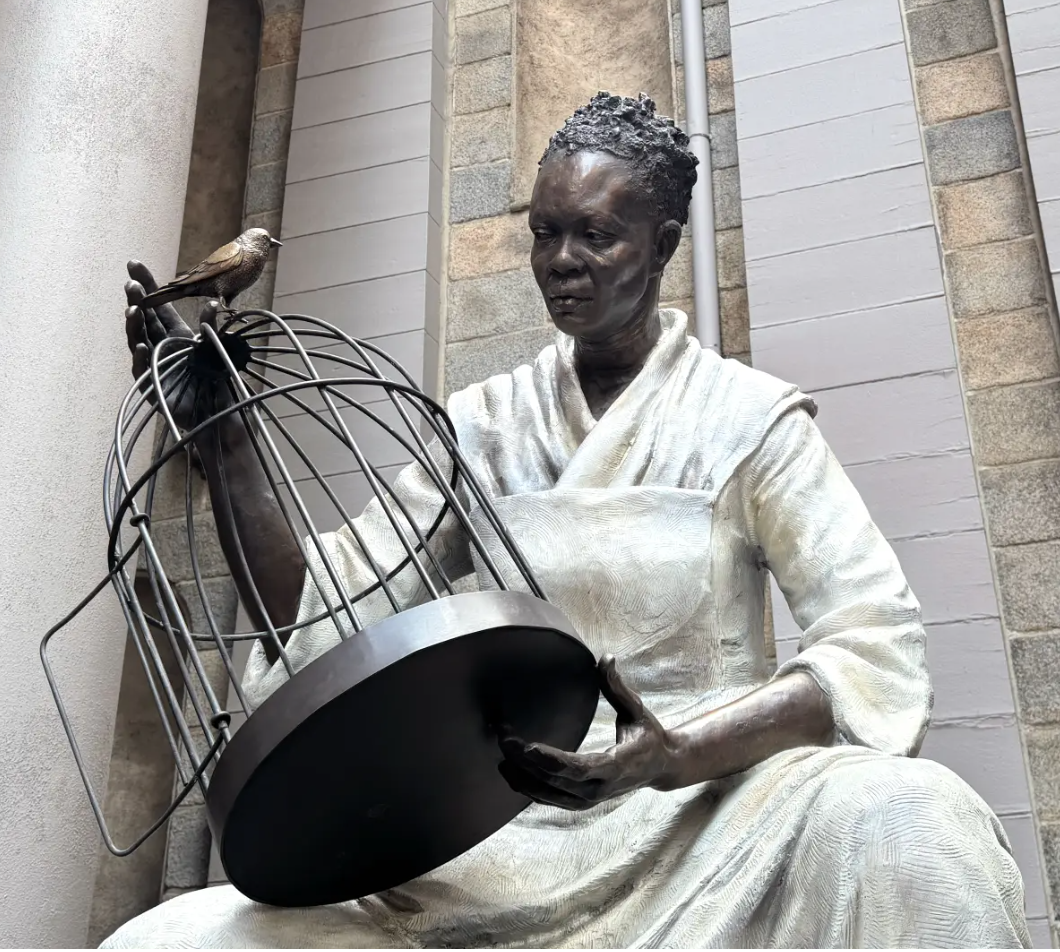
King’s Chapel unveils ‘Unbound’.

photo credit: WGBH Boston

On September 14, 2025, King’s Chapel unveiled its Memorial Sculpture, “Unbound,” by artist Harmonia Rosales.

Rosales’s work was stewarded by the MASS Design Group. It is a tribute to the 219 enslaved parishioners brought to church by their enslavers.

As many of you know, King’s Chapel has been actively engaged in studying and revealing many aspects of its racial history over recent years. A rich summary, including their plans for an ongoing project, is presented online via the page entitled King’s Chapel Memorial to Enslaved Persons.

September 22, 2025 –Mary Beth Clack, Mary Blocher, Cindy Coldren, Pat Krol, Liz Levin.

Juneteenth Events in the Boston Area

Aside

The local commemorations of Juneteenth included three events of note. Dio Mass held its Juneteenth service at St. Stephen’s Church, Lynn, with the Rev Bernadette Hickman-Maynard presiding. At Old South Church. The Reverend June Cooper, Theologian in the City of Boston and alum of the United Boston Sankofa Cohort, preached. Her reflection on the holiday, and the unfinished work of repair, appears in this blog post, Juneteenth, and the Unfinished Work of Freedom.

Juneteenth at Longfellow House-Washington’s Headquarters was held on June 22, 2025. The accompanying video, Who are my ancestors? highlights the reflections of the descendants of Cuba and Darby Vassall, who lived at the house. Continue reading

Faith Communities in the Historic West End

June 10, 2025

On our June 8th Chapel Camp tour of the Vilna Shul, we learned that the synagogue purchased the building occupied by the Twelfth Street Baptist Church in 1906. The Twelfth Street pews were kept at the site, 43-47 Phillips Street, and were used by the synagogue until 1919 when they moved to 18 Phillips Street. Services are still held once monthly and on the High Holydays and the building is now a center for Jewish Culture.

Twelfth Street Baptist Church was known as “The Fugitive Slave Church” — many of its congregants were abolitionists and self-emancipated slaves, Lewis and Harriet Hayden and Anthony Burns among them. The Reverend Edward Grimes, pastor from 1848 to 1874, led the congregation with vibrant advocacy and energetic activism. The church grew steadily, mobilized by Grimes to raise funds for those who sought freedom. A notable celebration of the Emancipation Proclamation was held January 1863. Frederick Douglasss attended and wrote glowingly about the event.

For more about the history of these communities of faith, see the West End Museum site: The Vilna Shul and Twelfth Street Baptist Church.

–Mary Beth Clack, Mary Blocher, Cindy Coldren, Pat Krol, Liz Levin


The Green Book Tour of Boston’s South End

May 26, 2025

A reprise of the Green Book Tour of Boston was offered on May 17, 2025. The tour was organized by The Reverend June Cooper, social justice educator, activist, and Theologian in the City at Old South Church.

She invited Byron Rushing to be our guide. Byron was Massachusetts State Representative for the South End from 1983-2019 and has been lay deputy to our General Convention since 1973. The tour was supported by the Boston Faith and Justice Network.

Victor Hugo Green, a postal worker, created the first Green Book in 1936. It was published until 1966 (with the exception of the years 1940-1946). A guide to establishments open to black travelers during the Jim Crow era, it served as an essential tool in welcoming them to many U.S. towns and cities.

Included on the Boston tour are the Union Combined Parish, the Columbus Avenue AME Zion Church, and Harriet Tubman Park, along with jazz club locations, other  community gathering places, and Slade’s, operating since 1929. We also stopped at the home of Julia Henson, 25 Holyoke Street, which was the first Harriet Tubman House, founded to provide housing for black women who were excluded from college dormitories and rooming houses. Henson founded the African American Northeastern Federation of Women’s Clubs and was active in the settlement house movement. Harvard’s Houghton Library acquired a copy of the 1949 edition of the Green Book, and it is freely accessible via this link.

The chapter on Massachusetts lists 50 businesses open to Black travelers in Boston, including hotels, restaurants, beauty parlors, barber shops, tailors, and one jazz club. In the Introduction, we read: “There will be a day sometime when this guide will not have to be published. That is when we as a race will have equal opportunities and privileges in the United States. It will be a great day for us to suspend this publication for then we can go wherever we please, and without embarrassment. But until that time comes, we shall continue to publish this information for your convenience each year.”

—Mary Beth Clack, Mary Blocher, Cindy Coldren, Pat Krol, Liz Levin

Reckoning with History: The First Step toward Racial Reparation

Addressing the historical harms of slavery starts with facing up to a good deal of uncomfortable truth. What does this mean for white Americans like me or for members of an historically white American church like ours?  We must acknowledge first that the truth has been hidden from us. Participants in the “Stolen Beam” course on reparations, which Connie Holmes and I teach, will sometimes say, “Why was I never taught this?” We must seek information from unaccustomed sources, which requires effort and research. Continue reading

Boston’s Home for Aged Colored Women

March 3, 2025

To honor women’s history this month, we turn to a story of little seen women in Boston at the time Emmanuel was being founded. The Boston Globe published an article about the discovery of a marker for the Home for Aged Colored Women (1860-1944) in Dorchester’s Cedar Grove Cemetery (From a mass grave in Boston, unearthing Black women’s lives” by Karilyn Crockett (February 3, 2025)

The Home, founded in 1860, was among the Boston institutions that offered shelter and support to women who did not have financial or other family support. In the case of the Home for Aged Colored Women, historical news accounts and the organization’s records (located at the Massachusetts Historical Society) state that women of color applied to the Home after not being welcomed at almshouses and other benevolent institutions.

We discovered that Emmanuel parishioners were benefactors of the Home from the 1860s onward (among them was Susan Coombs Dana (Mrs. Wiliam R. Lawrence).

We invite you to explore these sites which explore the Home’s history in more detail

The West End Museum site.

The National Park Service’s page about the Home.

–Mary Beth Clack, Mary Blocher, Cindy Coldren, Pat Krol, Liz Levin
UK Marks Black History Month

October 22, 2024

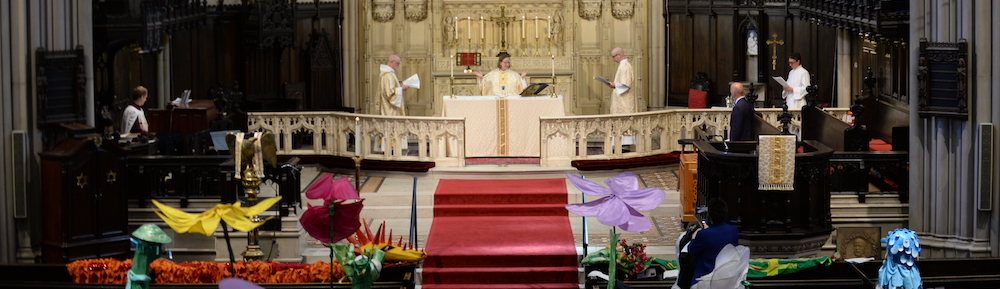
We first learned of the United Kingdom’s Black History Month, which is celebrated in October, from the Episcopal News Service article, “Church of England prepares to mark October as Black History Month.”

In addition to the musical offerings mentioned in the above article, one of the several lectures hosted by cathedrals and churches will be given by David Olusoga, OBE, professor of Public History at the University of Manchester and author of Black and British: A Forgotten History (London: Macmillan, 2016). A BBC documentary of the same name is also posted on YouTube.

This year’s theme for the month is “Reclaiming Narratives,” and the Church of England has a rich page of resources for additional prayer, contemplation, and reflection. Study days, lectures, services, and other events have been planned, listed here:

We were happy to see that a film that we viewed a few months ago is now widely available on YouTube: “After the Flood: The Church, Slavery, and Reconciliation.”

–Mary Beth Clack, Mary Blocher, Cindy Coldren, Pat Krol, Liz Levin
–Published in This Week @Emmanuel Church October 22, 2024

Old North Church Reckons with its Links to Slavery

Several years ago, the Episcopal News Service reported on Old North Church’s deepening its research into its connections with the slave trade, “Iconic Boston
Church Reckons with its Links to Slavery.”

Our curiosity about what has been learned since, and how the church tells its stories, led to tour Old North, Boston’s oldest surviving church. Guides lead visitors to the gallery where they narrate the history of individuals and families who were not able to purchase pews and who sat in the balcony of the church. Parishioners’ children sat on the right side facing the altar while free blacks, enslaved persons, indentured servants, and Indigenous peoples were assigned to the left side. After combing through pew records and other materials, the church has been able to piece together stories of community support and relationships that developed in the gallery. The stories are incomplete–many with questions remain–yet some patterns of social interactions are discernable. The results of their inquiries are well-presented in signage placed in certain pews, as well as on their web page, “The People in the Pews.Continue reading

Remembering Jonathan Myrick Daniels

August 18, 2024

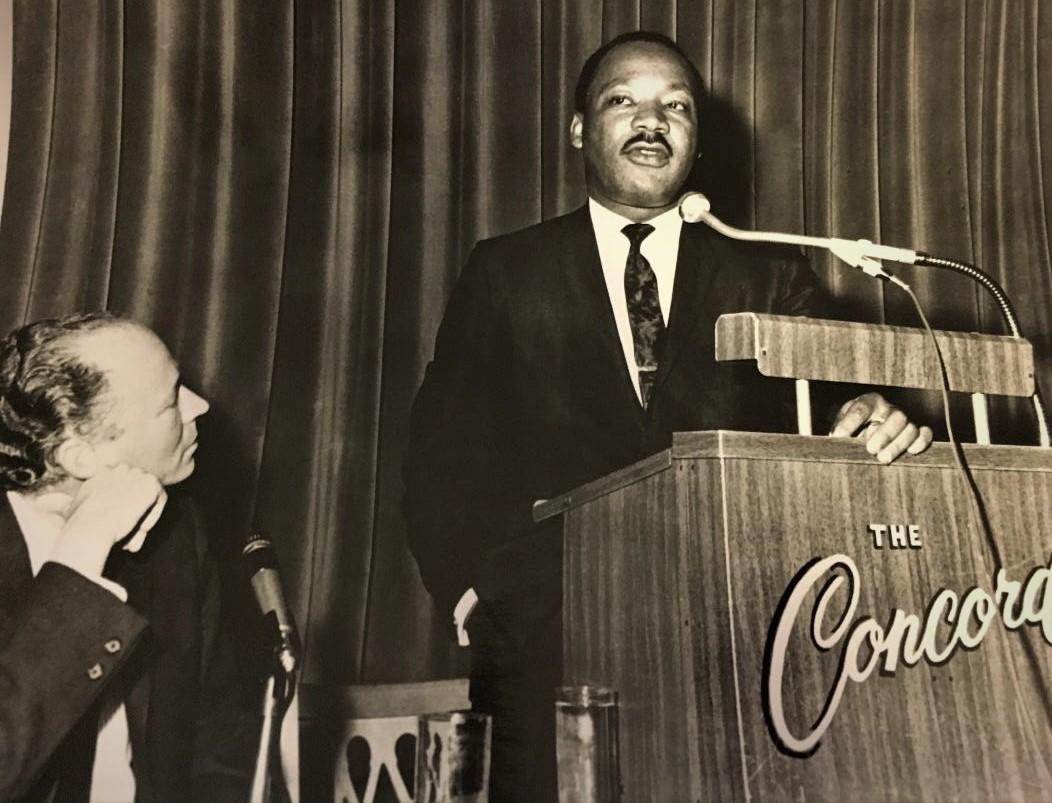
This week we pause to remember Jonathan Myrick Daniels, civil rights activist and Episcopal seminarian at the Episcopal Divinity School, who sacrificed his life in the service of voting rights marchers in Selma. He defended Ruby Sales, shielding her from death in an altercation with law enforcement on August 20, 1965.

Daniels was responding to Martin Luther King’s call for clergy of all faiths to support voting rights and the integration of churches. He first attended the Selma to Montgomery March and returned to Selma to assist in a voter-registration project in Lowndes County. Daniels explained his return to Selma in this way: “something had happened to me in Selma, which meant I had to come back. I could not stand by in benevolent dispassion any longer without compromising everything I know and love and value. The imperative was too clear, the stakes too high, my own identity was called too nakedly into question…I had been blinded by what I saw here (and elsewhere), and the road to Damascus led, for me, back here.”

The Episcopal Church honors Daniels on August 14th. He is recognized as a martyr and was added to the observances of Lesser Feasts and Fasts in 1999. August 14, 1965, was the day he and the other activists were arrested in Fort Deposit, Alabama for protests calling for the integration of public places and voting rights (six days before his assassination). Continue reading