1974

  • The Rev. Dr. Mark Harvey began his jazz ministry and founded the Jazz Coalition (later the Aardvark Jazz Orchestra), which sponsored concerts, liturgies, and festivals here over the next four decades.  See also his Timeline of Jazz @ Emmanuel.
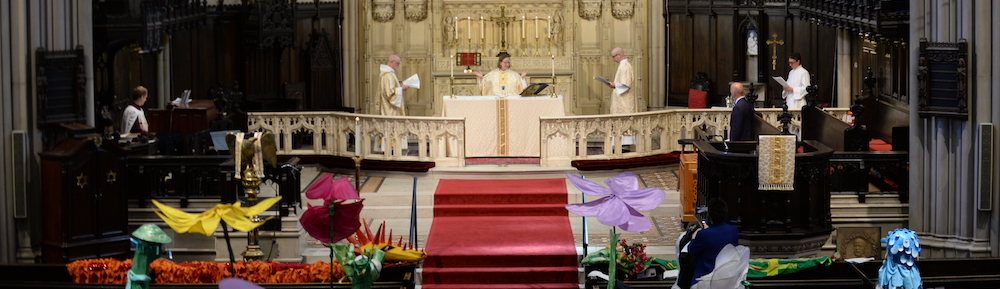
  • March 3.  As our sponsored seminarian, Pauli Murray preached from our pulpit her inaugural sermon on a passage she had selected (Isaiah 61: 1-4), entitled ” Women Seeking Admission to Holy Orders: As Crucifers Carrying the Cross”.* Saying that Emmanuel “sent me forth as a member of your congregation with your blessings and prayers to begin my training for the Sacred Ministry”, she asked:

Why in the face of the devastating rejection at the Louisville General Convention of last October, 1973–a rejection which Bishop Paul Moore of NY has called the violation of the very core of their personhood–[have the women seeking ordination to the priesthood] only increased their determination to enter the higher levels of the clergy?

Then paraphrasing Isaiah 53:3, she prophesied:

I believe that these women are in truth the Suffering Servants of Christ, despised and rejected, women of sorrows and acquainted with grief.  They are answering to a higher authority than that of the political structures of our Church, and in the fullness of time God will sweep away those barriers and free the Church to carry forward its mission of renewal as a living force and God’s witness in our society.

* Reprinted in Daughters of Thunder:  Black women preachers and their sermons, 1850-1979, Bettye Collier-Thomas (NY: Jossey Bass, 1998),  pp. 240-44.  Please see also About Pauli Murray and our Timeline entries about her:  1951,1970, 1973, 1977, 1985, 1987, 2012 & 2015.
1973

  • Pauli Murray, who was a vestry member, left her tenured position at Brandeis U. and  entered the General Theological Seminary. The Rev. Alvin L. Kershaw had helped her discern a call to ordination.

Once I admitted the call of total commitment to service in the church, it seemed that I had been pointed in this direction all my life and that my experiences were merely preparation for this calling.  In spite of my own intellectual doubts and the opposition to women’s ordination which was widespread within the Episcopal Church at the time, I took the fateful step of applying to The Rt. Rev. John Melville Burgess, Bishop of the Diocese of Massachusetts, for admission to holy orders. (Autobiography, 1989, p. 427)

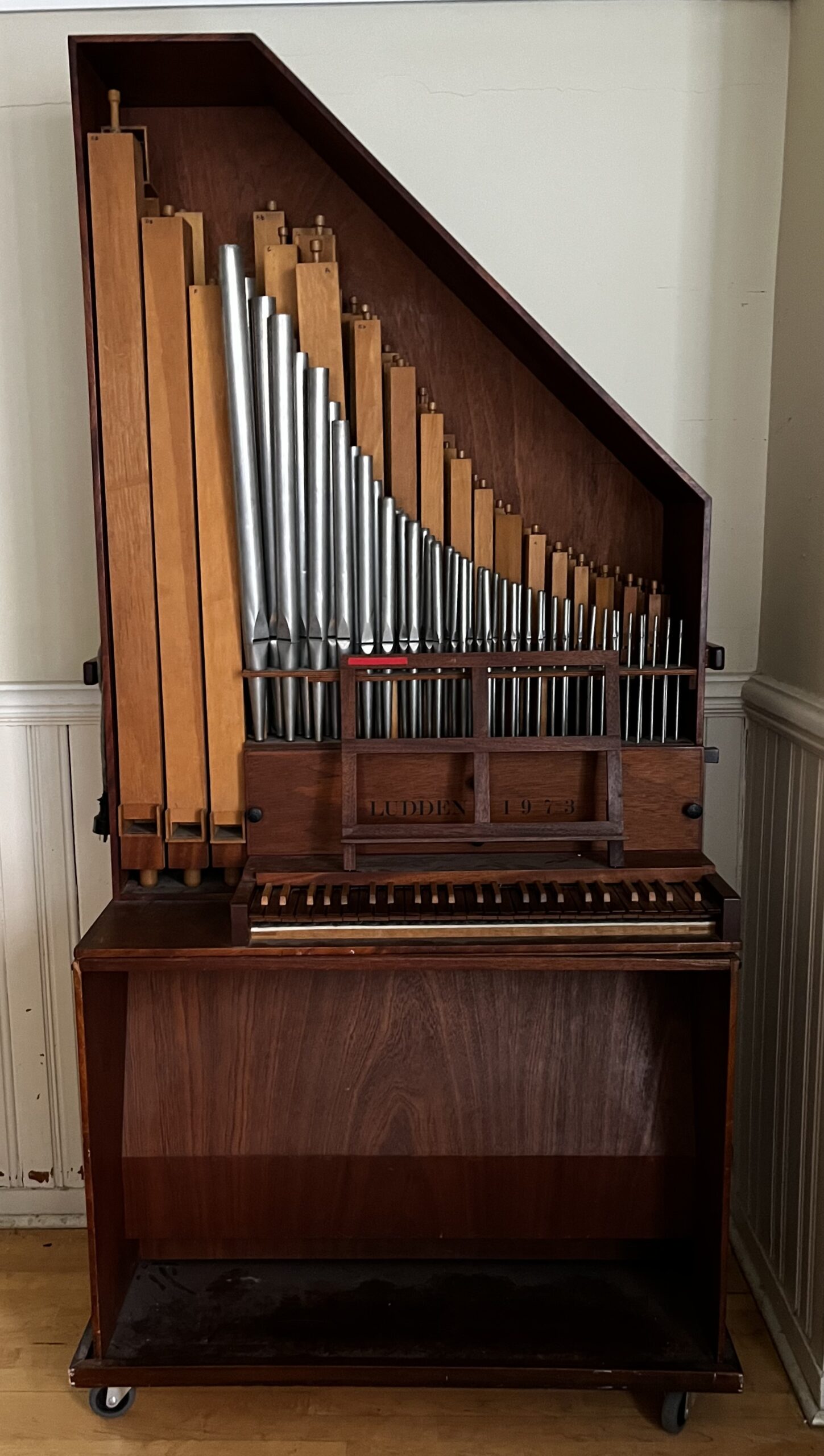
  • Organ built by James Ludden, given by Priscilla Rawson Young in 1973

    4 Nov. Priscilla Rawson Young gave a portable pipe organ, built by James Ludden, which is still used for rehearsals in our Music Room.

See also:

  1. Pauli Murray and Timeline entries:  1970, 1977,1985, 1989, 2012 & 2015.
  2. Priscilla Young:  Timeline entries: 1909, 1939194219711994 & 2000.

1960

Our centennial was celebrated with a candlelit service and a dinner at the Plaza Hotel, Copley Square.

Emmanuel Church, 1860-1960: The First Hundred Years, compiled by Harriet Allen Robeson, was published by the Vestry.  She credited these people for their help with her historical endeavor:  The Rev. Harold Sedgwick, the Rev. Rollin J. Fairbanks, the Rev. David Siegenthaler, Eleanor S. Hunneman, Mrs. Wells Mitchell, Gladys McCafferty of the Diocesan Library, and daughters of former rectors Ellen Parks and Constance Worcester.

See its introduction and appendix. For its chapters about the tenures of particular rectors, please see these years:

  1. 1861  F.D. Huntington
  2. 1869  A.H. Vinton
  3. 1878  L. Parks
  4. 1904  E. Worcester
  5. 1929  B.M. Washburn
  6. 1932  P.E. Osgood
  7. 1943  R.G. Metters
  8. 1957  H.B. Sedgwick
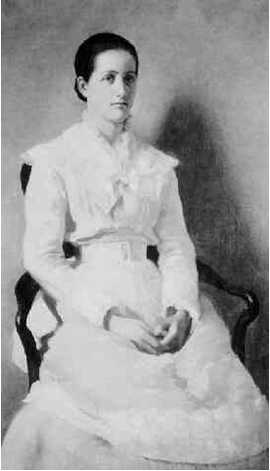
  • Clara Endicott Sears (1863-1960) ca 1880, painted by Harper Pennington (1855–1920)

    March 28.  The funeral of Clara Endicott Sears was held in Lindsey Chapel, whose life had almost spanned our first century.  Born in 1863 to Emmanuelites Knyvet & Mary Peabody Sears and namesake of her maternal grandmother, she wrote books about American history and several of its religious movements including  Millerism, New Thought, Transcendentalism, and the Shakers. She bequeathed her collection of art and Indian artifacts housed at her  Fruitlands Museum to the Commonwealth’s Trustees of Reservations. According to the Boston Globe, she was descended from 8 colonial governors of Massachusetts including John Winthrop and John Endicott.

1959

The Business & Professional Women’s Guild (formerly Club) had 98 members.  Its officers were Miss Lydia LeBaron Walker, President; Miss Caroline G. Whitney, Vice-President and Recording Secretary; Miss Margaret A. Cooke, Corresponding Secretary; Maude D. Gowen; Treasurer.  Our archives has its membership directory for that church year. The Guild was active for another decade.

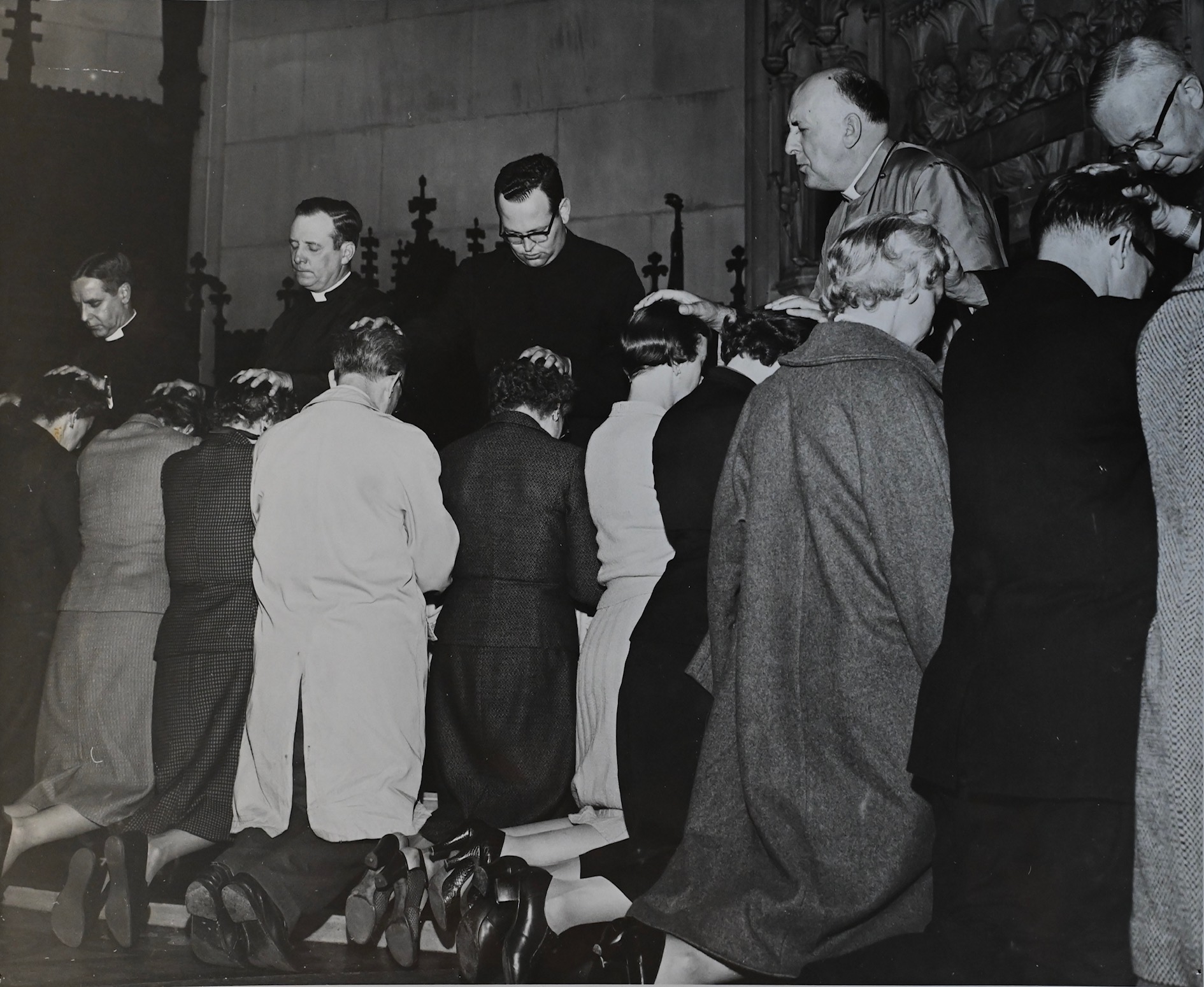
Oct. 18-20. A series of five Healing Services were held with the Rev. Canon Alfred W. Price presiding, assisted by Rector Harold Sedgwick, the Rev. Dr.  Rollin J. Fairbanks,  and other clergy.  Their hands were laid upon more than 3600 heads.  After a nationwide outbreak of polio in 1955, the Salk vaccine had been widely administered.  People in the Commonwealth became alarmed by a recurrence of paralytic poliomyelitis, which peaked here in September. Since about half of the patients had been properly vaccinated, the vaccine’s effectiveness was called into question.  When the Sabin attenuated vaccine was distributed in oral form in 1961, the nation heaved a sigh of relief.

Dr. Fairbanks (1908-1983) was the Robert Treat Paine Professor of Pastoral Theology at Episcopal Divinity School.  Canon Price (1899–1992), who had been awarded a Purple Heart for his service in WWII, was for many years an international warden of the Episcopal Church’s Order of St. Luke the Physician. His works include:  Healing:  The Gift of God (1955), Religion & Health (1962), and a God’s Health:  Handbook for the Practice of the Church’s Ministry of Healing (1976).

Left to right: Rector Sedgwick, Dr. Fairbanks, the Rev. Don Hargrove Gross, the Rev. Canon Alfred W. Price & ?

1949

  • 13 October. After its Planning Committee led by Misses E. Louis Seymour and Elsie L. Jones had laid the groundwork, the Business & Professional Women’s Club held its first meeting.  Alberta Pond and Adele Herrick became its first president and secretary, respectively. They held monthly suppers after which members worked on projects or enjoyed entertainment.

1947

Redington Mudge DeCormis (1884-1967), son of the Rev. Dr. Louis De Cormis (1846-1916), became Jr. Warden and then served as Sr. Warden from 1948-53, during the tenure of Rector Metters. His father, the Rev. Dr. Louis De Cormis, was priest of St. Stephens, Lynn, when he named his son after Enoch Redington Mudge, patron of the beautiful church, whose cornerstone was laid in 1881. E.R. Mudge had  served as our Jr. Warden from 1865-72.   Having been vice president of the Second National Bank since 1923, R.M. De Cormis retired in 1955, when it merged with State Street Bank and Trust.  Correspondence of his second wife, Charlotte (Lotten) Augusta Lenander, a Swedish physician whom he had married in 1944, have been archived.

1945

  • 8 May. Germans surrendered, leading to the end of World War II in Europe.
  • June.  Rector P. E. Osgood preached his last sermon at Emmanuel.
  • 15 July.  The Rev. Dr. H. Robert Smith, formerly of Grace Church, Newton MA, accepted the position of Minister-in-Charge to serve until a new rector could be called.
  • 6 & 9 August. US dropped atomic bombs on Hiroshima and Nagasaki, leading to Japanese  surrender a week later.
  • October.  After many years in charge of our Church School, Elizabeth Varney departed, and Nancy Currier took over.
  • 28 November.  The vestry assigned the church’s reading rights at the Boston Athenæum to rector-elect, The Rev. Robert Gifford Metters. For more about his tenure, please see the chapter on him in Emmanuel Church, 1860-1960: The First Hundred Years.

1937

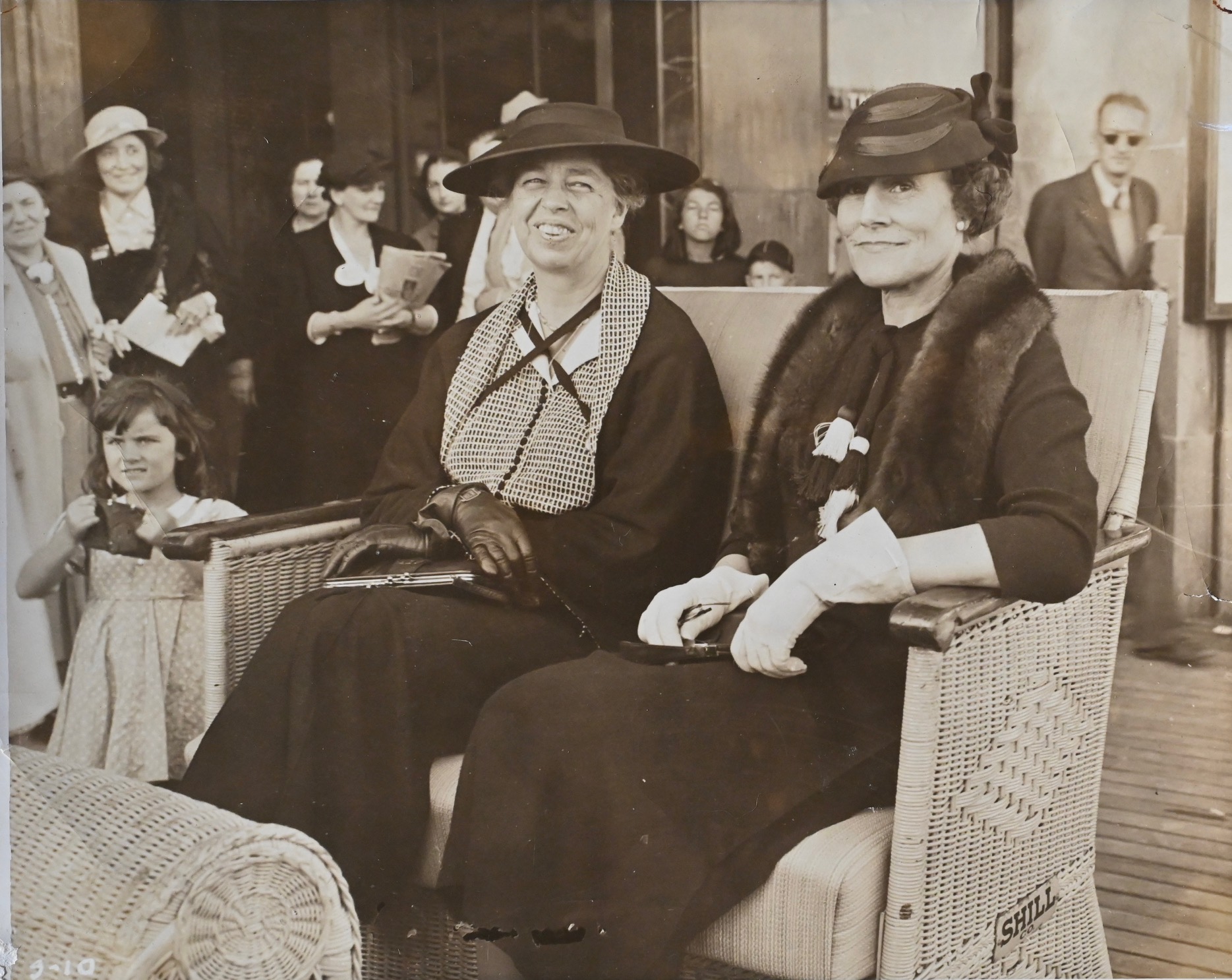
15 Sept. First Lady Eleanor Roosevelt mentioned in her diary My Day that Harriet Robeson was her guide at a convention of the American Hospital Association, which was held at Atlantic City NJ.  Harriet Allen Robeson (1882-1978) compiled our centennial history in 1960.  Namesake of an aunt who had died young in 1852, she was the granddaughter of our founders Andrew Robeson, Jr. (1817-1874) and Mary Allen Robeson (1819-1903).

First Lady Eleanor Roosevelt & Harriet A. Robeson at Atlantic City NJ. Photo. Fred Hess

1931

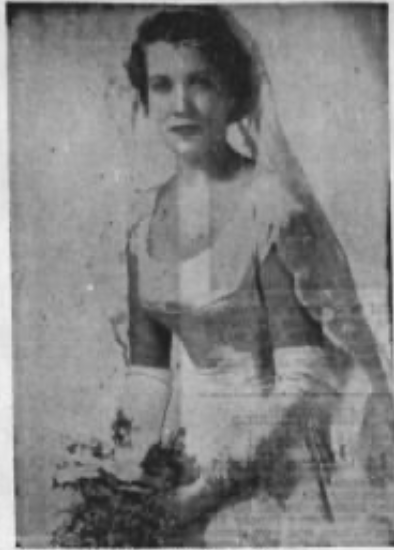
Rosemary Dodge Hutcheson (1931-2000), 1957, Clerk of the Vestry (1971-72)

Rosemary Dodge was born in The Hague, Holland.  After graduating from Wellesley College and working in its admissions office, she married in 1957 a public-heath psychiatrist, Dr. Bellenden Hutcheson, and they had a son. In 1971 she became our first women officer as Clerk of the Vestry.

1926

Amy Lawrence Lowell (1874-1925) was posthumously awarded the Pulitzer Prize for Poetry for What’s o’Clock.  

After the consecration Lindsey Chapel, our parish house was enlarged by adding a third floor to the former chapel.  A parish hall with built-in book shelves and a stage became known as “The Library”. Most of its books have been dispersed, but those remaining in 2008 were cataloged  by our Parish Historian, Mary Chitty.  What is now our second-floor Music Room served as a work area for women’s groups and as a dining hall.  For more details, please see our Timeline of Building History.