Reasons to Rejoice

The Third Sunday of Advent, 3B, December 14, 2014; The Rev. Pamela L. Werntz

Isaiah 66:1-4, 8-11. To give them a garland instead of ashes.
1 Thessalonians 5:16-24. Rejoice always, pray without ceasing.
John 1:6-8, 19-28. This took place in Bethany across the Jordan where John was baptizing.

O God of hope, may we have the wisdom, the strength, and the courage to seek always and everywhere after truth – come when it may and cost what it will.


One of the benefits of sharing sanctuary and programs, families and friendships, with a synagogue is that we are regularly called out of theological complacency when it comes to our Christian scripture and Church tradition’s references to Jews – or Levites, priests from Jerusalem, high priests, Sadducees, scribes, or Pharisees. I changed the word Jews in our Gospel lesson to Judeans by way of putting a speed bump in our path, not because Judeans is necessarily the best translation of Judaios here, but because I want us all to slow down a little bit when we listen to this reading. John the Evangelist (that is, John, the Gospel writer) begins his version of the story of Jesus with tension between “the Jews” and Jesus in a way that the other three Gospel writers do not. For John the Evangelist, the tension started before Jesus even appeared on the scene. It’s not exactly clear to scholars who John means when he writes Judaios. He’s certainly not talking about all Jews or all Judeans even at the time, since Jesus and his followers were all Jewish. He may be contrasting Judeans and Galileans, but most likely he’s writing about some of Jerusalem’s religious authorities.[1] He clearly has an ax to grind that the other Gospel writers do not have. The Gospel of John uses the term Judaios some sixty-four times compared with six in the Gospel of Mark, five in Matthew, and three in Luke.[2] It seems that John, who was writing in the late first century, is caught up in a late-first-century conflict, which he is applying retroactively to the first part of the first century. I wonder if John is using the word the way some of us refer to “the police,”  “the military,” or “the government,” when we are angry or despairing in the midst of struggle. I don’t know John’s intent, but I do know that we cannot let it slide. Continue reading

Bad News and Good News

Last Sunday after Pentecost, Christ the King, Proper 29A, 1B, November 30, 2014; The Rev. Pamela L. Werntz

Isaiah 64:1-9. Now consider, we are all your people.
1 Corinthians 1:1-9. Grace to you and peace from God our [Author] and the Lord Jesus Christ.
Mark 13:24-37. Keep alert…keep awake…and what I say to you I say to all: keep awake.

O God of New Beginnings, may we have the wisdom, the strength, and the courage to seek always and everywhere after truth – come when it may and cost what it will.

Today marks the end of our liturgical year in terms of Sundays. Today marks the end of our reading of the Gospel of Matthew (I know some of you are thanking God for that). We have reached the end of the teachings of Jesus in Matthew’s Gospel narrative. This passage is the conclusive teaching before the Passion. It’s combined in our lectionary with another great sorting prediction from the prophet Ezekiel, and an interlude from the letter to the Ephesians.

When I was growing up, my parents were fond of prefacing announcements with: “I’ve got good news and bad news.” There was a household expectation of asking for the bad news first. Whatever the bad news, presumably, it would be balanced out by the good news (it didn’t always work). That trope kept coming back to me as I reflected on our readings for today. It’s probably not coincidental that I was anticipating my brother Rob and sister-in-law Anna being in church today! Continue reading

As a Gentile and a Tax Collector

Thirteenth Sunday after Pentecost, 18A, September 7, 2014; The Rev. Pamela L. Werntz

Exodus 12:1-14 This day shall be a day of remembrance for you.
Romans 13:8-14 Love is the fulfilling of the law.
Matthew 18:15-20 Let such a one be to you as a Gentile and a tax collector.

O God of mercy, grant us the wisdom, the strength and the courage to seek always and everywhere after truth, come when it may, and cost what it will.

Those of you who have heard me preach more than once or twice might know that I often complain about lectionary reading combination – the scheduled selections of the Hebrew Bible, Second Testament, and Gospel readings. Today I love them. Today, the reading from Exodus in the Torah, the piece of St. Paul’s letter to the Romans, and the Gospel passage from Matthew all speak to each other so beautifully, at least to my ears. I especially love the way the first two readings can help us realize what the Gospel reading is all about, not in a way that props up the Gospel, but in a way that illuminates the path for us. Continue reading

1988

  • June.  Organist Michael Beattie joined Emmanuel Music for rehearsals in our Music Room of Peter Sellars‘ version of Mozart’s opera Le Nozze di Figaro, which played that summer in the PepsiCo Theater in Purchase NY.  Craig Smith conducted; Frank Kelley sang the part of Basilio; Jayne West, the Countess; and Susan Larson, Cherubino.
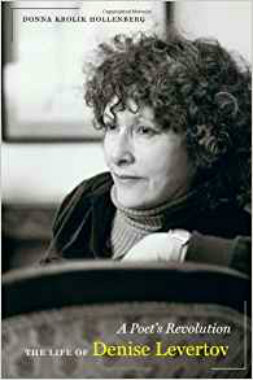
  • In her “Peace Pentecost” sermon at our Cathedral Church of St. Paul, poet Denise Levertov (1923-97) emphasized the connection between contemplation and action:  “If we neglect our inner lives, we destroy the sources of fruitful outer action.

    Thanks to U. of California Press for this image.

    But if we do not act, our inner lives become mere monuments to egotism.” At Emmanuel she founded a Peace Group to foster the links between spiritual thought and action among her fellow parishioners.

Earlier in the decade she had been attracted to Emmanuel by our social-justice activities, beautiful music and liturgy, and rector Al Kershaw, who counseled her.  “He assured her that doubt was part of spiritual growth and the darkness she encountered might increase her sense of dependence and lead her to God,” says her biographer Dana Greene citing Denise’s diary entry for June 13, 1988.

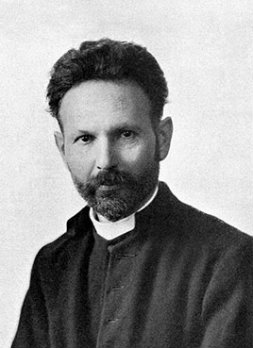
Denise’s father, Paul Philip Levertoff (1878–1954), born in Belarus, an early proponent of Messianic Judaism, took holy orders in the Anglican Church and preached wearing an alb with a tallit and kippa.

The Rev. Paul Philip Levertoff

In 1922 he had become director of what is now the London Diocesan Council for Work among the Jews and edited its quarterly journal, The Church and the Jews. He was a prolific writer on theological subjects in Hebrew, German, and English and translated into English the Midrash Sifre on Numbers (1926) and the Zohar  (1933).

See also:

  1. Dana Greene.  Denise Levertov:  A Poet’s Life.  Urbana IL:  U. of Illinois Press, 2012.
  2. Denise Levertov.  Making PeaceBreathing the Water.  NY:  New Directions, 1987.
  3. Donna Hollenberg.  A Poet’s Revolution: The Life of Denise Levertov. Berkeley: U of California Press, 2013.
  4. Paul A. Lacey and Anne Dewey, eds.  The Collected Poems of Denise Levertov.  NY: New Directions, 2013.
  5. Paul Philip Levertoff. Love and the Messianic Age.
  6. Timeline: 1994


1954

Emma Louise Gildersleeve Lane died.  Born in 1872 in Charlottesville, Virginia, to Emma Louisa Lanneau and Professor Basil Gildersleeve, later of Johns Hopkins University.  As founding editor of The American Journal of Philology, he became a colleague of Harvard Professor George Martin Lane, father of her husband-to-be Gardiner Martin Lane, an Emmanuelite and banker who became chairman of the board of the Boston Museum of Fine Arts.  In their memory, their daughter Katharine Lane Weems gave an endowment and a pair of Spanish candelabra for our baptistry.