Improvisation

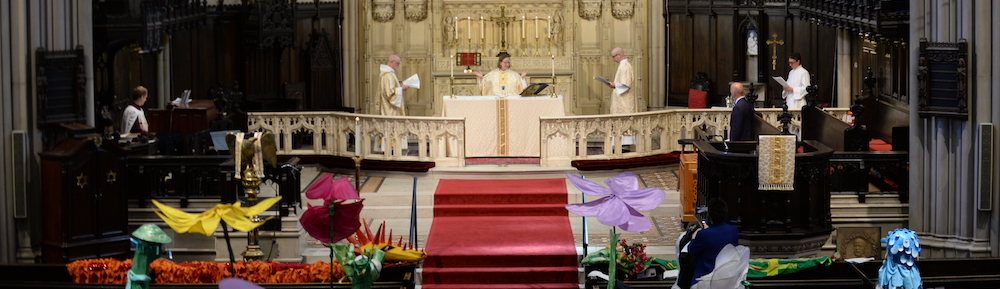
This week, we’re continuing rehearsals for the Easter Play, and I’m excited to incorporate some drama-therapy-based character work into the process. Through a series of movements and prompts, participants will step into their characters to explore their desires, motivations, and challenges through light improvisation.

This will be my first time facilitating exercises like these, so I’ll admit I’m a bit nervous.   I know, however, that the only way to improve is by practicing; and honestly, I couldn’t think of a better group to practice with.

If time allows, I’ll continue with my superhero interviews, but otherwise I’m taking it easy this week. Looking forward to seeing where all of this leads!

– Mary Schwabenland

Preparation for Our Easter Play

This week, back from my spring break, I’m feeling refreshed and ready to dive back into creative collaboration here at common art.

First up is the kickoff meeting for our Easter Play! My plan is to start with a warm-up activity to break the ice and get everyone engaged before we do a read-through of the script, written by our beloved community member Richie Berman.  Since this script is shorter than our December play, I’m hoping we can spend more time having fun with it rather than getting too caught up in staging logistics.

Over the next few weeks, I’d love to incorporate more character work and acting exercises (with a therapeutic lens, of course), which you might see in a traditional theatre group.

Beyond that, I’m still continuing with the superhero interviews; and people are coming up with some truly creative responses. Last time, we had one superhero whose power came from sandwiches and another whose strength was fueled by friendship bracelets.  I loved seeing how much fun everyone was having with it.

That’s all for this week.  I’m excited to see where these projects take us!

Show what love looks like!

Lent 2C, March 16, 2025.  The Very Rev. Pamela L. Werntz

Genesis 15:1-12, 17-18. I am your shield.
Philippians 3:17-4:1.  He will transform the body of our humiliation.
Luke 13:31-35.  How often have I desired to gather your children together as a hen gathers her brood under her wings.

O God whose glory is always mercy, grant us the strength, the wisdom and the courage to seek always and everywhere after truth, come when it may, and cost what it will.


Today’s choice of a Gospel text for the second Sunday in Lent always strikes me as a little jarring. It’s jarring to begin the first week of Lent with Luke’s account of Jesus resisting temptations in the wilderness before his ministry began and then to skip, over his teaching and healing all around the Galilee and beyond, to the end of Chapter 13 at the middle of the Gospel of Luke.  (Next week the scheduled portion is back at the beginning of that chapter.) The slow, almost leisurely pace of Jesus’ ministry in Luke with magnificent story-telling, prayer, and Sabbath meals is completely eclipsed in our Lenten readings from Luke’s Gospel. Our lectionary saves all those stories for the summer. Continue reading

Spectrogram

Last Wednesday, I decided to do a performance-based workshop with my common art poetry group, using Dylan Thomas’s “Do Not Go Gentle Into That Good Night”. We mixed things up with some acting exercises, which had everyone laughing and really brought the poem to life. It was such a great reminder of how performance can transform poetry into something so dynamic and engaging. The energy in the room was contagious! Continue reading

Preparing for Easter

Lent 1C, March 9, 2025.  The Very Rev. Pamela L. Werntz

Deuteronomy 26:1-11. Now I bring the first of the fruit of the ground that you, O Lord, have given me.
Romans 10:8b-13. The word is near you, on your lips and in your heart.
Luke 4:1-13. It is written…it is written…it is said.

O God of hope, grant us the strength, the wisdom and the courage to seek always and everywhere after truth, come when it may, and cost what it will.


I’m feeling relieved that it’s finally Lent. We’ve had a longer wait than usual because this year Easter is almost as late as it can ever be, but the calendar hasn’t been the only thing making these last weeks feel unbearably long. While I’ve waited, I’ve felt keenly aware of our need for penitence and healing, for a quarantine of almsgiving, prayer, fasting, and meditating on Holy Scripture. I’ve felt our need to get right with God, in the midst of the socio-economic collapse and exiles of all kinds that are happening in our world.

Continue reading

Shehecheyanu Redux

See also our rector’s 2013 sermon of the same title.

Epiphany, Last Sunday.  2 March 2025.  The Very Rev. Pamela L. Werntz

Exodus 34:29-35. The skin of his face was shining and they were afraid to come near him.
2 Corinthians 3:12-4:12. Since then, we have such a hope, we act with great boldness.
Luke 9:28-43a. And all were astounded by the greatness of God.

O God of faithfulness, grant us the strength, the wisdom and the courage to seek always and everywhere after truth, come when it may, and cost what it will.


One of the many benefits for me of sharing the pulpit of Emmanuel Church with a rabbi-in-residence and with an Ark of the Covenant in my peripheral view is that it continues to challenge and change the way I encounter Holy Scripture and the prayers and hymns of the Episcopal Church. My sensitivity to the need for corrective lenses in the Church is heightened. My desire to preach against the ways that the Christian Church has promoted supersessionist theology continues to rise. Christian supersessionism is very much like racism as far as I am concerned.   It’s systemic, oppressive, often internalized, hard for many Christians to see, and always wrong. It distorts our vision and damages our souls. 

I especially need to call this out on a day when we welcome a child with dual citizenship in the realm of God, as both a son of Israel and a member of the Body of Christ. Levi and his older sister and brother all have two spiritual passports in the realm of God; they are full citizens of both Judaism and Christianity. How is it possible? I don’t exactly know, but I do know that with God anything born of love is possible. And I know that at Emmanuel Church we have a long history of experiencing glorious impossibilities.

And so on this day on which we mark the end of the Epiphany season with stories of the transfiguration of Jesus, in light of the stories of Moses’ shining countenance, I’m drawn to preach about the Apostle Paul and his words to the Church in Corinth, because our passage today sounds as if Paul was dismissing Moses and the Israelites as old news (and he was). It sounds as if Paul was preaching the newness and better-ness of Christianity (but he wasn’t quite doing that). I have to tell you (or remind you) that Paul was not a Christian. [1] While he recruited Gentiles to follow Jesus, as a Jew through and through, he was arguing with people within his own tradition for openness and inclusivity in the realm of God, . Furthermore, neither Paul nor Jesus was inventing the ideas of openness and inclusivity. To varying degrees both of them were declaring stretched boundaries and widened gates for belonging and beloving as people of God, using the Law and the Prophets as their scriptural foundations. The Apostle Paul and the Evangelist Luke were asserting continuity and expansion of belonging and beloving in encouraging people to follow the Jesus Way.  Looking back on Paul’s arguments with corrective lenses, however, it becomes clear that he was arguing about who was out and who was in as he contended that the glory of Moses was dimming and the glory of Jesus was brightening.

Paul was reacting to rivals, whom he derisively called super-apostles, who were insisting that to be faithful to Jesus required being faithful to Torah. The Rev. Dr. Dan Joslyn-Siemiatkoski, Director of the Center for Christian-Jewish Learning at Boston College, wrote the other day that although this was an intramural argument within Judaism, it was “aimed towards Gentile Jesus believers, [and] it quickly becomes an argument that can and does fuel anti-Jewish perspective.” [2] Dan argues that this reading should not be included in the Lectionary at all. I think he’s right. We should go back to using the Episcopal Church Lectionary assignment for this Sunday, which calls for 1 Corinthians 12:27-13:13, Paul’s treatise on the primacy of love.

I know that there are those who dislike Paul, and they have good reasons. I used to dislike him, but now I like him enough to want to argue with him rather than just discount him. My seminary professor and Jewish New Testament scholar Larry Wills taught me to use a different interpretive framework or lens to know and appreciate Paul. The new framework or lens getting developed over the last several decades takes into account all of what Paul wrote (that we still have in scripture). It’s a much broader approach than the one that excludes the things that don’t fit in a more traditional Protestant Reformation framework. 

I would like to persuade you that Paul was not a phony, ignorant, or a liar, although I admit he was a bit of a jerk. I would like to persuade you that we don’t need to imagine that he was hating and rejecting himself or his tradition even as he challenged his rival apostles within it. He was a great writer, and he had a passion for welcoming folks into the beloved community by proclaiming that the God of Israel’s mercy and grace extended to all nations, i.e. all Gentiles.

The context for our passage from 2 Corinthians is this. Having founded the community of Jesus followers in the city of Corinth, Paul moved on to gather similar communities in other cities. After he was gone, some super-apostles came to Corinth and insisted that, in order to truly be people of the God of Israel, the Gentile men had to be circumcised and the Gentile people had to follow halakhah, or Jewish dietary laws and other established faithful practices. The thing is, Paul’s audience in Corinth was made up of Gentiles. He was arguing that the Torah does not apply to Gentiles. In his letter to the church in Rome, he wrote: “Do we then render Torah void? God forbid! On the contrary, we uphold the Torah!”  Torah is so much deeper and wider than our English word law.  Torah is a way of being, created before the world (as in, “In the beginning was the Word, and the Word was with God, and the Word was God.”) Torah is the Word, the way of being, given to Jews.

So if all of this is true (and I believe it is), what does any of it have to do with us? Well, according to Paul, God’s mercy and grace extend to people even if they aren’t Jews. This is good news, great news actually! Interest in openness and inclusiveness has its roots in the Hebrew Bible and is continued in the Christian Testament. We bear witness to openness and inclusiveness at Emmanuel Church with scripture, tradition, and reason as our foundation, and with the authority that comes from engaging with the Holy One, Who is always doing a new thing.

New covenant doesn’t nullify any previous covenants from the standpoint of the God of Israel.  God was offering new covenants to God’s people throughout ancient history: the new covenant of Noah, the new covenant of Abraham, the new covenant with Moses and the people in the wilderness, the new covenant with David, the new covenant written on the hearts of the people described by the prophet Jeremiah, the new covenant proclaimed by Jesus. In her book entitled Paul was Not a Christian, Jewish New Testament scholar Pamela Eisenbaum asks the rhetorical question: “Has Jesus’ act of faith rendered the covenant between God and Israel meaningless? God forbid! On the contrary, we who are members of Israel are fulfilling the prophesies of Torah by acknowledging God’s redemption of the whole world.” [3]

Here’s what I notice about the story of Moses veiling his face and about Paul’s interpretation. Moses was radiant, brilliant, dazzling, terrifyingly luminous because of his encounters with the Divine. Since the people were afraid, he he veiled his face to avoid frightening them when he talked to them. The scripture tells us that Moses, plagued by doubt and anxiety, had sought the Divine Presence and positively glowed after his encounter. with God.   According to Paul, Moses had good intentions; but in trying to protect people from their fears, he obscured something essential: the reflection of the glory of God. According to Paul, being shielded from the reflection of the glory of God hardened the people’s minds. That’s an interesting idea. Paul was encouraging his audience to be bold and to shine with the glory of God. The Church has been wrong in making this an anti-Jewish message. The story of the transfiguration in our Gospel today, written decades after Paul’s letters, reveals and upholds that Jesus’ closest companions saw Moses, Elijah, and Jesus in relational community. Sadly, our English translation willfully obscures the word exodus when Jesus was talking with Moses and Elijah about his departure, which he was about to accomplish in Jerusalem. Jesus was speaking with them about his forthcoming exodus, i.e. liberation from slavery and journey through the wilderness to a land of well-being, a land of the well cared for.

We are all called to boldly shine with the glory of God when we encounter the power of love in community. Shining can be so much more difficult than lamenting, especially when times are tough. To express beauty and joyfulness in the midst of so much anxiety and sadness in the world is brave and hopeful. It’s not a denial of suffering, but a nevertheless gladness to be alive, gratefulness to have survived to this point. It doesn’t negate any of the sorrows prior to this day or the sorrows felt by other people. It’s bold to say it,  to pray it, to radiate with it, and not to hide it. It seems like a most fitting way to end this sermon: giving thanks to God for the joy of this gathering. If you know the Shehecheyanu, say it with me! Baruch atta Adonai eloheinu melech ha’olam, she-hecheyanu v’ki-yemanu v’higianu lazman hazeh. Blessed are you Holy One, sovereign of the universe, Who has kept us in life and sustained us and brought us to this time.


  1.  Pamela Eisenbaum, Paul was Not a Christian: The Original Message of a Misunderstood Apostle (HarperCollins, 2009).
  2. Dan Joslyn-Siemiatkoski.  https://www.facebook.com/dan.joslynsiemiatkoski
  3. Eisenbaum, op. cit., electronic book edition (no page numbers).

Interviews with Superheros

Last week, I had the chance to try out my superhero interviews, and I’m happy to report that they went really well! I ended up conducting four interviews, which felt like a great way to explore and practice my therapeutic skills in this setting. Since each person interprets the questions differently this format really gives me an opportunity to guide them through the conversation. It’s a mix of reflecting back what they’ve shared, offering new words or ways to summarize their experiences, and asking for clarification or digging deeper into certain themes. It feels like a collaborative process in which we’re both learning and discovering.

One of the things I loved most was that every superhero I spoke to had a power that was rooted in helping or healing others—whether through music, seeing people’s truths, transforming darkness into light, or offering protection through faith.  Considering how much passion, kindness, and community-mindedness I’ve witnessed in this space, I’m not surprised but still find myself awed and inspired.

Since I find the superhero theme naturally lends itself to storytelling,  I can’t help but feel creative potentials percolating in my mind. Imagine an Avengers-style crossover of common art superheroes, here to bring the world towards healing and wholeness. That’s a story I could get invested in.

As for this week, I’m diving back into my poetry group. While it’s not superhero-themed, I’m hoping some of the creative energy from the interviews will carry over. I’ve planned some fun acting exercises to incorporate.  I’m excited to see whether they spark creativity and engagement in the group.

This Friday is Boston Warm’s first movie day of the year!  I’ll be leading a discussion after we watch “West Side Story”, which offers  so much to unpack.  I’m looking forward to exploring themes that feel especially relevant to our community, such as division and unity, discrimination and belonging, hope and despair, and more. The movie will begin at 9:00am, so feel free to join us if you can!

-– Mary Schwabenland, 26 Feb. 2025

I’m begging you.

Epiphany 7C.   23 February 2025.  The Very Rev. Pamela L. Werntz

Genesis 45:3-11, 15. And he kissed all his brothers and wept upon them.
1 Corinthians 15:35-38, 42-50.  Someone will ask, “How are the dead raised?
Luke 6:27-38. A good measure, pressed down, shaken together, running over will be put into your lap.

O Most Merciful and Compassionate, grant us the strength, the wisdom and the courage to seek always and everywhere after truth, come when it may, and cost what it will.


During this season of Epiphany, our First Testament lessons have been from the Writings and the Prophets: Nehemiah, Isaiah, Jeremiah, and Malachi. Suddenly and unexpectedly, a lesson falls into our laps from Genesis about the long-lost Joseph encountering his brothers in Pharaoh’s court in Egypt. I want to make sure you know the backstory just in case you didn’t have at least a half a dozen years of Sunday School when you were growing up!

Here’s a quick synopsis of about a dozen chapters of Genesis: Joseph was the 11th of 12 sons of Jacob (aka Israel). Jacob had his last two sons with Rachel, who died in childbirth delivering Benjamin. The legend goes that Joseph was Jacob’s favorite, and his brothers were insanely jealous of their father’s favoritism and Joseph’s dreams of superiority. When Joseph was 17, his brothers, who couldn’t take it anymore, decided to kill him. Then they changed their minds and threw him into a pit instead. He got pulled out by some passersby, who sold him into slavery. The brothers tore up Joseph’s ornamented tunic, a special gift from their father, put blood of a goat on it, and told Jacob that his beloved son must have been devoured. [1] He was devastated. Joseph ended up in Egypt, where he was enslaved in a wealthy household and then jailed by the jealous master whose wife lusted after him. While in jail, Joseph interpreted the dreams of fellow prisoners and so gained the attention and then the trust of Pharaoh, who made him the second-most-powerful person in Egypt, in charge of the empire’s food supplies through a severe famine. 

Meanwhile, Joseph’s brothers, who were starving in the land of Canaan, learned that there was plenty to eat in Egypt; so they headed there to beg for food. They didn’t recognize Joseph when they met with him, but he knew them. He gave them sacks of food, but hid a golden cup in youngest brother Benjamin’s sack. He then accused Benjamin of theft and threatened to imprison him. When the brothers begged to be imprisoned in Benjamin’s place, Joseph revealed who he really was. High drama! That’s where our story this morning picks up.

What’s missing in our reading is the beautiful verse in which Joseph and Benjamin wept on each other’s necks in a poignant acknowledgement that the injury inflicted by the older brothers was not just to Joseph and Jacob, but also to Benjamin. The two sons of Rachel then weep over the other ten brothers. There is no righteous retribution, vindictiveness, or Schadenfreude at their desperate circumstances, even though, surely, they had it coming. There is a promise of mercy, compassion, material restoration, and care with a strong sense of divine providence turning decades of tragedy into a future of dignity and grace. Walter Brueggemann describes Joseph’s work as reinterpreting the past, redefining the present, and reimagining the future. [2]

In the light of this story from Genesis, I can see that Jesus was teaching Torah in Luke’s Sermon on the Plain. When I look through Luke’s particular lens at Torah and Gospel, I can see that he views the Good News as the healing power of relationship with the Divine, the healing power that flowed out of Jesus, to reinterpret the past, redefine the present, and reimagine the future. But Jesus’ teachings here are hard; the challenges are huge. Even if we agree with the ideas and the ideals of loving our enemies, putting that into practice takes a lifetime of work. Often in conversation about these teachings, there’s a quick move to the extremes: what about the oligarchs? What about the President? Going to the extremes is a way of avoiding looking at our own spheres of influence. Closer to home we might ask: what about someone who is in an abusive or exploitative relationship? No! What then? Are we to be passive or complacent? How do we reckon with evil without indulging it? Surely we should not tolerate intolerance! Jesus’ answers have to do with responding restoratively rather than retributively. Restoring what? Restoring dignity. Jesus asserts the healing power of restoring dignity in undignified circumstances. Jesus has no tolerance for public shaming or humiliation, and he knew that violence never ends violence. Only creative non-violence will do that. Hatred will never overcome hatred; only love will do that. (That’s a teaching from the Buddha, by the way.) Similarly, Jesus lays out a path of non-violent, dignified responses to injuries that affirms self-worth and the worth of the other, even if the path is completely obscured by the fog of cultural differences, language, and time.

It’s hard for me to think of a teaching of Jesus that requires greater translation across culture, time, and language than the one about turning the other cheek if someone strikes you. The word that gets translated strike describes the act of slapping someone with an open hand. The backhand slap was typically done in the context of humiliation or mockery, used to shame someone in a public setting. The Greek dictionary says, “It was considered a grave insult, reflecting a deep level of contempt or disdain.” [3]

I was far along into my theological education when I had the opportunity to see the great Walter Wink demonstrate this teaching from Jesus, and it made an indelible impression on my heart. He demonstrated the motion of backhanding someone on the right cheek (with his right hand) like someone with greater power would do to someone with less power. When the victim offered the other cheek, the only slap possible was to cup the person’s cheek, which was a gesture of affection. The move of offering the other check is physically, literally, disarming. It is an elegant response that asserts the dignity of both the perpetrator and the victim. Likewise, giving one’s shirt to someone who has just taken one’s coat is a non-violent way to demonstrate the dignity of nakedness and the indignity of injustice. In an honor-and-shame culture, nakedness brings shame on the one who sees, not on the one who lacks cover.

Although these are not teachings about being doormats for Jesus, what if we cannot manage to love our enemies? What do we do when loving is too hard or too dangerous? Remember, when the task is overwhelming and seems impossible, it means that the first step is too big; and so we need to break it down into smaller steps. One move is to step outside of what Pádraig Ó Tuama calls, “the energy of enmity,” which keeps us trapped or stuck, cornered or cowering. [4] Buddhist teachers Robert Thurman and Sharon Salzburg have said that, for them, the first step toward non-hatred is to become aware of how it feels to be scared and angry inside of oneself but not todiscount or ignore the injury. If you’re like me, lately, you’ve had opportunities to feel scared or angry every day. 

A next step is to cultivate a desire to not be stuck there: a desire to heal. Non-hate is the beginning of the journey. If you’re like me, you also have opportunities to step out of that narrow place of desire for revenge and into a place of mercy and compassion. If you’re looking for an example of what I mean, the Bishop of Washington, Marianne Edgar Budde, recently gave a master class on speaking truth to power in a most loving way, both in her sermon at the prayer service the day after the Inauguration and in subsequent interviews. (If you haven’t yet seen and heard Bishop Budde, then listening to her is a good next step.)

The idea of non-hate being the beginning of a journey toward love connects for me to Jesus’ command to be merciful. The verb can also be translated: become. Become merciful like the Holy One, who is merciful. Be in relationship with divine mercy for yourself and for others, along the Way. Do not judge, and you will not be judged by the Holy One. Do not condemn, and you will not be condemned by the Holy One. Perhaps you hear the echo, “Forgive us our sins as we forgive those who sin against us,” from the way Jesus taught his followers to pray. I don’t know about you, but I’m always hoping that God will forgive us our sins better than we forgive those who sin against us, because Christians in general are not that good at it yet. 

Another step toward non-hate, and this is very important, is to refrain from considering or declaring that our enemies are somehow less than or other than human. Violence toward others cannot be justified by dehumanizing them, even if they are behaving in depraved and terrible ways. And for me, it’s important to understand that we are capable of the most depraved and terrible things that we deplore in our enemies, which is one reason “We repent of the evil that enslaves us, the evil we have done, and the evil done on our behalf.”

What I want to suggest about the prohibition of judging and condemning is that there is an important distinction to me between judging and condemning people and judging and condemning behaviors. Even as I say this, I’m aware of how “Love the sinner, hate the sin” has been used against queer people like me. Nevertheless, even as Jesus says don’t judge, he is clearly judging against violent behaviors of all kinds. Also, according to Luke, Jesus responded in mercy and compassion to the criminal on the cross near him who believed that he deserved his own death sentence.  I’m sure that responding to one’s enemies with grace and mercy will and does change us for the better; responding with grace and mercy heals us and the world. When we can loose whatever grip righteous indignation has on us, when we stop consuming the poison of resentment and hatred, it’s like an abundance of grace, so much that it generously runs over like a gift falling into our laps!

I want to close by saying something about our lesson from First Corinthians. I just love Paul’s words of assurance that someone is going to ask, how are the dead raised? With what kind of body do they come? In other words, how exactly does resurrection work? “Fool!” he practically shouts. Listen up, Emmanuelites! Resurrection looks like: “They buried us but they did not know we were seeds.” Resurrection looks like twelve brothers reunited and forgiven. like mercy and compassion, like suffering with, like remembering and asserting one’s own dignity in the face of mistreatment, like respecting the dignity of every human being, and for Christians, like seeking and serving Christ in all persons, even when you cannot discern any evidence of the Christ. It looks like restorative rather than retributive justice, reinterpreting the past, redefining the present, and reimagining the future. It looks like using our power to heal, like a strong sense of divine providence turning decades of tragedy into a future of dignity and grace. It looks like Love that is stronger than death. Without that love, whatever we do is worth nothing, our opening collect today acknowledges. Take that Word of God seriously. I am begging you.


  1. Robert Alter’s translation in his The Hebrew Bible: A Translation with Commentary (NY: Norton, 2019).
  2. Walter Brueggemann, Genesis in Interpretation, Vol. 1 (Atlanta: John Knox Press, 1982), p.347.
  3. “Strike” in Strong’s Exhaustive Concordance.
  4. https://onbeing.org/programs/sharon-salzberg-robert-thurman-love-your-enemies-really?

Respond in love!

Epiphany 6C. 16 February 2025. The Very Rev. Pamela L. Werntz

Jeremiah 17:5-10. Iin the year of the drought it is not anxious and it does not cease to bear fruit.
1 Corinthians 15:12-20. The first fruits of those who have died.
Luke 6:17-26. Blessed…blessed…blessed….blessed…woe….woe…woe…woe.

O God of healing, grant us the strength, the wisdom and the courage to seek always and everywhere after truth, come when it may, and cost what it will.


Last week we heard the story about what happened when Simon Peter let Jesus use his boat to demonstrate an improbable abundance of fish caught by going deep in broad daylight! Last week Jesus told Peter and his friends that he would show them how to catch people. Somehow that sounded so good, according to Luke, that they left everything and followed Jesus. When Jesus then healed a man of leprosy, crowds started to show up wherever he went in the hope that they, too, could be healed.  Luke writes that Jesus would withdraw to deserted places and pray. One day he healed a paralyzed man whose friends had lowered him through the roof, because that was the only way to get close to him. Luke reports,  “Amazement seized all of them, and they glorified God and were filled with awe saying, ‘We have seen strange things today!'” Kind of reminds me of church!

When Jesus invited a tax collector named Levi to follow him, Levi gave a great banquet with a large crowd of tax collectors sitting at the table with them, which caused quite a stir among people with higher standards for dining companions. As controversy grew around Jesus’ healings and teachings, folks got mad enough to want to shut him down. “Now during those days,” Luke writes, “Jesus went out to the mountain to pray” all night, “and when day came, he called his disciples and chose twelve of them whom he also named apostles.” It was a motley crew for sure, and apparently not everyone made the team of apostles because he drew from a great crowd of disciples. (Remember, disciples are learners; apostles are learners who are sent out to teach and heal.) Did he choose the most capable, the most diverse, or only the ones who had nothing left to lose? Did the ones who didn’t get selected feel regret or relief? Dread or excitement? Probably a little of both. We don’t know.

Now you’re up to speed about the context for Jesus’ teaching about blessings and woes. One thing I want you to notice right away in today’s Gospel reading is that Jesus was addressing this teaching to “the great crowd of his disciples;” and he was addressing them directly. “You who are poor, you who are hungry, you who are weeping, you who are excluded, reviled, and defamed for humanity’s sake (which is another way of understanding the term Son of Man). And you who are rich, you who are full, you who are laughing, you who are well-spoken of.” They, too, were in the crowd of disciples or learners that Jesus is teaching. That reminds me of church, too!

I also want you to notice that Luke doesn’t spiritualize poverty; he’s talking about access to tangible resources: money, food, clothing, and shelter. Nor does he glorify poverty, hunger, sorrow, or being reviled and excluded. Rather than writing about life after death, he is writing about life before death. Remember Luke is the one who wrote about the early Jesus-following communities, which shared money and other resources in common so that each gave according to their ability and each received according to their need. That’s how living and leaning into the Realm of God or the Rule of Love works, according to Luke.

Taking a little further the idea that the crowd was a mixture of rich and poor, full and hungry, laughing and weeping, included and excluded, I think maybe every person had aspects of blessing and aspects of woe within themselves. I hear the Luke beatitudes as descriptions of needing the Holy One versus relying on one’s own strength; I hear them as descriptions of needing one another versus relying on one’s own strength.

Jesus looked at his disciples and declared God’s blessing on them for being poor, hungry, bereft, excluded, and defamed for his sake. It’s a peculiar honor. I hear Jesus saying, “God bless you for getting into this with me.” You who are poor, yours is the realm of God. (Not in the future, but right now.) You will be fed, experience joy, and experience the heaven of God, which is another way to say shalom, deep peace, or well-being. God bless you for putting everything on the line. And there’s trouble ahead to you who are rich and full, scoffing at the naïveté or laughing at the foolishness of practicing loving kindness to the point of poverty and hunger, sorrow, and slander. You will not experience the true joy of the realm of God unless or until you engage in extreme generosity and get in touch with your own need for God and one another. Jesus was speaking to everyone who would listen. That’s good news for us because we certainly are among the disciples now who are being challenged by Luke’s critique of wealth that is not used for the benefit of the community, so that each gives according to ability and each receives according to need. 

Theologian Mark Davis describes the Luke beatitudes as describing the difference between is and ought. [1] How there is a yawning gap between over-resourced and under-resourced, even in the same crowd, and how there ought to be no gap at all. Unfortunately, our lectionary cuts the reading off in his mid-thought. Jesus said:

Woe to you when all speak well of you, but I say to you that listen, Love your enemies, do good to those who hate you, bless those who curse you, pray for those who mistreat you….be children of the Most high who is kind to the ungrateful and the wicked. Be merciful just as God is merciful.

In other words, even when you are on the receiving end of the bad behavior of others because of your faithfulness to the Love of God, respond with Love. And when others are on the receiving end of bad behavior, be merciful just as God is merciful.

It’s Love that made the early Church a most powerful resistor to the oppression and cruelty of the empire. Indeed, today when the Church is functioning at our best, we serve as a bold alternative to authoritarianism as we live into our strong alternative models of community and governance. When we are functioning at our best, we are providing for those in need in ways that are life-giving and liberating for both the givers and the receivers. We are living our best lives in the kingdom of God (aka realm of Love) when we do not confuse wealth, happiness, joy, or popularity with blessings, but understand that the blessings are in the practice of sharing with generosity, compassion, and integrity.

It occurs to me that while Jesus was addressing his followers, there were others within earshot, those from the multitudes who were seeking healing. It occurs to me that maybe we are really not so different at Emmanuel Church: part apostles, part disciples, part not identifying as Jesus followers but seeking welcome, which is a form of healing. Often we come to church somewhat depleted – emotionally, physically and spiritually. Often we come to church fearful, angry, and betrayed by some circumstance, institution, or person in our lives. Sometimes we aren’t fully conscious of our depletion, our fear, our anger, or our hurt. As a crowd (even a small one) we come with varying degrees of awareness about our own unclean spirits or our own dis-ease. Maybe we come out of habit; maybe we are curious; maybe we hope to hear a good word or spectacular music, receive a warm embrace, have the chance to be quiet, have the chance to be heard, or get something to eat or drink; maybe we hope to make a connection with the Divine, with ourselves, with others. Whatever our hope, we all need healing for our bodies and souls. 

It also occurs to me that when a crowd (even a small crowd) of people with unclean spirits and dis-ease get together, there’s bound to be discomfort caused by competing or conflicting needs and depleted resources. Then I think, “Welcome to the Church!” We are a motley crew maybe not so different from the first ragtag bunches of people who were first drawn to the healing power of Jesus. And if you arrived at church hoping that either you are the only one with needs to be met, or that no-one else has needs that you will be asked to meet, you may be in for a rough morning. 

But if you arrived at church hoping for a chance to give thanks to God for all the many ways that you have been blessed, and looking for opportunities to share those blessings, then you are in luck! This will be a good morning for you! Give thanks to God that you were able to get here at all. If you are able to sit in a pew in this lovely worship space on this snowy day, give thanks to God. If you are able to access this worship service on line in a place that is warm and dry, give thanks to God. If you are able to breathe unassisted, give thanks to God. If you are able to stand and to walk, give thanks to God. If you are able to move and feel your hands and your feet, give thanks to God. If you are able to see, hear, taste, smell, or use any or all of those senses, give thanks to God. Now notice who else is in the room or online. Give thanks to God that you are not the only one here this morning either physically or virtually. If you are able to offer your hand to another in Peace, give thanks to God. If you hunger for the bread and wine of communion, give thanks to God for your hunger and thirst. Or if you desire a blessing, give thanks to God for your desire. 

As far as I can tell, giving thanks to God is the beginning of healing. And giving thanks to God in the midst of a crowd (even a small one and even if you give thanks in silence) begins a healing process in you and in everyone around you. Giving thanks is what replenishes our depleted selves – our emotionally, physically, and spiritually depleted selves. Giving thanks to God calms our fears, assuages our anger, provides forgiveness sufficient for the betrayals. Thanksgiving purifies our unclean spirits and heals our dis-ease. Thanksgiving is a sacrifice, because we have to release our hold on our dis-ease and our self-sufficiency. We will have to let go of our incapacitating anxiety and our playing too big or too small. We will have to open our hands and our hearts for healing and acknowledge the truth of our belovedness, becoming needy for the sake of the realm of God. Giving thanks is a powerful way to move from seeker and learner to teacher and healer. The promise of our scripture and our tradition is that the reward of our sacrifice of thanksgiving will dwarf whatever the cost. Offer to God, today, a sacrifice of thanksgiving and respond in Love, no matter what.


  1. D. Mark Davis, www.leftbehindandlovingit.blogspot.com.

Superheroic Personae

This week, in addition to my poetry group, I’m announcing a new project I’m starting with common art. I was inspired by our play last December, “Fix the Damn Sidewalk,” written by our beloved Richie Berman, to do something with superheroes. I’ve never been a superhero person, but I realized that there’s something about superheroes that makes for a great analogous tool when one tries to get to know people.  What are your strengths, your superhuman abilities, your weaknesses, your kryptonite? In drama therapy we would call this a projective device, something fictional or separate from oneself, which allows one to discover aspects of oneself within it.

Since I wanted to bring more intention to my one-to-one conversations with common art members this semester, I thought I would add some structure and creativity to it. So I decided to start a project wherein I would interview members as if they were superheroes. My goal is to have this be a long-term thing, where members would hopefully get inspired to create their own superhero personas and create art around them. There are lots of different directions we could take it, depending on how people respond. For now, I’m just testing the waters to see who’s interested. I may begin asking people some of my questions. I don’t think it would be hard to identify the superpowers in this community. Excuse my corniness, but I am blown away by their powers and talents every week. I have no idea how they would feel about this idea, but maybe that’s my superpower: trying things and finding out. Stay tuned!

–Mary Schwabenland